Image
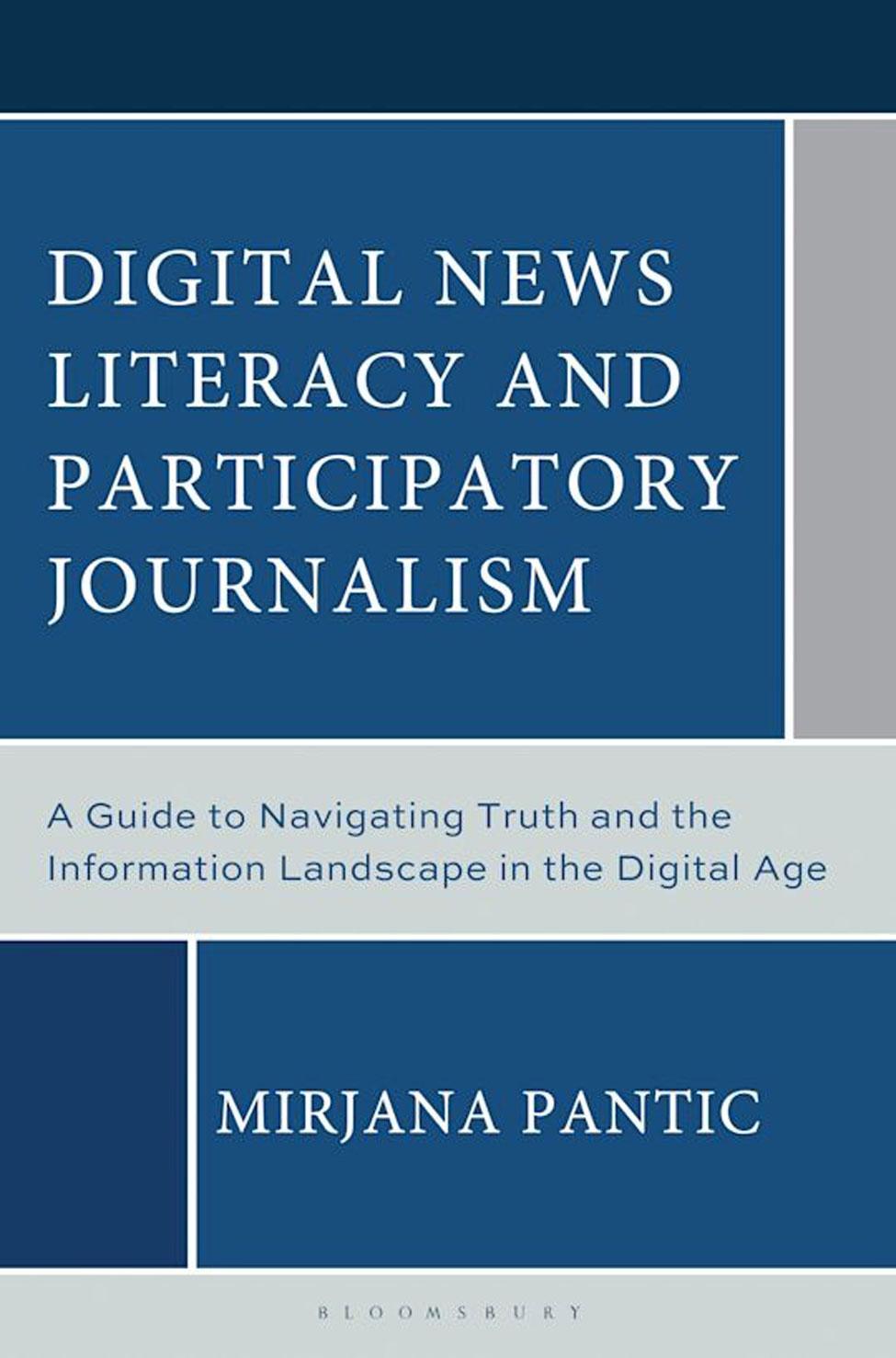

The central theme of Digital News Literacy and Participatory Journalism is empowering individuals to become informed, critical, and active participants in today’s complex digital news environment.
The book argues that understanding the foundational principles of journalism is essential for navigating an era marked by information overload, misinformation, fake news, and rapidly evolving technologies. By clarifying journalistic standards and explaining the differences between facts, opinions, and various forms of false or misleading content, it equips readers with the tools needed to evaluate information responsibly.
At the same time, the book emphasizes that news literacy is not only about critical consumption but also about active engagement. It explores the rise of participatory journalism and the growing role of citizens in producing and sharing news, highlighting how this participation can strengthen democratic accountability. Finally, by examining the influence of artificial intelligence on news creation and distribution, the book situates digital literacy within the broader technological forces reshaping public discourse.
What inspired me to write the book was my growing concern about how difficult it has become for many people, including my students, to distinguish between content published on social media and content produced by professional news organizations. I noticed that the boundaries between journalism, opinion, promotion, and personal expression are increasingly blurred in the digital environment. This confusion motivated me to clearly explain what journalism is, what its core principles and standards are, and why it plays such a vital role in democratic societies.
In writing this book, I wanted to help readers understand how journalism differs from other forms of online content. I also felt it was essential to provide concrete, practical tips for recognizing misleading information. In an era marked by misinformation and disinformation, I believe it is more important than ever that we are able to distinguish facts from fiction and make informed decisions.
In addition, my extensive research on participatory journalism strongly influenced this book. Over the years, I have studied how citizens contribute to news production and public discourse. I especially wanted to emphasize the important role participatory journalism plays in strengthening news literacy. For me, news literacy is not only about critical consumption but also about active engagement—understanding the news and contributing responsibly to the public conversation.
The book is important for the field of journalism because it addresses one of the profession’s most urgent contemporary challenges: maintaining public trust and clarity in an increasingly fragmented and digitized media environment. As the boundaries between professional journalism, social media content, opinion, and misinformation continue to blur, the book reinforces the core standards and democratic purpose of journalism while equipping readers with the tools to recognize and value credible reporting. By connecting news literacy with participatory journalism and emerging technologies such as artificial intelligence, it not only defends the relevance of professional journalism but also repositions audiences as informed, responsible contributors to the news ecosystem. In doing so, it strengthens both journalistic practice and the public’s capacity to engage meaningfully with it.
There were two particularly meaningful moments for me while working on this book. The first came when I was writing the chapter on participatory journalism. That was when I fully realized how much research I have produced in this area since beginning my PhD in 2014, and how I have contributed to discussions in the field. I felt especially proud for connecting this concept I have worked on for over a decade with news literacy, arguing that digital news literacy requires not only critical consumption, but also an understanding of how news is produced, shared, and engaged with. That felt like an important scholarly contribution.
The second moment came while working on the chapter about artificial intelligence. I was struck by how rapidly the field was evolving, even as I was writing. The pace of change in AI and journalism was both fascinating and challenging, especially when offering guidance on recognizing AI-generated content. Watching these developments unfold in real time reinforced just how dynamic the media environment is, and how much transformation likely still lies ahead.
I hope readers come away with a clear understanding of how vital it is to be informed by facts rather than by content that simply confirms their existing beliefs. In today’s polarized and algorithm-driven media environment, it is tempting to seek information that aligns with our attitudes, even when it is distorted or inaccurate. But without a commitment to evidence, we risk making decisions that can seriously harm our lives and our communities.
Ultimately, I want readers to see that digital news literacy is both a personal responsibility and a democratic necessity. An informed society is the foundation of a healthy democracy, and fact-based decision-making is essential to protecting it.
Understanding how much this topic matters not only for journalism but for society as a whole, I wanted the book to extend beyond the page. That is why I designed a course titled Digital News Literacy, which will be offered to students starting in Fall 2026. The course is a natural continuation of the book’s mission: to equip students with the knowledge and critical skills they need to navigate today’s complex media environment responsibly and confidently.
In addition, I have a YouTube channel where anyone interested can find additional content related to the book and to news literacy more broadly. Through this platform, I hope to continue the conversation, provide practical examples, and make discussions about journalism and digital literacy accessible beyond the classroom.
This might sound funny, but the first book I published was in 2024. It is a fiction piece inspired by real events called How (Not) to Be Single in New York City from A to Z, available on Amazon.
I joined in 2017.
I consider myself an eclectic nerd who loves reading diverse literature and experiencing life through culture and travel. These passions continually expand my perspective and give me knowledge and insights that I am eager to share with others. I find great joy in seeing young minds engage with new ideas, question assumptions, and grow intellectually. At the same time, I value how much I learn from them. For me, teaching is always a two-way process, and that exchange of curiosity and insight is what makes it so deeply rewarding.
I have many hobbies, but writing has always been my greatest outlet. I write short, often humorous stories that I read at open mic events in New York City, reflecting on everyday life with a touch of irony and warmth. I am currently working on a new project, and I suspect my next book will be a fiction piece inspired by real-life experiences, tentatively titled How (Not) to Be a Tourist When You Travel from A to Z.
I am also an avid reader, typically reading around 50 books a year outside of my academic work—mostly fiction, along with psychology. I deeply enjoy meaningful conversations and connecting with people from diverse cultural backgrounds.
Travel is another passion of mine: last year I visited Iceland, Serbia, Montenegro, Croatia, Argentina, Chile, and Uruguay, and this year I am preparing for a safari in Africa.
I am a dedicated marathon runner, which is one of my biggest passions. I also love cooking, going to museums, and attending concerts, especially indie rock shows. For me, all of these activities—writing, reading, traveling, running, culture, music, and socializing with friends—are different ways of experiencing life.
I just finished reading Victor Frankle’s Man’s Search for Meaning, which prompted me to order several more books from the library on logotherapy. While waiting for them, I am reading Nonverbal Communication in Close Relationships by Laura K. Guerrero and Kory Floyd.