Image
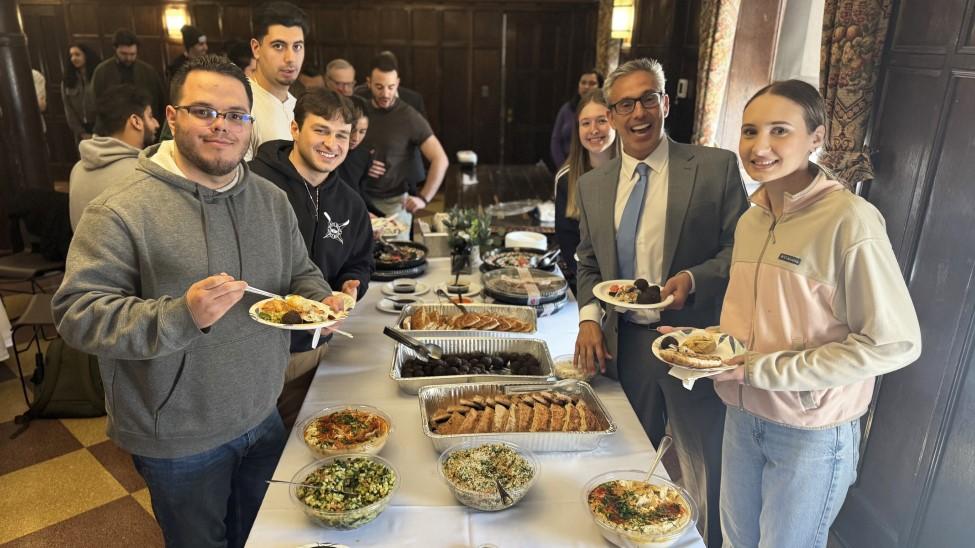

Members of the Christian Law Students Association, Jewish Law Students Association, and the Muslim Law Students Association at the Elisabeth Haub School of Law at Pace University came together on February 24, 2025, to break bread and build bridges at an Interfaith Luncheon held on campus. The event, organized by Professor Leslie Garfield Tenzer through a grant from the Academic Engagement Network, was a testament to the law school's commitment to diversity and inclusivity, creating a space where students could engage in meaningful conversations about their shared values and distinct traditions.
“The Interfaith Luncheon was a unique opportunity for students of different faiths to connect, fostering a spirit of unity and mutual respect,” said Professor Tenzer, who is the faculty advisor to JLSA, and sparked the idea for the collaborative event. “It was truly special seeing students, faculty, staff, and religious leaders from all walks of life find common ground in a social setting free from stigma. It’s this kind of openness and community spirit that makes Haub Law the unique place it is.”
The event began with invocations from esteemed religious leaders: Father Tom Byrne, Imam Shaffieq Chase and Rabbi David Marcus, each offering words of wisdom and encouragement for interfaith cooperation. Their messages set the tone for a gathering rooted in understanding and collaboration. Adding to the spirit of unity, the presidents of the three participating student organizations—Tia Hodroj of the Muslim Law Students Association, Emily Nobles of the Christian Law Students Association, and Evelina Safanova of the Jewish Law Students Association—gave brief remarks promoting togetherness and religious tolerance on campus. Their words served as a powerful reminder that law school is not only about academic growth, but also about building bridges between different communities, ensuring that future legal professionals are equipped to advocate for a more just and understanding society.
“It was truly special seeing students, faculty, staff, and religious leaders from all walks of life find common ground in a social setting free from stigma." - Professor Leslie Garfield Tenzer
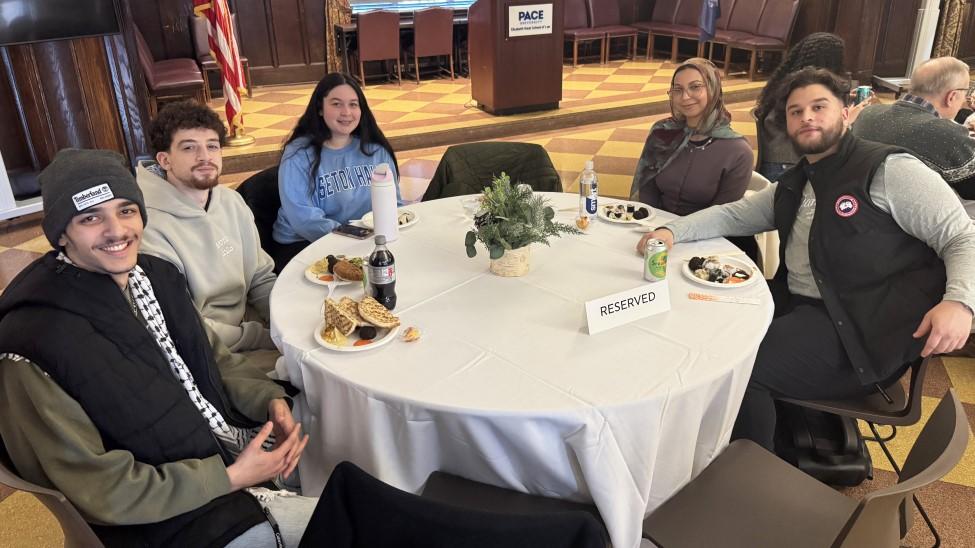
Throughout the luncheon, the 40+ students in attendance engaged in thoughtful discussions, building connections that transcended religious boundaries. By coming together in this way, students strengthened their sense of community and reinforced the importance of inclusivity in the legal profession. This event exemplified how law students can lead by example, embracing diversity as a cornerstone of justice and equity.
The Law School aims to develop additional collaborative programming for its interfaith community, focusing on topics of mutually-shared interest, such as how to navigate religious beliefs and practices in a work place setting -- a topic of particular interest to students they prepare to embark on careers in law practice.

As the Pace Women’s Justice Center marks 35 years of advocacy, Executive Director Cindy Kanusher, JD, examines the legal obstacles facing survivors, the shortcomings of the justice system, and what it takes to help thousands of people find a path forward.
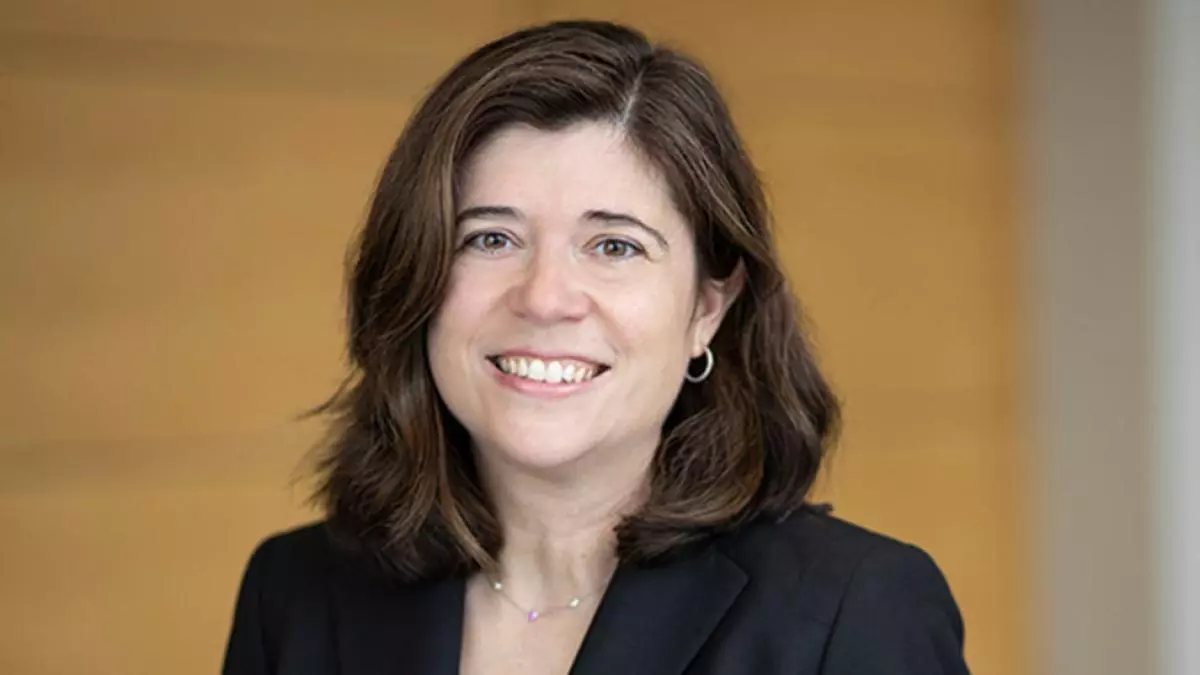
Professor Emily Gold Waldman has been awarded the 2026 Goettel Prize for Faculty Scholarship.

Haub Law launches the Environmental Law Fifty Fund to support innovative research, scholarship, and collaboration among junior environmental law scholars.