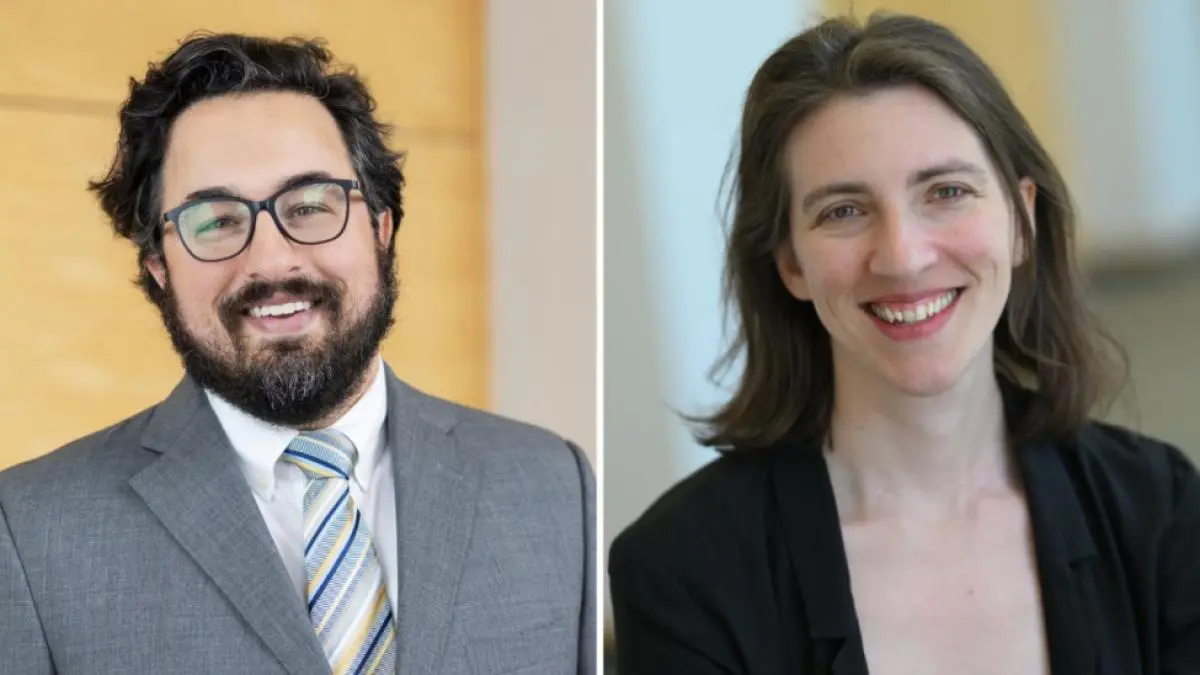
The Elisabeth Haub School of Law at Pace University welcomed Tyler Maulsby, Deputy Managing Partner of Frankfurt Kurnit Klein and Selz PC, to deliver the 2026 Philip B. Blank Memorial Lecture on Attorney Ethics speaking on, “Legal Ethics in the Age of Artificial Intelligence.” Held virtually on Monday, January 26, Tyler examined how the expanding use of generative AI is reshaping the legal profession and raising critical ethical questions for lawyers, clients, courts, and the public. Special thanks to Professor Imre Szalai and the students of the Honor Board for confirming Tyler Maulsby as our speaker.
Elisabeth Haub School of Law Dean Horace E. Anderson Jr. gave welcoming remarks, noting the timeliness of the topic as AI tools are increasingly being used to draft, research, summarize, and even advise. He observed that this raises “significant questions for our profession—such as, ‘How do we protect clients and the integrity of the legal system from the risks of misuse?’ and ‘How do we think responsibly about regulation as legal technology evolves?’”
During his insightful lecture, Mr. Maulsby explored how existing ethics rules apply to emerging technologies, focusing on core professional duties such as competence, confidentiality, candor, and communication with clients. He noted that while ethics rules establish minimum standards, they also leave room for lawyers to exercise professional judgment when navigating new technologies. Mr. Maulsby discussed the importance of transparency when lawyers use AI tools, particularly when such use could be material to a client’s matter. He encouraged lawyers to proactively communicate with clients about how and when AI is used, noting that trust depends largely on expectations, disclosure, and responsible oversight.
A central theme of Mr. Maulsby’s lecture was the growing tension between unauthorized practice of law rules and the public’s increasing use of generative AI tools for legal help. While ethics rules traditionally focus on lawyers’ responsibilities, individuals and small businesses are already turning to platforms like ChatGPT and similar systems to address everyday legal needs—often outside the boundaries of the attorney-client model.
Mr. Maulsby noted that this development comes at a time of deep unmet legal need. In New York, a 2024 report from NY State Court’s Permanent Commission on Access to Justice found that 75% of low-income households experience at least one civil legal problem each year, yet many are unable to find assistance. Generative AI, if responsibly regulated and deployed, could help expand access to justice, but current unauthorized practice laws also create uncertainty for innovators seeking to develop tools in this space. “In my view, states would be well suited to explore changes to their UPL laws that would allow for innovation and responsible growth instead of opting for an outright prohibition and sort of legislating reactively, “ Mr Maulsby said.
The Philip B. Blank Memorial Lecture on Attorney Ethics was established in 1990 by the family, friends, and colleagues of the late Philip B. Blank, Associate Dean for External Affairs and Professor of Law at Pace University School of Law. In honor of Dean Blank’s commitment to legal ethics, the Blank Lecture has presented distinguished members of the legal community recognized for their leadership in attorney ethics and professional responsibility for more than 35 years. Recent past lecturers include experts and academics in the area of Attorney Ethics and Practice, such as Andrea Kupfer Schneider, Professor of Law, Yeshiva University, Irene Oritseweyinmi Joe, Professor of Law, UC Davis School of Law, Mimi Rocah, Former Westchester County District Attorney, and others.