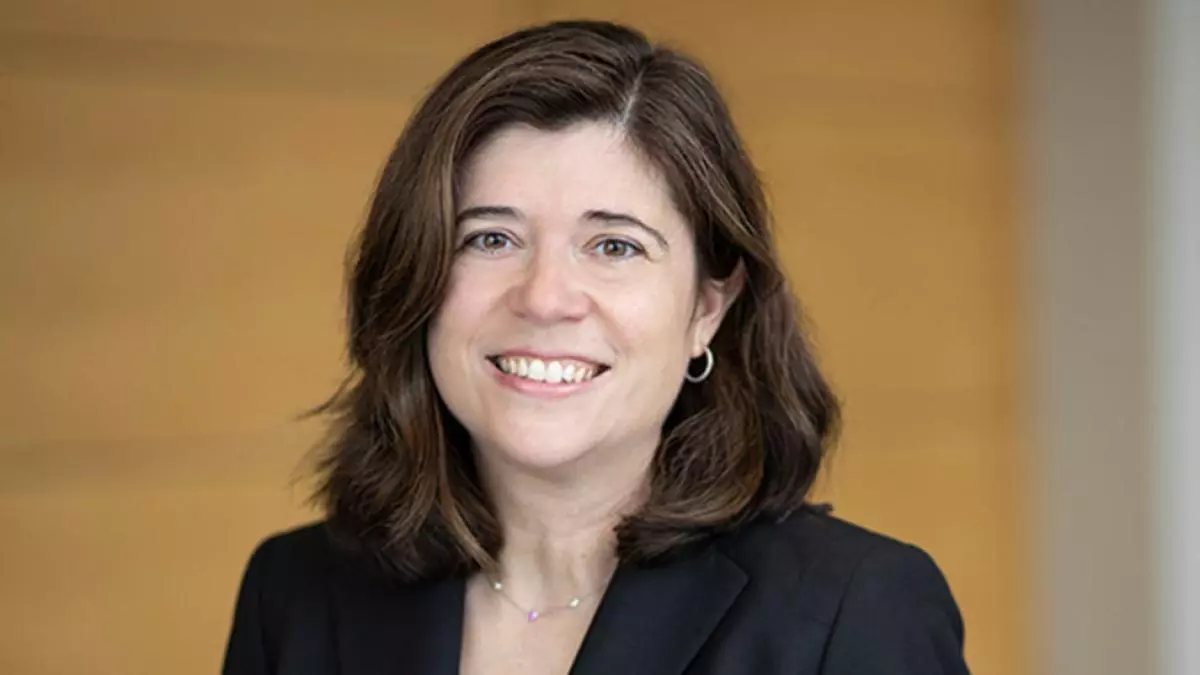
From a young age, Basil Seggos ’01 was always interested in the outdoors and with nature itself. As he went through high school, and college, he gained a greater appreciation of the amount of injustice in the world and was motivated to be a part of the effort to try to help resolve some of these issues, specifically environmental issues being faced by people and by the planet. Law school proved to be the perfect fit for him, and he was able to merge his passion for the environment with his sense of and desire for justice. From 2015–2024, Basil served as the longest-tenured Commissioner of the New York State Department of Environmental Conservation, leading an agency of over 3,000 professionals. Today, Basil serves as Partner and Senior Policy Director for the firm Foley Hoag in New York City. In the interview below he shares his successes as DEC Commissioner, as well as his sentiments from his time at Haub Law.
You accomplished so much as DEC Commissioner, what are you most proud of?
I am most proud of the passage of the state’s climate law and the work we have done to begin its implementation. That would be number one. Number two is rebuilding the agency and reinjecting a sense of purpose through a bolder agency budget, increased staff, and a modernized mission for the challenges over the horizon. DEC was heavily impacted by the economic downturn of the late 2000s. It took the better part of eight years to rebuild the agency to where it is now. Number three is securing billions of dollars for water quality infrastructure across the state. Starting with almost no grant money for infrastructure when I first took this job, we now have a nearly $5 billion grant fund, and the largest revolving loan program in the country. Number four is bringing a sense of environmental justice into the everyday work we do as an agency. This includes helping to guide the agency in a positive way and ensuring we are making decisions and investments with the goal of righting the wrongs of the past. Finally, the last thing would be keeping New York at the lead of important environmental issues, whether it is climate, water, emerging contaminants, or environmental justice. We have set the tone nationally for many important initiatives. And, while we haven’t solved all the state’s legacy issues, we are on the right track.
You were instrumental in the passage of the state’s nation-leading climate change law, the Climate Leadership and Community Protection Act – how did you achieve that tremendous milestone?
We are confronting an existential crisis, so the questions are: what do we do about it? What actions can we take to address the crisis and reduce burdens on front line communities while keeping the state economically competitive? Those questions served as the foundation for the law, and it will likely be one of the most challenging undertakings in state history. We’re now in the implementation phase, and while we develop new policies and investment programs, we’re also doubling down on communicating with New Yorkers. Change of any kind is difficult and change on this scale and in this polarized environment can be frightening if we don’t emphasize constant communication and stakeholder engagement. It was important for us to lay the groundwork in a collaborative way and ensure that the various stakeholder groups had a voice. We worked with environmental justice groups, industries, unions, businesses, and local government officials to create a groundswell of stakeholders who would help craft and implement solution. Goals and targets are critical, but ultimately, the process needs to be collaborative and empowering.
How did you ultimately choose the law as a career and specifically Haub Law?
I was working at the NRDC after college, specifically with the urban environmental team and I got to know a bit about Haub Law. There were some Haub Law professors who were active with the NRDC and they encouraged me to think about law school. It was the perfect opportunity to create a career centered on justice and the environment. I’m so glad that I chose Haub Law.
Which professors at Haub Law had the biggest impact on you?
I distinctly remember Karl Coplan, he was the toughest and most outstanding professor I ever had. Karl managed the Environmental Litigation Clinic at the time, and no one had a better handle of the science, facts, and the law—if you were in his clinic, you better come prepared. He very effectively put students into challenging situations and helped us learn how to become attorneys. And then of course there was Nick Robinson, an absolute legend. He was my first environmental law professor. He had a global view of the law and understanding of how to use environmental law and policy to improve lives. Ann Powers was another terrific professor. All three of them took great care and interest in their students.
What were some of your most impactful experiences during your time at Haub Law?
My time in the environmental litigation clinic was certainly formative and challenging. We students were quickly immersed in real-life cases. During my first two weeks in the clinic, I was handed a case that was headed toward an appeal in federal court. It forced me to evolve from being a mere student into a young practitioner with real clients, briefs and appearances in court. Professor Karl Coplan quickly prepared me for that opportunity. That was the first time that I really felt the ability of a person to impact change in a meaningful way in a court of law.
My time in the environmental litigation clinic was certainly formative and challenging. We students were quickly immersed in real-life cases.
What are your thoughts on New York’s recently passed Green Amendment?
One of the things I take away from it is the fact that New Yorkers value the environment—they went the polls and said yes, the protection of the environment should be enshrined in the state’s constitution. As someone who works on the environment every day in New York, I take pride in knowing that New Yorkers value these issues. Now, the courts will ultimately decide what the green amendment means. There are several cases working their way through the courts to determine the implications of the amendment.
You have an active presence on social media – how do you feel that social media helps to push forward movements for change?
Social media has been an important tool to advance environmental progress. From spreading awareness of issues to galvanizing movements, we’re fortunate to have these tools to help knit us together as a society. In the same breath, social media can also be divisive, and it is often rife with misinformation, and often much worse. There has to be a balance. Use social media as one of the ways to rapidly and widely communicate with the public, but don’t let it supplant the obligation to get out of one’s seat, hit the ground, and be present to speak to people face to face—and listen to what they have to say.