Image
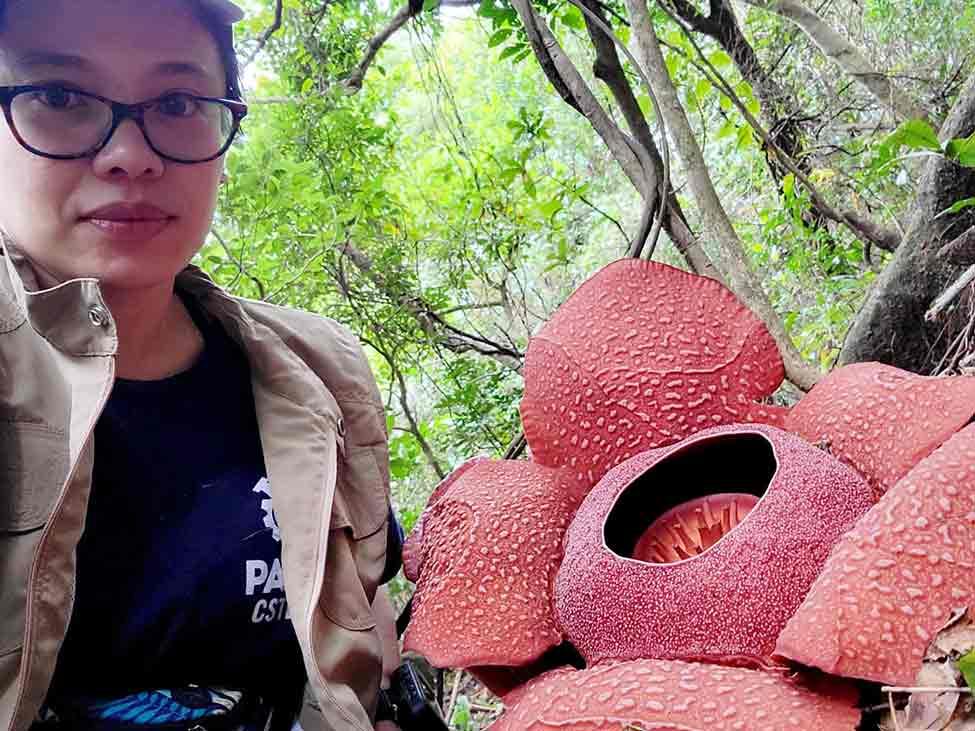

For more than 200 years, Rafflesia, the largest flower on Earth, a rare “corpse flower,” and one of the strangest and most endangered plants in the world, was widely considered nearly impossible to cultivate outside its native habitat.
Jeanmaire Molina, PhD, associate professor of biology in Pace University’s Dyson College of Arts and Sciences, has spent more than a decade trying to change that, collaborating on the propagation research with the United States Botanic Garden in Washington, D.C.
Now, that persistence has helped produce a landmark conservation breakthrough. In a newly published paper in Sibbaldia: The International Journal of Botanic Garden Horticulture, Molina and an international team of collaborators report the first documented cultivation of Rafflesia in the Western Hemisphere, a milestone that may help strengthen conservation efforts for a critically endangered plant that has long challenged botanists, horticulturists, and conservation scientists around the world.
For Molina, the accomplishment is both scientific and deeply personal.
Originally from the Philippines, Molina first encountered Rafflesia more than 20 years ago as a graduate student. The plant immediately captured her imagination. Known as the “panda of the plant world,” Rafflesia is charismatic, critically endangered, and biologically extraordinary. It is also commonly called a corpse flower because of its powerful odor, an adaptation that mimics rotting flesh to attract carrion flies for pollination.
But for most of its life, the plant is entirely hidden from view.
Unlike most plants, Rafflesia has no leaves, roots, or stems. It is a parasitic plant that lives inside the tissues of a host vine, Tetrastigma, where it can remain invisible for years before producing a bud and, eventually, a bloom. That cryptic life cycle is part of what makes the plant so fascinating and so difficult to study, cultivate, and protect.
“Growing a plant you cannot see” is more than the title of Molina’s new paper. It is the central challenge of the work.
The paper, “Growing a Plant You Cannot See: Ex Situ Propagation of the Endoparasite Rafflesia speciosa to Strengthen In Situ Conservation,” details the successful propagation of Rafflesia speciosa from the Philippines at the United States Botanic Garden (USBG). The work was made possible through collaboration among Pace University, the USBG, the Philippine Department of Environment and Natural Resources, the Municipality of Miagao in the Philippines, Sofi Mursidawati at Bogor Botanic Garden in Indonesia, and a broad network of scientists, horticulturists, students, and community partners.
The path to that breakthrough began modestly. In 2014, Molina launched a crowdfunding campaign to support her dream of bringing a Philippine Rafflesia to the Western Hemisphere as an ambassador for biodiversity conservation. In the pitch, she made a playful nod to Lady Gaga, another singular figure known for being extraordinary and impossible to ignore.
The campaign caught the attention of the USBG. That moment sparked a partnership between Molina and the USBG that has continued for more than a decade, fueled by Molina’s vision and later also supported by funding from the National Science Foundation. Along the way came years of trial and error: the USBG Horticulture team’s work found seeds that would not germinate, cuttings that rooted and then died, and grafts that failed, and Molina and collaborators’ annual fieldwork required patience and trust among partners.
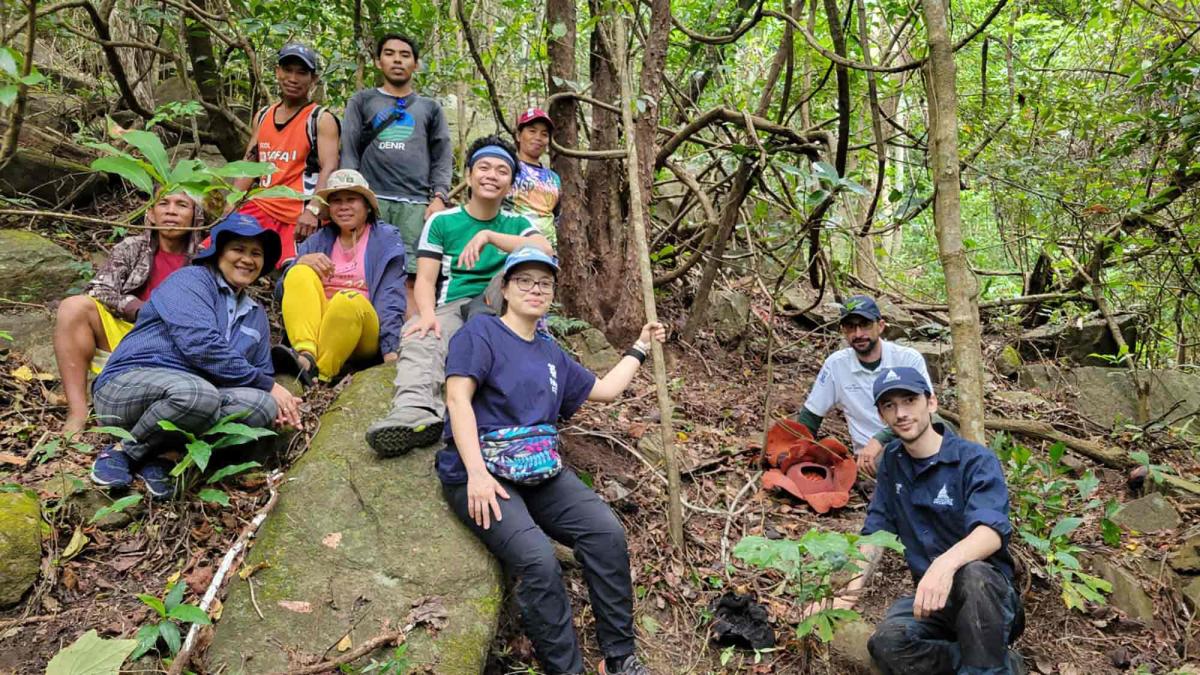
After years of failed attempts, Molina and her USBG collaborators were able to propagate Rafflesia-infected host material using two complementary approaches: rooting infected stem and root cuttings, and grafting infected root tissues onto established Tetrastigma vines. This latter practice was learned from Sofi Mursidawati at Bogor Botanic Garden in Indonesia. The team confirmed infection through molecular and histological testing, providing evidence that the parasite remained alive inside its host.
Then, finally, there were buds.
In 2025, one graft produced two Rafflesia buds, the first evidence of bud initiation outside Southeast Asia. Though the buds did not survive to bloom, the achievement marked a major scientific step forward. For a plant with high bud mortality in the wild, the emergence of buds in cultivation demonstrated that the botanical parasite had survived transport, grafting, and growth far from its native habitat.
For Molina, the breakthrough was profoundly emotional. She had spent more than a decade returning to the same challenge, often with hope followed by disappointment. Each year, she said, she would tell collaborators in the Philippines that “this is the year,” only to come back and explain that it had not worked. When she learned that Rafflesia buds had appeared at the USBG, the moment felt like confirmation that the invisible plant she had spent years trying to cultivate was alive.
“I actually cried when I was told that we have buds in DC,” Molina says. “It was so long.”
The bloom may still be years away. The science is still unfolding. Researchers continue to study what triggers Rafflesia to emerge from dormancy, how to improve bud survival, and how to use knowledge of the plant’s genetics, chemistry, microbiome, and host relationships to support future propagation.
But the milestone is already significant.
The work establishes replicable greenhouse propagation protocols for Rafflesia-infected Tetrastigma, offers a practical framework for confirming infection before buds emerge, and shows that infected tissues can persevere beyond the lifespan of the original plant material. Together, these advances create new possibilities for safeguarding one of the world’s most endangered plant groups.
Still, Molina is clear that the work is not simply about bringing Rafflesia to the Western Hemisphere. The deeper goal is to strengthen conservation where Rafflesia naturally grows.
“I actually cried when I was told that we have buds in DC,” Molina says.
In the Philippines, Molina, the USBG, and other collaborators have worked with local partners, government agencies, municipalities, and community members to share propagation and grafting techniques that can support in situ conservation, the protection and recovery of species within their native ecosystems. That means helping build local capacity to propagate and protect Rafflesia in the forests where it belongs.
This community-centered approach is central to the work of Molina and the USBG. Conservation, she emphasizes, cannot be disconnected from the people who live near and steward the forests that sustain rare species. By teaching propagation techniques and supporting local conservation efforts, the project helps communities develop practical tools to protect Rafflesia and the host vines, and the forest ecosystems on which it depends.
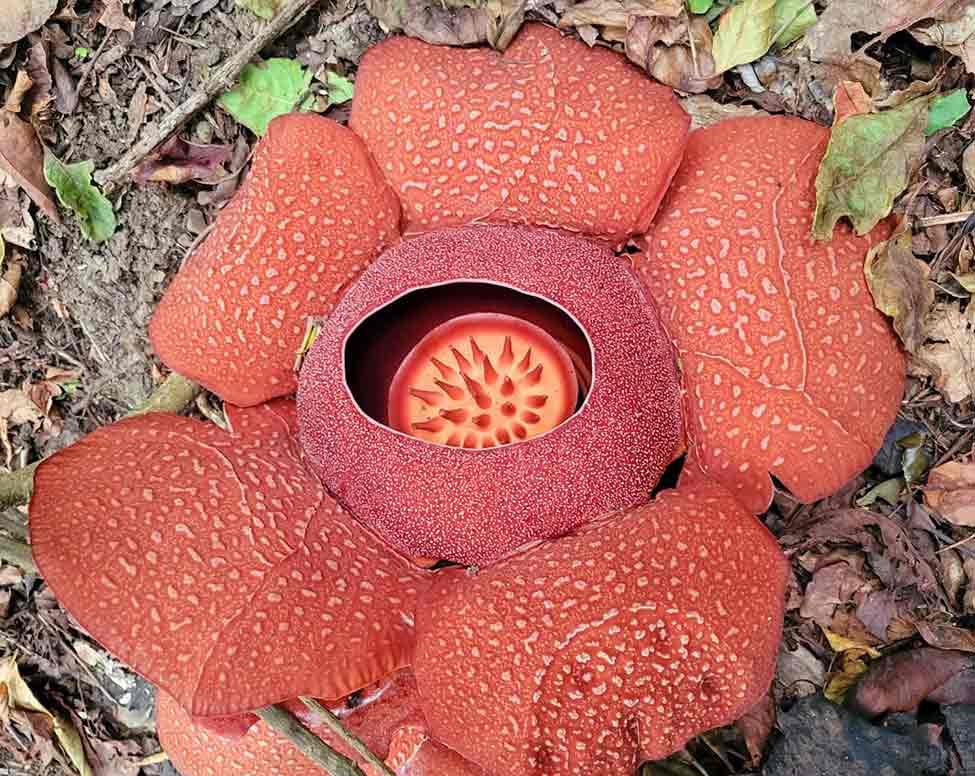
The long-term vision is both ecological and community-focused: healthier forests, stronger local conservation practices, and future opportunities for sustainable ecotourism that can make intact forests more valuable than cleared land. In places where rare blooms can attract visitors, Rafflesia has the potential to support alternative livelihoods while reinforcing the importance of forest protection.
That is one reason Molina sees the work as a partnership, not a one-way transfer of expertise.
“Now that we’ve been successful in ex situ propagation, we also have to continue teaching the local Filipino community how to do this,” Molina says. “Once it blooms, tourists can go there, and that can provide an alternative livelihood so they don’t have to clear their forests. Having a Rafflesia there changes the game.”
The project brings together scientific research, horticultural experimentation, field conservation, community training, and international collaboration. It also reflects Molina’s belief that conservation depends on humility: listening across borders, disciplines, and communities; sharing knowledge; and recognizing that the survival of a species is inseparable from the landscapes and people around it.
That same philosophy shapes Molina’s work at Pace.
Her students know Rafflesia well. Many have heard her stories, seen photos of the massive flower, and learned how a plant that looks like an evolutionary oddity can reveal profound lessons about biodiversity, ecology, adaptation, and extinction. That student-centered approach is reflected in the publication itself: one of the coauthors, James Hill, was a Pace biology student who contributed to the histological analysis of Rafflesia-infected host tissues. For Molina, teaching students about Rafflesia is part of a larger mission: helping the next generation see plants not just as background scenery, but as essential living systems inextricably linked to our own existence.
“I always involve students in my research,” Molina says, “because it’s not just important to cultivate Rafflesia, but also to cultivate the next generation of scientists who will carry on this mission.”
For students, Rafflesia also raises the kind of question that can change how they understand the natural world.
“People always ask if this is a parasitic plant, why rescue it, why save it?” Molina says.
Her answer is rooted in ecology. Plant parasites, she argues, are not merely biological curiosities. They function as important ecological players, shaping host populations, influencing competition, and reflecting the health of larger ecosystems. To protect Rafflesia is to protect more than a flower. It is to protect the relationships among plants, pollinators, forests, and communities.
That is the kind of research impact that defines Pace University’s faculty.
Across disciplines, Pace scholars are asking urgent questions, building partnerships, involving students, and applying their expertise to challenges that matter far beyond campus. Molina’s work is a vivid example: research rooted in deep scientific inquiry, sustained by international collaboration, and directed toward real-world conservation outcomes.
“I always involve students in my research, because it’s not just important to cultivate Rafflesia, but also to cultivate the next generation of scientists who will carry on this mission.”
A plant long considered impossible to cultivate has been propagated outside of its native range. A critically endangered species has new tools for conservation. A collaboration with a national botanic garden. Local partners in the Philippines are gaining techniques that can support recovery efforts in native habitats. And Pace students are learning from a scientist whose work shows that research can be rigorous, collaborative, and globally consequential.
For Molina, cultivating Rafflesia is only part of the mission.
The larger goal is to cultivate conservation advocates: students, scientists, partners, and communities who will carry the work forward.
Because once a species is gone, it cannot be brought back. And sometimes, saving what remains begins with learning how to grow what cannot yet be seen.

Pace Professor Cathryn Lavery, PhD, challenges the Hollywood myths surrounding human trafficking and prepares students to recognize the grooming, coercion, trauma, and exploitation happening in homes, relationships, online spaces, and everyday communities.

Dyson Professor Melvin Williams speaks with USA Today about the first trailer for Shrek 5, explaining how Fiona's slimmer appearance reflects longstanding gender expectations surrounding aging and body image in popular culture.

Pace University’s award-winning documentary film team, PaceDocs, today released its latest film, Stories Come Together. It follows a successful premiere at the Jacob Burns Film Center, which last week brought together students, alumni, faculty, and supporters to celebrate the lasting impact of the University’s documentary filmmaking program.