Image
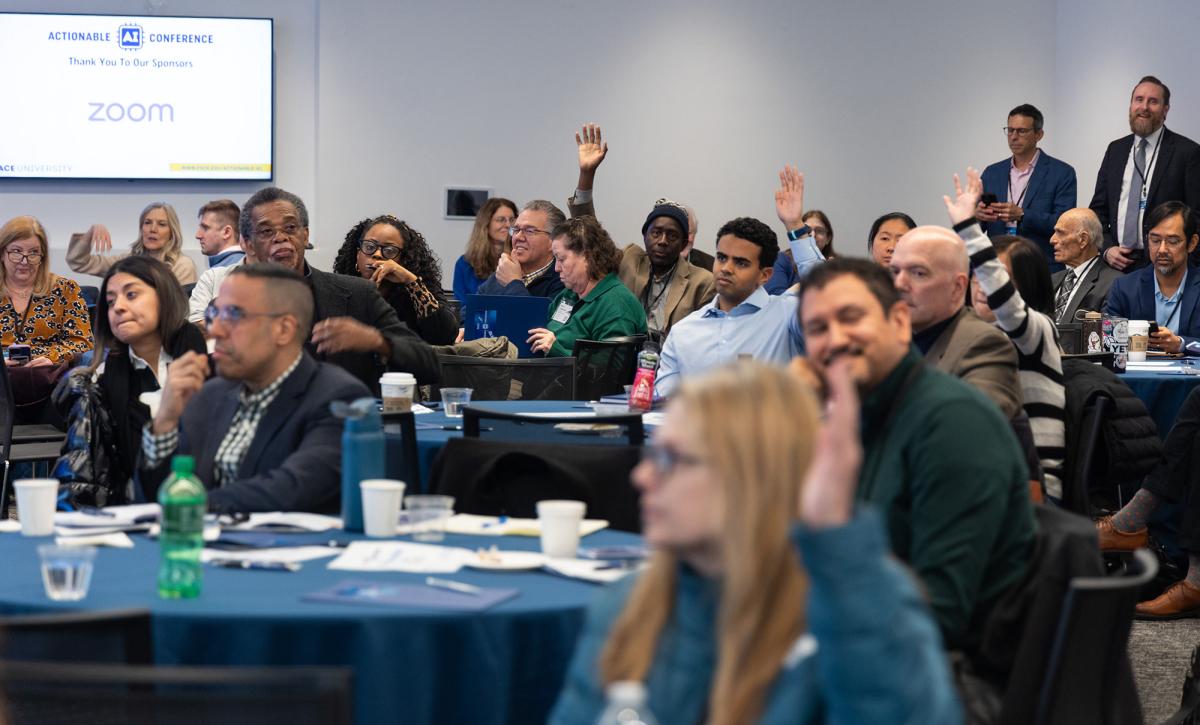

A leader in enterprise AI told a packed room of business leaders, faculty, and alumni that artificial intelligence is rapidly reshaping the nature of work — shifting professionals away from routine tasks and toward strategy, decision-making, and leadership.
In speaking at Pace University’s Spring 2026 Actionable AI Conference in Lower Manhattan on Friday, Kaitlin Elliott, executive director and head of firmwide generative AI solutions at Morgan Stanley, described how emerging forms of AI are transforming enterprise operations and workforce roles.
“We are going to go from being the task doers to the mastermind of the task,” Elliott told attendees during her keynote. “AI is moving from answer generation to action. Knowledge is infinite at this point in time.”
The conference focused on practical strategies for implementing artificial intelligence across organizations, continuing the event’s theme, “Less Hype, More How.” Building on the success of its fall conference focused on AI in higher education, this spring gathering turns to the broader business landscape — examining how artificial intelligence is transforming operations, workforce strategy, governance, and risk management across industries.
Executives and industry leaders also explored the impact of AI across key sectors during a discussion on Intelligent Economy: AI Across Critical Sectors,” including Justin Vortage, CEO of INDATEL; Alyce Gee, investor at Camber Creek; and Jonathan Hill, chief transformation officer at Pace University. Moderated by Li-Chiou Chen, dean of Pace’s Seidenberg School of Computer Science and Information Systems, the discussion examined how artificial intelligence is reshaping telecommunications infrastructure, real estate investment, and higher education.
The operational challenges organizations face when moving from experimentation to enterprise adoption were the focus of “Building the Foundations: How Organizations Overcome Roadblocks to AI Integration.” The discussion featured Jared Heiner, higher education account manager at Zoom, and Don Welch, vice president for information technology and global chief information officer at New York University, and was moderated by Ajay Koharana, dean of Pace’s Lubin School of Business.
“Part of the challenge is that organizations are trying to move quickly in an area that doesn’t yet have clear guardrails,” said Heiner. “The key is creating ongoing dialogue across teams so people understand what the technology can do, where the risks are, and how it can be applied in meaningful ways.”
Ethical considerations and public trust were the focus of “Navigating AI Risk: Ethics, Law, and Public Perception.” The session, moderated by David Sachs, professor of information systems at Pace’s Seidenberg school, featured Roy Girasa, distinguished professor at Pace’s Lubin School of Business, and Frank Iannella, chief information officer at Heineken USA, examined legal, reputational, and operational risks organizations must manage as AI capabilities expand.
“If you haven’t done it, you need to do it now, because every risk has changed in this new context,” Iannella said. “Look at your risks again. AI changes how those risks behave, but it can also help you identify opportunities to respond faster.”
The conference also featured a Lunch and Learn presentation from Craig King, AI Lead at Google, titled “The Future of AI — What’s Hype, What’s Real, and What’s Next.” King discussed the rapidly evolving AI ecosystem, highlighting how organizations can distinguish between headlines and practical applications delivering real value.
King illustrated the technology’s potential with a personal example of using AI tools with his children. After his son draws a picture, he said, the family uploads the drawing into Google’s video model to generate an animation from it — a simple demonstration of how generative AI can turn ideas into new forms of content.
“You don’t have to have a perfect strategy, but you have to have some type of strategy — you have to do something,” King said. “Audit your workflows, experiment with low-stakes pilots, build AI literacy across your teams, and put governance around your data. The organizations that start experimenting now will be the ones that figure out how to use these tools responsibly.”
The Actionable AI Conference is part of Pace University’s broader effort to bring together industry leaders, researchers, students, and alumni to explore how artificial intelligence is reshaping business, technology, and society. Sponsors included Carahsoft, Crestron, D2L, Google for Education, MicroTheory Engineering, and Zoom.
Founded in 1906 and celebrating 120 years of preparing students for success in 2026, Pace University pairs real-life learning with strong academics to launch meaningful careers. With campuses in New York City and Westchester County, Pace serves 13,600 students across a range of bachelor, master, and doctoral programs through the College of Health Professions, Dyson College of Arts and Sciences, Elisabeth Haub School of Law, Lubin School of Business, Sands College of Performing Arts, School of Education, and Seidenberg School of Computer Science and Information Systems.
Launched in April 2024, Pace’s AI Committee is a cross-functional group spanning the University and including staff, faculty, and students. The committee leads institution-wide efforts to advance AI literacy, governance, and responsible adoption. In its first year, it established an academic AI policy, revised CIS 101 to ensure all students receive AI literacy instruction, and launched AI in the Workplace for the broader Pace community.
To date, more than 2,000 students and 140 faculty and staff have completed CIS 101, and AI in the Workplace has generated more than 1,000 registrations across students, faculty, staff, and alumni. The committee has also conducted AI tool pilots, hosted a Google Gemini Pop-Up, and produced the Fall Actionable AI Conference focused on AI in higher education.

The Elisabeth Haub School of Law is proud to announce that the 2026 Elisabeth Haub Award for Environmental Law and Diplomacy will be jointly awarded to environmental lawyers Alfred Lahai Gbabai Brownell Sr. and Durwood Zaelke for their groundbreaking contributions to the progressive development of environmental law and their decades of leadership advancing environmental justice, climate action, and environmental governance around the world.

The Elisabeth Haub School of Law at Pace University is pleased to announce that Suffolk County District Attorney Raymond A. Tierney has been selected as the recipient of the 2026 Robert S. Tucker Prize for Prosecutorial Excellence.
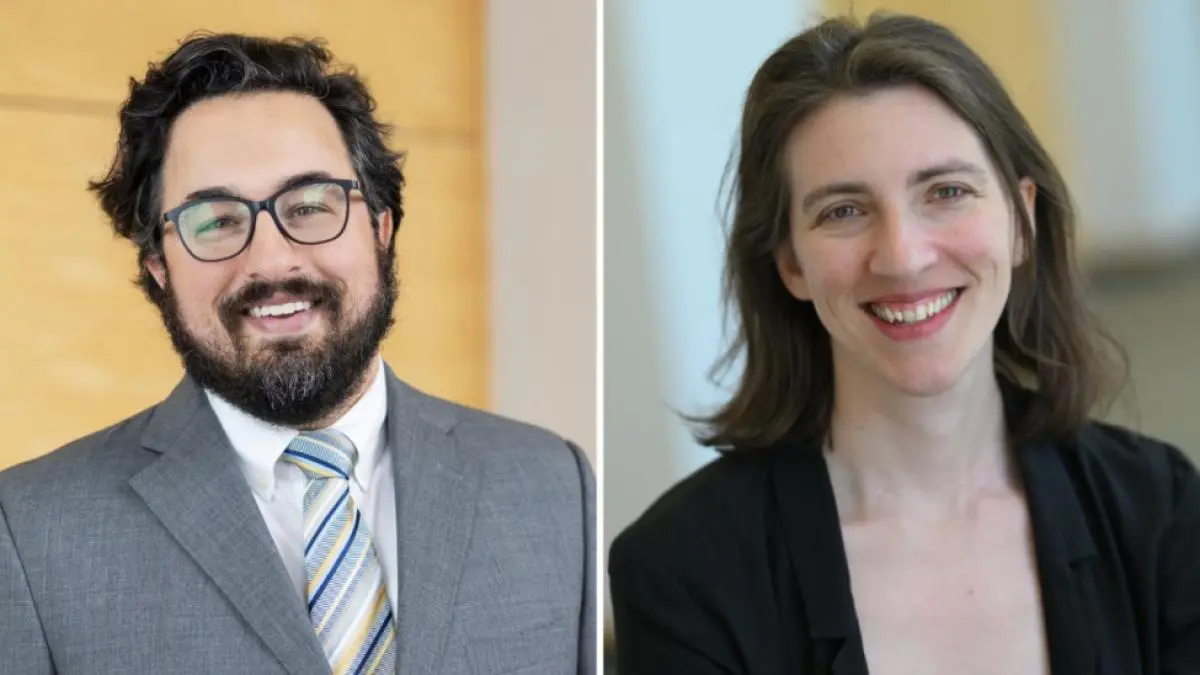
The Elisabeth Haub School of Law at Pace University is pleased to announce the appointments of Professor Margot J. Pollans as Associate Dean of Faculty Development and Professor Josh Galperin as Associate Dean of the Environmental Law Program, further strengthening the Law School's academic leadership.