Image
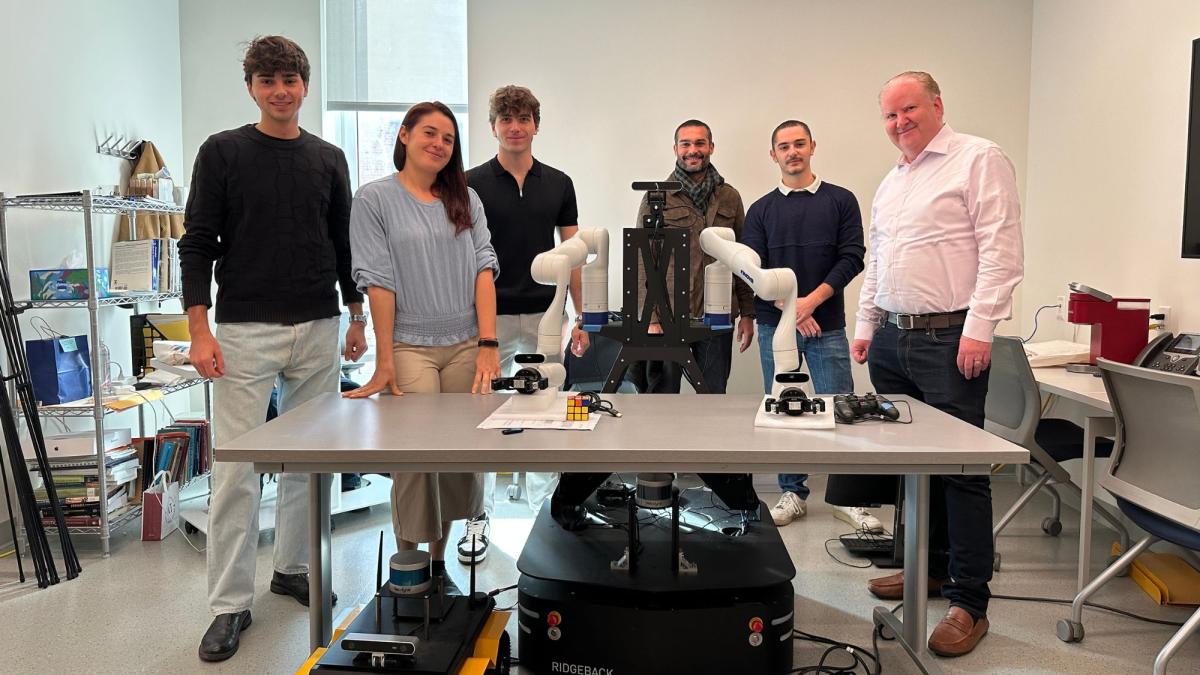

Sara Falcone, PhD, assistant professor of computer science at Pace University’s Seidenberg School of Computer Science and Information Systems, has been awarded a grant from the Alfred P. Sloan Foundation, one of the most competitive and respected research funding organizations in the world.
The award recognizes Falcone’s innovative work at the intersection of human-centered AI, robotics, and immersive technologies—fields that examine not just how systems function, but how people experience and interact with them. Her Sloan-funded project will focus on making hybrid and remote environments more accessible, collaborative, and human.
The goal is to support things like attention management, timing and turn-taking, navigation and awareness in physical spaces, and to smooth social coordination in busy hybrid settings.
Drawing on her multidisciplinary background in computer science, robotics, and cognitive science with a focus on human–computer and human–robot interactions, Falcone is developing new ways for remote participants to engage more naturally in academic settings such as conferences, lab visits, and invited talks. At the core of the project is the idea of co-embodied hybrid attendance—a model where remote attendees and on-site hosts work together in real time, allowing the remote attendee to participate more naturally rather than merely observing through a screen.
“We’re building lightweight wearable haptic prototypes worn on the forearms and shoulders that deliver haptic cues as a low-disruption, private communication channel alongside audio/video,” Falcone said. “The goal is to support things like attention management, timing and turn-taking, navigation and awareness in physical spaces, and to smooth social coordination in busy hybrid settings.”
By integrating multisensory wearable technology with virtual and physical interaction, her research aims to close the gap between being there and truly participating, particularly for those unable to travel.
Falcone is collaborating with leading researchers to advance the project. “This work is being carried out in collaboration with research partners at Cornell University and Cornell Tech, combining expertise in human-computer interaction, accessibility, and embodied telepresence,” she added. “Through iterative prototyping and user studies/pilot deployments, we’ll evaluate how these cues affect engagement, social presence and connection, workload, and overall quality of the hybrid experience, and we’ll translate the findings into practical design guidance for more inclusive hybrid participation.”
This is a massive achievement for any faculty member, and we are incredibly proud to have Professor Falcone in the department.
Miguel Mostero, PhD, professor of computer science and chair of the computer science department at Seidenberg, noted that the “Sloan Foundation is known for backing only the most high-impact, innovative researchers, and receiving this grant is a major stamp of approval on the caliber of Professor Falcone’s work.”
He emphasized that “this is a massive achievement for any faculty member, and we are incredibly proud to have Professor Falcone in the department. I look forward to seeing the project unfold!”
Through the continuation of her groundbreaking work, Falcone demonstrates Pace University’s commitment to advancing technology that centers human connection, accessibility, and real-world impact.

Pace’s Break the Pattern with AI event explored how women in tech can use AI thoughtfully to challenge familiar ways of thinking and creating.

From empathetic chatbots to smarter AI project management, Seidenberg Professor Youngsoo Shin's latest research is advancing human-centered AI and positioning Pace University at the forefront of innovation across multiple disciplines.

Whether he's leading an AI internship, hosting a campus barbecue, or mentoring students, Seidenberg professor Matt Ganis approaches every opportunity with one goal: helping students succeed.