Image

Pace Women's Lacrosse added another memorable postseason run to its growing legacy. The Setters once again proved they belong among the nation's best.


The 2026 season for Pace University Women’s Lacrosse was another reminder of what the program has become.
A national contender. A postseason standard. A team built to play deep into May.
Three years after capturing the NCAA Division II National Championship, the Setters once again found themselves on the biggest stage in the country, reaching the NCAA Semifinals for the second time in program history and closing the year with a 16-6 overall record.
The road there was not simple. Pace opened the season against a demanding schedule, facing ranked opponents, regional contenders and several teams with postseason expectations. The early tests gave the Setters a chance to sharpen their identity before the heart of Northeast 10 Conference play arrived. By the time the regular season hit its final stretch, Pace had found its rhythm.
The Blue and Gold closed the regular season with eight straight wins, storming through league play behind a complete team effort. Pace finished 8-1 in the NE10, collecting key victories over Saint Anselm, Southern New Hampshire, Assumption, Bentley, Saint Michael’s and American International while positioning itself near the top of one of the toughest conferences in Division II.
By the time the regular season hit its final stretch, Pace had found its rhythm.
Then came the postseason. Pace advanced back to the NE10 Championship game, earning another shot at top-ranked Adelphi. The Setters came up just short in the conference final, falling by one goal, but the loss did not define the season. Instead, it set the stage for another opportunity.
Selected as the second seed in the NCAA East Region, Pace opened the national tournament at Northwell Stadium against Mercy. In a one-goal battle, the Setters found a way to survive and advance, earning a 13-12 victory to move into the NCAA Quarterfinals.
Waiting there was Adelphi again.
This time, on the road, Pace delivered one of its biggest performances of the season. The Setters went into Garden City and took down Adelphi, 16-12, punching their ticket back to championship weekend and proving once again that the Blue and Gold belonged among the final teams standing.
The win sent Pace to the NCAA Semifinals for the second time in program history.
The win sent Pace to the NCAA Semifinals for the second time in program history.
The Setters run eventually came to a close against Florida Southern, but the message of the season had already been made clear: Pace was still one of the premier programs in the country.
The individual recognition followed the team success. Doty was named NE10 Midfielder of the Year and earned IWLCA First Team All-American honors after putting together one of the most complete seasons in the nation. Kulo also earned IWLCA First Team All-American recognition, while Sheehan landed on the Second Team after leading the offense with her playmaking ability.
By the end of the year, Pace had collected 12 All-NE10 selections, seven IWLCA All-Region honorees, four USA Lacrosse All-Americans, three IWLCA All-Americans and six CSC Academic All-District selections. The honors reflected the depth of a roster that produced at every level, from the attack to the midfield, the draw circle, the defensive end and the classroom.
The run showed more than talent. It showed the toughness and belief that have become the foundation of the program.
The 2026 season added another defining chapter to the rise of Pace Women’s Lacrosse.
A return to the NE10 Championship game, a gritty NCAA Tournament win at home and a statement victory over #1 Adelphi in the national quarterfinals all led the Setters back to championship weekend.
The run showed more than talent. It showed the toughness and belief that have become the foundation of the program.
Pace finished the year among the final four teams in Division II, proving once again that the Blue and Gold are not just chasing national success, they are firmly established among the country’s elite.

Championships weren't the only measure of success in 2025–26. Pace student-athletes once again excelled in the classroom, earning academic honors at every level.

Alexandra Witucki made Pace history as the first student-athlete named NE10 Woman of the Year. The honor celebrates a career defined by leadership, service, academic excellence, and championship success.

Pace Esports raised the bar in 2025–26, capturing conference championships, making deep national tournament runs, and proving they can compete with the country's best. See how the Setters turned a record-breaking season into a statement for the program.
From a 390-foot crane to thousands of new light fixtures, the transformation of One Pace Plaza East is a story told in big numbers, bold spaces, and behind-the-scenes precision. Go inside the construction of Pace’s future-facing downtown campus hub—one seat, studio, stage, and catwalk at a time.


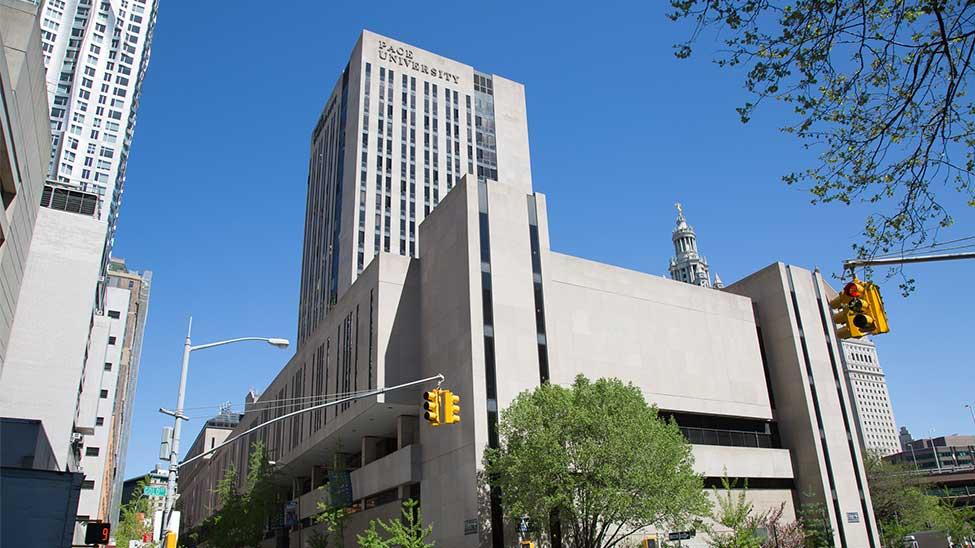
How do you measure the transformation of a campus icon? For One Pace Plaza East, the answer starts with a 390-foot crane, 427 seats in the reimagined Schimmel Theater, 259 upgraded dorm rooms in Maria’s Tower, and more than 10,000 square feet of new scene and costume shop spaces. But the numbers tell only part of the story. Together, they add up to a once-in-a-generation renovation designed to expand creative arts education, strengthen student life, improve accessibility, and help Pace build a more sustainable future in the heart of downtown Manhattan.
The approximate length of the crane used during the Spring 2024 semester.
One of the largest crane operations on the East Coast helped bring the scale of the One Pace Plaza East transformation into full view, reaching approximately 330 feet high.
In Maria’s Tower.
A small detail with a big number, showing the scale of the residential renovation.
Throughout One Pace Plaza East. Behind every major transformation are hundreds of essential details—right down to the sinks and faucets.
New convenience outlets for student use. The renovation includes more places for students to plug in, power up, and stay connected.
The future capacity of the reimagined Schimmel Theater. The new Schimmel Theater will feature orchestra and balcony seating, including six boxes with 24 box seats.
A more accessible Schimmel Theater experience. The reimagined venue will include ADA access on every major level, including the orchestra, balcony seating, stage, and even the catwalks.
New catwalks in the Schimmel and Black Box Theaters. The project will add approximately 450 linear feet of catwalks, giving students hands-on access to professional theater environments.
A new fly tower for the Schimmel Theater. The new fly tower will include 50 linesets, supporting more sophisticated staging and production possibilities.
New Makerspace and Zine Library. One Pace Plaza East will be home to a state-of-the-art Makerspace and the Pace Zine Library, expanding opportunities for hands-on creative work and access to unique publications.
New student-centered common spaces. The renovation will add café seating, common areas, a student lounge, and residential amenity space.
New scene and costume shop spaces. One Pace Plaza East will feature major new production spaces, including one of the largest collegiate costume shops in the world.
Upgraded residential rooms in Maria’s Tower. The renovation will bring major improvements to student residential life at One Pace Plaza East.
The new Spruce Street Stoop. With 28 steps and 14 seating steps, the new stoop will create a welcoming place to pause, gather, and experience campus life along Spruce Street.
Piece by piece, number by number, One Pace Plaza East is taking shape—and in Fall 2026, Pace students will step into a transformed campus experience.

Inside the newly revitalized One Pace Plaza East, Pace University’s Commercial Dance students got their first glimpse of a space built for the way they move, create, and collaborate. What began as a social media shoot became a live lesson in experiential learning, as Sands students choreographed, directed, and performed original movement in minutes—offering a joyful preview of Pace’s next chapter in the performing arts.

From celebrating 120 years of Pace pride to earning national recognition, launching new centers, advancing sustainability, and empowering students to lead, this semester offered 10 inspiring reminders of Pace’s momentum—and the community driving it forward.

From Peabody-winning storytelling and major musical theatre honors to global AI collaboration and civic engagement tied to the United Nations Sustainable Development Goals, Pace faculty are earning national and international recognition for work that reaches far beyond the classroom.
Pace Esports raised the bar in 2025–26, capturing conference championships, making deep national tournament runs, and proving they can compete with the country's best. See how the Setters turned a record-breaking season into a statement for the program.

The 2025–26 season for Pace University Esports was a year that pushed the program into a new tier of national recognition.
Across multiple titles, multiple leagues and multiple championship stages, the Setters proved they were no longer just building toward national relevance. They had arrived.
What started as a year of steady growth quickly became one of the most successful seasons in program history, highlighted by championship runs, national tournament appearances and breakthrough performances against some of the top collegiate esports programs in the country.
At the center of the year was VALORANT Gold.
The Setters put together a dominant run through the Eastern Collegiate Conference, completing a perfect 7-0 regular season before carrying that momentum into the postseason. In the ECC Grand Finals, Pace defeated Utica University 3-1 to capture the program’s first conference championship and earn a berth in the Collegiate Esports Commissioners Cup in Waco, Texas.
That championship became the launch point for something even bigger.
Entering CECC as the fourteenth seed, Pace arrived on the national stage as an underdog. The Setters did not play like one.
After working through group play, Pace made its first major statement in the Round of 16 with a convincing win over number three San José State University. The Blue and Gold followed with another standout performance in the quarterfinals, taking down number 11 Stony Brook University in a three-map series to earn a spot in the national semifinals.
Pace arrived on the national stage as an underdog. The Setters did not play like one.
By the time the run ended against number two Fisher College Navy, Pace had already made history. The Setters became the lowest-seeded team in CECC history to reach the semifinals and finished tied for third alongside Texas A&M.
It was a defining moment for the program.
Pace entered the tournament looking to prove it belonged among the best collegiate teams in the country. By the end of the weekend, the Setters had done more than that. They had beaten national contenders, reached the final four and delivered one of the most memorable underdog runs of the entire event.
The momentum did not stop there.
VALORANT Gold continued its strong postseason stretch by winning the New York City Collegiate Esports Circuit title, adding another championship to an already historic spring. The Setters then carried their success to the FORGE Scholastic Esports Championship in San Antonio, Texas, where they once again faced elite national competition.
Pace entered the tournament looking to prove it belonged among the best collegiate teams in the country. By the end of the weekend, the Setters had done more than that.
At FORGE, Pace VALORANT reached the Grand Finals and took on Northwood University, the number three collegiate VALORANT team in the nation. After dropping the opening map, the Setters responded with a win on Lotus to force a deciding third map, eventually finishing second overall in the group.
Even in defeat, Pace showed the same identity that had defined the season: resilience, and the confidence to compete with anyone.
Rainbow Six: Siege also added to the program’s national presence. Competing against top-ranked opponents at FORGE, the Setters tested themselves against some of the strongest collegiate teams in the country, including the University of Akron and Fisher College. Pace pushed Akron, the top collegiate Rainbow Six: Siege team in the nation, in tight maps and finished third overall in the group.
The results across VALORANT and Rainbow Six: Siege showed the depth of Pace Esports. This was not a season carried by one team or one weekend. It was a year that displayed the program’s growth across several competitive spaces, with varsity rosters continuing to raise the standard for what Pace can accomplish nationally.
The 2025–26 season became a statement about where Pace Esports is headed.
The 2025–26 season became a statement about where Pace Esports is headed.
A first conference championship. A perfect ECC regular season. A CECC semifinal appearance. A New York City title. A FORGE Grand Finals run. A top-three finish for Rainbow Six: Siege on another national stage.
Together, those moments formed the most complete picture yet of a program on the rise.
Pace Esports spent the year proving it could win championships, challenge nationally ranked opponents and build momentum across multiple titles. More importantly, the Setters showed that the program’s success was not a single breakthrough moment. It was the result of steady development, and a growing belief that Pace belongs among the top collegiate esports programs in the country.
The 2025-26 season did more than add trophies and national finishes to the record books. It gave Pace Esports a new standard to chase.
Alexandra Witucki made Pace history as the first student-athlete named NE10 Woman of the Year. The honor celebrates a career defined by leadership, service, academic excellence, and championship success.
Pace Women's Lacrosse added another memorable postseason run to its growing legacy. The Setters once again proved they belong among the nation's best.
Championships weren't the only measure of success in 2025–26. Pace student-athletes once again excelled in the classroom, earning academic honors at every level.
From virtual patients to real-world readiness, students are training in high-stakes scenarios before they ever enter a clinic. Nancy Owen reveals how AI is reshaping that experience at Pace’s Center for Excellence in Healthcare Simulation.


When a nursing student steps into the ER, theory becomes practice. When a new therapist takes their first client, there’s no double-checking. Healthcare students study diligently—but what does it really mean to prepare for the real-life realities of patient care?
That’s where Pace’s Center for Excellence in Healthcare Simulation (CEHS) comes in. Also known as the simulation lab, CEHS was developed by Patty Myers, now assistant dean of accreditation for the College of Health Professions. The simulation lab is available on both the New York City and Pleasantville campuses—you may have seen its manikins featured online. Both centers mimic real-life clinical settings such as emergency rooms, hospital units, home settings, and doctor’s offices, giving students the opportunity to gain hands-on experience while still having the space to learn.
The lab is continuously evolving.
Now, artificial intelligence (AI) is expanding the scope, depth, and accessibility of these simulations, reshaping how healthcare students train for the demands of patient care.
Nancy Owen, the director of CEHS, has worked in simulation since 2015, drawing on her background in nursing and nursing education. “The lab is continuously evolving,” she explains. She has seen firsthand how that development is accelerated by the integration of AI. “Simulation is really accelerating as we speak,” she says. “These AI-driven systems are technologies that did not exist until now.”
These AI-enabled simulations allow faculty to guide students through deeper, more reflective learning. “Following simulation standards, faculty prepare students, next they have an interaction with the AI avatar, and then we debrief afterwards,” says Owen. “It’s very positive for learning… We dive deeper into what learners did, how they could improve, and what they discovered. She adds, “It’s not replacing other modalities—it’s enhancing our ability to design clinical encounters and measure competencies.”
It’s not replacing other modalities—it’s enhancing our ability to design clinical encounters and measure competencies.
In Fall 2025, students in the Psychiatric Mental Health Nurse Practitioner Program (PMHNP), under the leadership of Laura Kelly, PhD, and Gabrielle Ranger-Murdock, PhD, were the first to pilot this technology. With the introduction of AI, the PMHNP faculty have been able to create unfolding patient cases; have students use screening instruments for anxiety, depression, and trauma; and practice consultation skills. The PMHNP students participated in a “clinic day” experience, where each student independently conducted interviews with multiple patients —an activity that is not possible with traditional simulation modalities.
In the undergraduate nursing program, simulation educators Aimee Smith and Nancy Harrison, created a case for pediatrics students. The child or patient in the case is nonverbal, so the AI encounter was designed for learners to interact with the child’s mother, adding a new experience with guardian communication. “The AI models conversations that help develop students’ communication skills, empathy, and ability to respond to difficult conversations,” says Owen. “It's not just technical skills we need to develop, but also cognitive thinking, competency, compassion and clinical judgment.”
It's not just technical skills we need to develop, but also cognitive thinking, competency, compassion and clinical judgment.
In the near future, CHP’s patient manikins may receive an AI upgrade. “Usually sim technologists sit behind the glass speaking for the manikins and answering questions during the case, ” Owen explains. “Now there are manikins with built in AI technology, so learners can literally have a direct conversation with them.” This is something for CHP to look forward to.
These AI platform can also evaluate student performance using faculty-developed rubrics that assess diagnostic accuracy and empathetic communication. Faculty start with prebuilt simulations, such as a patient with diabetes, and adjust them to align with objectives and course goals—creating more personalized learning experiences while reducing grading time and allowing greater focus on student engagement.
According to Owen, both students and faculty have responded positively to the new AI-enabled simulations. The programs aren’t perfect—Owen recalls one AI avatar who kept referring to everyone as “honey.” That moment underscores a measured approach to adoption. While AI continues to improve, its use in the simulation lab is intentional and guided. “There's a place for AI,” Owen explains. “We’re trying to see where it fits, what's the best usage of this type of product.”
What we do here in the College of Health Professions is prepare students for exactly what they will encounter when they graduate and enter clinical practice.
Even as AI expands what’s possible in simulation, human-centered experiences remain essential. “One of the highlights of our center is our standardized patient program, which is where live actors come in and perform for the students,” Owen says. “We're accredited through the Association of Standardized Patient Educators which is unique to simulation centers.” While AI offers scalable, customizable practice, standardized patients provide the nuance of real human interaction—preparing students for the realities of clinical care.
As AI becomes more ubiquitous across industries, keeping up with change is part of preparing for the future. For students in the simulation lab, that future is already taking shape. “Students need to be aware of how things are changing,” says Owen. “What we do here in the College of Health Professions is prepare students for exactly what they will encounter when they graduate and enter clinical practice.”
At Pace’s Center for Excellence in Healthcare Simulation, that preparation is already happening—one simulation at a time.

What can dogs teach us about ourselves? Through the Dog Lab, Dyson College assistant professor Molly Byrne, PhD, is using innovative virtual research to uncover new insights into canine and human behavior alike.
From celebrating 120 years of Pace pride to earning national recognition, launching new centers, advancing sustainability, and empowering students to lead, this semester offered 10 inspiring reminders of Pace’s momentum—and the community driving it forward.

Through research, teaching, and interdisciplinary collaboration, Pace faculty from Dyson College and the College of Health Professions are helping students understand human trafficking as a complex human rights issue—one that demands knowledge, compassion, and care.
For Brenda Latham-Sadler, MD, ’78, Pace was more than a place to earn a degree—it was the foundation for a remarkable career in medicine and service. As she celebrates retirement after decades as a physician and professor, Brenda reflects on the close-knit biology program, supportive faculty, and lasting friendships that helped shape her journey.

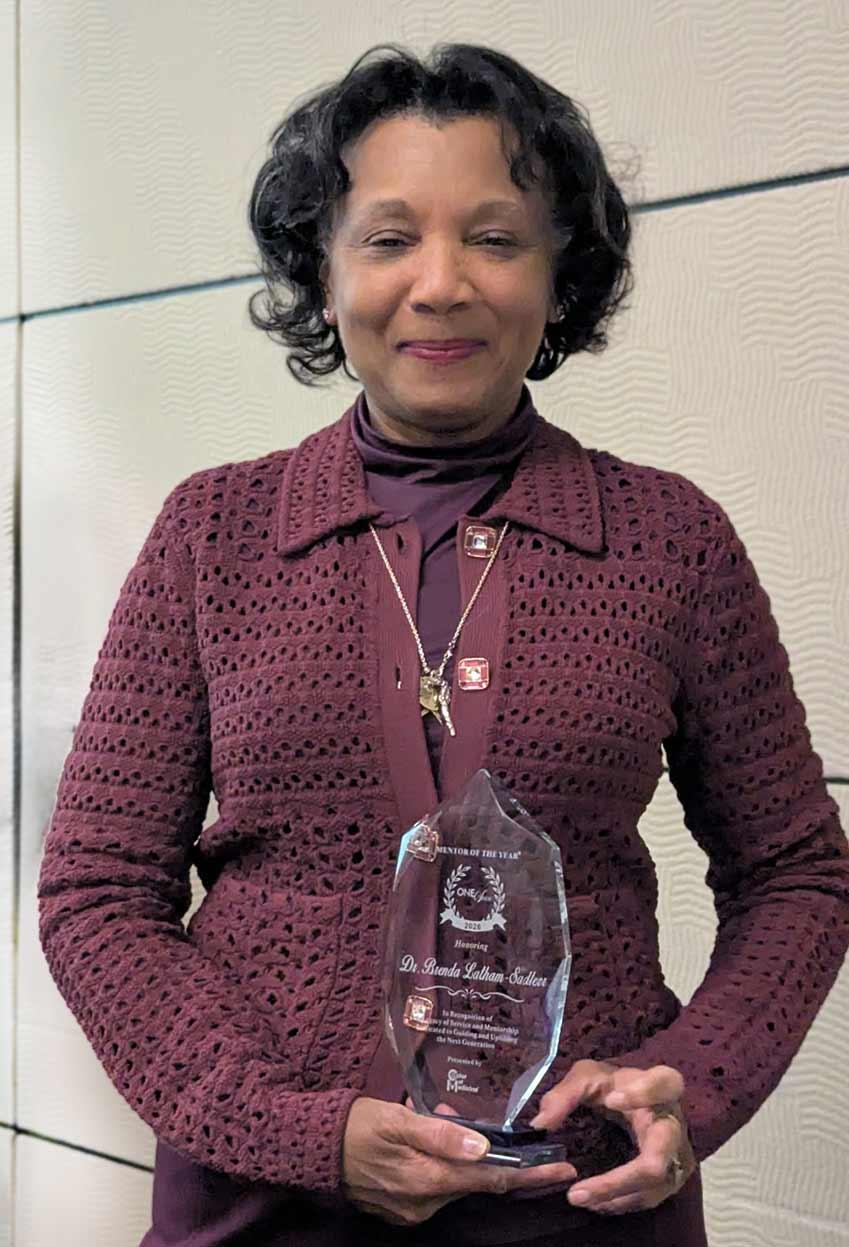
When Brenda Latham-Sadler, MD, ’78 looks back on her academic and professional career, the far-reaching impact of her time as an undergraduate student at Pace University is never far from her mind. Retirement presents a new chapter and a journey of its own—one that Brenda is pleased to be starting. It’s a time for well-deserved celebration: “I had about 150 people at my retirement party,” Brenda said. “We had margaritas and a DJ. How many academic medical centers do all that?”
For Brenda, it’s also an opportunity to reflect on a fruitful career as a medical professional and educator. Throughout her career, Brenda worked as a primary care doctor and spent more than three decades teaching as a professor at Wake Forest Baptist Health and Wake Forest University School of Medicine, where, though officially retired, she returns for guest lectures as professor emerita: a deeply fulfilling professional journey that began in Pace’s then small but mighty biology department.
At Pace, Brenda built the foundation for a proud career steeped in a deep passion for medicine and education—and she is not alone. Brenda recalls the Pace biology program of the 1970s as a tight-knit community of hardworking students and encouraging faculty members who helped lift each other up. Her fond memories reveal how Pace has persisted as a lasting presence in her and her classmates’ lives, the enduring impact of her professors’ support, and the ways the University has evolved and grown since her time on campus, while remaining a steadfast beacon of transformation and opportunity.
Brenda was born at Walter Reed Medical Center in Maryland. Both of her parents were in the Air Force, and she was raised in South Carolina on her grandparents’ tobacco farm. For much of Brenda’s upbringing, public schools in Horry County, South Carolina, were still segregated—only integrating in 1970, when Brenda entered high school. Despite the many challenges, Brenda is grateful for the education she received.
“Myrtle Beach is in Horry County, so we were fortunate to have that tourist base, which helped with funding education,” Brenda said. “We didn’t get hand-me-down books; we had good schools and teachers—and I think that made a difference.”
After her parents split up, Brenda spent her summers in New York, where her mother had moved for work.
Growing up, Brenda didn’t have the slightest inkling that she would one day pursue a career in medicine. “When I was young, I wanted to be a movie star,” Brenda said. “But then I realized I couldn’t sing and I couldn’t act, so that was out.”
Her mother was a medical assistant at a federally funded clinic in New York City. As she was exposed more to her mother’s work at the clinic, Brenda eventually became drawn to the study of medicine. Encouraged by the testimony of a colleague whose daughter had attended and loved her experience at Pace, Brenda’s mother urged her to attend the University and become a doctor.
“She was such a fan of Pace,” Brenda recalled.
Brenda heeded her mother’s advice and soon fell in love with Pace’s campus, location, and sense of community.
“When I visited, everybody just seemed really nice,” Brenda said. “I used to love to study in the library and look at the Brooklyn Bridge. I’d walk down to the World Trade Center. I just love that area. It’s so vibrant and alive, and right across the street from City Hall.”
As a student, Brenda remembers Pace’s biology program being smaller than other science departments—which she says allowed her and her classmates to form uniquely close relationships with their professors.
“Classes were relatively small, so you really got to know your professors,” Brenda said. “They were always so helpful and supportive.”
“Pace means opportunity—for me and for a lot of working people,” Brenda said. “They’re trying to do better, and Pace helps them get there."
Dudley Cox, PhD, the biology program’s chair during Brenda’s time at Pace, was a particularly influential presence for Brenda and her classmates.
“He was always helping us get our work done and supporting our education,” Brenda said. “He was very hands-on in helping students get jobs in labs and encouraging us to thrive academically.”
Professors like Cox helped prepare Brenda and many of her peers for the challenges of medical school. Fellow classmate Donald Moore ’76, an NYC-based physician and current Pace adjunct professor, echoed Brenda’s gratitude toward the biology faculty and the culture of support they cultivated.
“My academic memories are anchored in classrooms where curiosity was sparked and rigor was embraced,” Donald said. “My interest in medicine was awakened by a course called Biology for Non-Science Majors, taught by Dr. Chunosoff. What began as a general education requirement became a moment of transformation, helping me envision a future in medicine. Looking back, it stands as a reminder that inspiration often arises in unexpected places—and that a single course can alter the course of a life.”
Donald, too, fondly remembers the difference that program chair Cox made in the lives of his students: “His warmth, approachability, and characteristic smile conveyed a genuine care for students that left a lasting impression, even from afar. Sometimes it is these brief encounters that quietly shape our sense of belonging within an academic community.”
Brenda recalls feeling a strong sense of community among her classmates as well. Despite its relatively small size, the program was highly diverse.
“We had white, Black, Puerto Rican, Dominican, Jewish, and Catholic students,” Brenda said. “We all really supported and encouraged each other.”
The bonds Brenda formed at Pace have traveled with her long after graduation, including her friendship with Ronald Klinger ’78, who attended medical school alongside her at Wake Forest. Brenda said their education at Pace and their friendship with one another helped considerably in navigating the challenges of med school.
“Just like at Pace, we got our group together at Wake, we supported each other, and laughed, and dined together, and just made it through,” Brenda said. “I feel that Pace prepared us very well.”
Since her time at Pace, Brenda has enjoyed a flourishing career, primarily as an educator and administrator, passing the gift of education along to the next generation of medical professionals.
“Education is really important to me, because I see it as the stepping-stone that gets people out of poverty,” Brenda said. “That’s the other thing about Pace—I felt like it was a place where you could come in with very little and get support. A lot of my friends at Pace were from families who were struggling. I know the struggle, and I know the difference that education makes.”
A beneficiary of scholarship support herself—without which, Brenda says, she would not have been able to attend college—Brenda has leveraged her success to help others receive an education.
“Between my husband and me, we have given to eight different educational institutions,” Brenda said.
Among those institutions is Pace, where Brenda has founded a scholarship in honor of her brother, Curtis Cotton.
“My little brother has since passed, which is why I wanted to put the scholarship in his name,” Brenda said. “He also graduated from Pace. He was an educator too, in the New York school system.”
In addition to her philanthropy, Brenda is a dedicated volunteer. She was previously a board member at Youth Opportunities, an organization focused on providing a safe living space for disadvantaged youth. She was also a board member with the Urban League, whose work seeks to provide African Americans and other underserved communities with greater educational opportunities, and United Way, a nonprofit dedicated to providing support and promoting self-sufficiency among low-income earners.
"A lot of my friends at Pace were from families who were struggling. I know the struggle, and I know the difference that education makes.”
For as much as Pace may have done for her, it was Brenda’s industry, strength of character, and commitment to the principles of lifelong learning that have enabled her to build a career worth celebrating and to open doors for so many others along the way. When asked what Pace means to her today, Brenda answers without hesitation: opportunity.
“Pace means opportunity—for me and for a lot of working people,” Brenda said. “They’re trying to do better, and Pace helps them get there. Whether they’re trying to go into nursing, or finance, or the arts . . . oh man, you didn’t hear much about the theater department when I was there, but if I were there now, maybe I would learn to sing and dance.”
Looking at all that Brenda has accomplished, it’s not hard to imagine she would.
“In my office, I had all kinds of inspirational posters and things for students,” Brenda said. “‘If you want it, go get it.’ ‘Don’t be afraid to dream big.’ I think my favorite was this plaque that said, ‘When you feel like quitting, remember why you started.’ There’s going to be plenty of days when you feel like quitting—but if you can remember why you started, you know why those challenges are worth overcoming.”
From celebrating 120 years of Pace pride to earning national recognition, launching new centers, advancing sustainability, and empowering students to lead, this semester offered 10 inspiring reminders of Pace’s momentum—and the community driving it forward.

With record-breaking fundraising, growing alumni engagement, and a bold vision for Pace’s next chapter, Vincent D. Clark has been appointed Vice President for Development and Alumni Relations after leading the University through two historic years of philanthropic momentum.
From virtual patients to real-world readiness, students are training in high-stakes scenarios before they ever enter a clinic. Nancy Owen reveals how AI is reshaping that experience at Pace’s Center for Excellence in Healthcare Simulation.
From Peabody-winning storytelling and major musical theatre honors to global AI collaboration and civic engagement tied to the United Nations Sustainable Development Goals, Pace faculty are earning national and international recognition for work that reaches far beyond the classroom.

Pace University faculty earned national and international recognition this year across the performing arts, artificial intelligence, civic engagement, and global education, underscoring the breadth of faculty work shaping both creative fields and urgent global conversations.
At Sands College of Performing Arts, Clinical Assistant Professor Brendan Patrick Hughes received a 2025 Peabody Award for Divine Intervention, the podcast he wrote, hosted, produced, and directed. The series explores a largely overlooked chapter of the Vietnam War era, following a group of Catholic priests and nuns in 1971 Boston who provided political sanctuary to a draft resister and carried out draft board raids that drew the attention of J. Edgar Hoover’s FBI. “The opportunity I have at this school, to work with the young storytellers whose ideas will shape the future of the American narrative, is something I cherish every day.”
Sands faculty also earned major recognition in musical theater writing. Eric Price and Phillip Christian Smith were named 2026 Kleban Prize winners, while Adam J. Rineer received the 2026 Jonathan Larson Grant. Together, the honors recognize some of the most promising voices shaping the future of the American musical.
At the Seidenberg School of Computer Science and Information Systems, Christelle Scharff, PhD, received her third Fulbright recognition through the Fulbright Specialist Program. Her project with Université Numérique Cheikh Hamidou Kane in Senegal will advance AI knowledge exchange, collaborative research, and international academic partnerships.
Seidenberg Professor John Cronin also joined the Millennium Campus Network’s global Civic Learning Council, which supports student-led projects tied to the United Nations Sustainable Development Goals. Cronin has helped guide Pace students through the Millennium Fellowship, including projects focused on water quality, sustainability, and public health.
Together, these accolades reflect the range and impact of Pace faculty whose work reaches far beyond the classroom while directly enriching the student experience.
From celebrating 120 years of Pace pride to earning national recognition, launching new centers, advancing sustainability, and empowering students to lead, this semester offered 10 inspiring reminders of Pace’s momentum—and the community driving it forward.
For Brenda Latham-Sadler, MD, ’78, Pace was more than a place to earn a degree—it was the foundation for a remarkable career in medicine and service. As she celebrates retirement after decades as a physician and professor, Brenda reflects on the close-knit biology program, supportive faculty, and lasting friendships that helped shape her journey.
Through research, teaching, and interdisciplinary collaboration, Pace faculty from Dyson College and the College of Health Professions are helping students understand human trafficking as a complex human rights issue—one that demands knowledge, compassion, and care.
Pace University associate professor of biology Jeanmaire Molina’s decade-long effort to cultivate endangered Rafflesia reflects the power of faculty research to advance global conservation through community partnership.


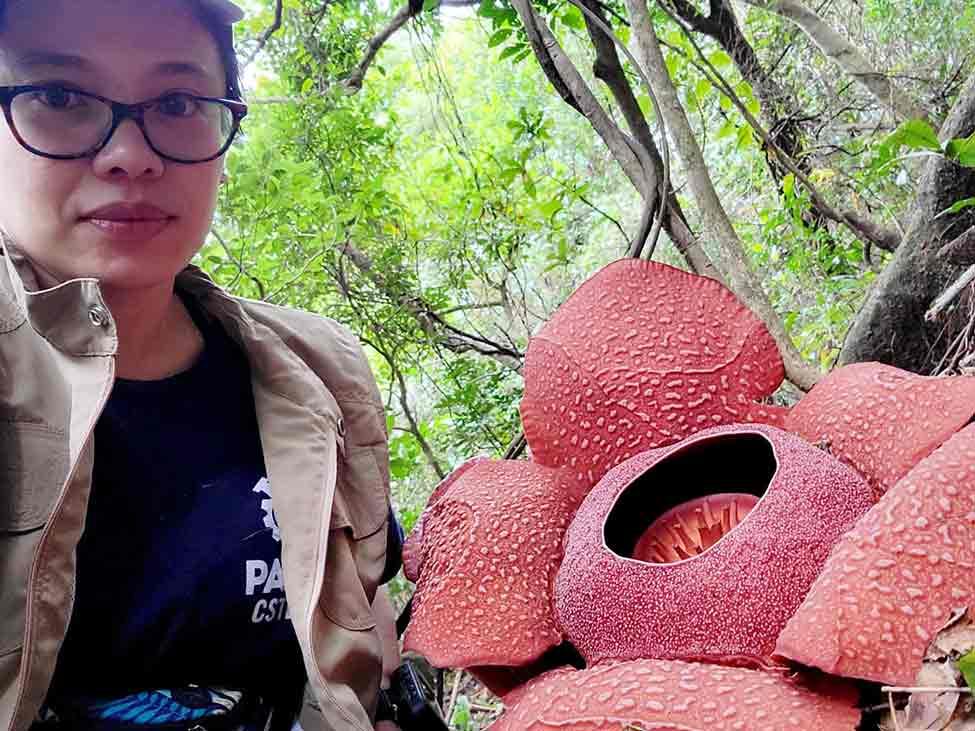
For more than 200 years, Rafflesia, the largest flower on Earth, a rare “corpse flower,” and one of the strangest and most endangered plants in the world, was widely considered nearly impossible to cultivate outside its native habitat.
Jeanmaire Molina, PhD, associate professor of biology in Pace University’s Dyson College of Arts and Sciences, has spent more than a decade trying to change that, collaborating on the propagation research with the United States Botanic Garden in Washington, D.C.
Now, that persistence has helped produce a landmark conservation breakthrough. In a newly published paper in Sibbaldia: The International Journal of Botanic Garden Horticulture, Molina and an international team of collaborators report the first documented cultivation of Rafflesia in the Western Hemisphere, a milestone that may help strengthen conservation efforts for a critically endangered plant that has long challenged botanists, horticulturists, and conservation scientists around the world.
For Molina, the accomplishment is both scientific and deeply personal.
Originally from the Philippines, Molina first encountered Rafflesia more than 20 years ago as a graduate student. The plant immediately captured her imagination. Known as the “panda of the plant world,” Rafflesia is charismatic, critically endangered, and biologically extraordinary. It is also commonly called a corpse flower because of its powerful odor, an adaptation that mimics rotting flesh to attract carrion flies for pollination.
But for most of its life, the plant is entirely hidden from view.
Unlike most plants, Rafflesia has no leaves, roots, or stems. It is a parasitic plant that lives inside the tissues of a host vine, Tetrastigma, where it can remain invisible for years before producing a bud and, eventually, a bloom. That cryptic life cycle is part of what makes the plant so fascinating and so difficult to study, cultivate, and protect.
“Growing a plant you cannot see” is more than the title of Molina’s new paper. It is the central challenge of the work.
The paper, “Growing a Plant You Cannot See: Ex Situ Propagation of the Endoparasite Rafflesia speciosa to Strengthen In Situ Conservation,” details the successful propagation of Rafflesia speciosa from the Philippines at the United States Botanic Garden (USBG). The work was made possible through collaboration among Pace University, the USBG, the Philippine Department of Environment and Natural Resources, the Municipality of Miagao in the Philippines, Sofi Mursidawati at Bogor Botanic Garden in Indonesia, and a broad network of scientists, horticulturists, students, and community partners.
The path to that breakthrough began modestly. In 2014, Molina launched a crowdfunding campaign to support her dream of bringing a Philippine Rafflesia to the Western Hemisphere as an ambassador for biodiversity conservation. In the pitch, she made a playful nod to Lady Gaga, another singular figure known for being extraordinary and impossible to ignore.
The campaign caught the attention of the USBG. That moment sparked a partnership between Molina and the USBG that has continued for more than a decade, fueled by Molina’s vision and later also supported by funding from the National Science Foundation. Along the way came years of trial and error: the USBG Horticulture team’s work found seeds that would not germinate, cuttings that rooted and then died, and grafts that failed, and Molina and collaborators’ annual fieldwork required patience and trust among partners.
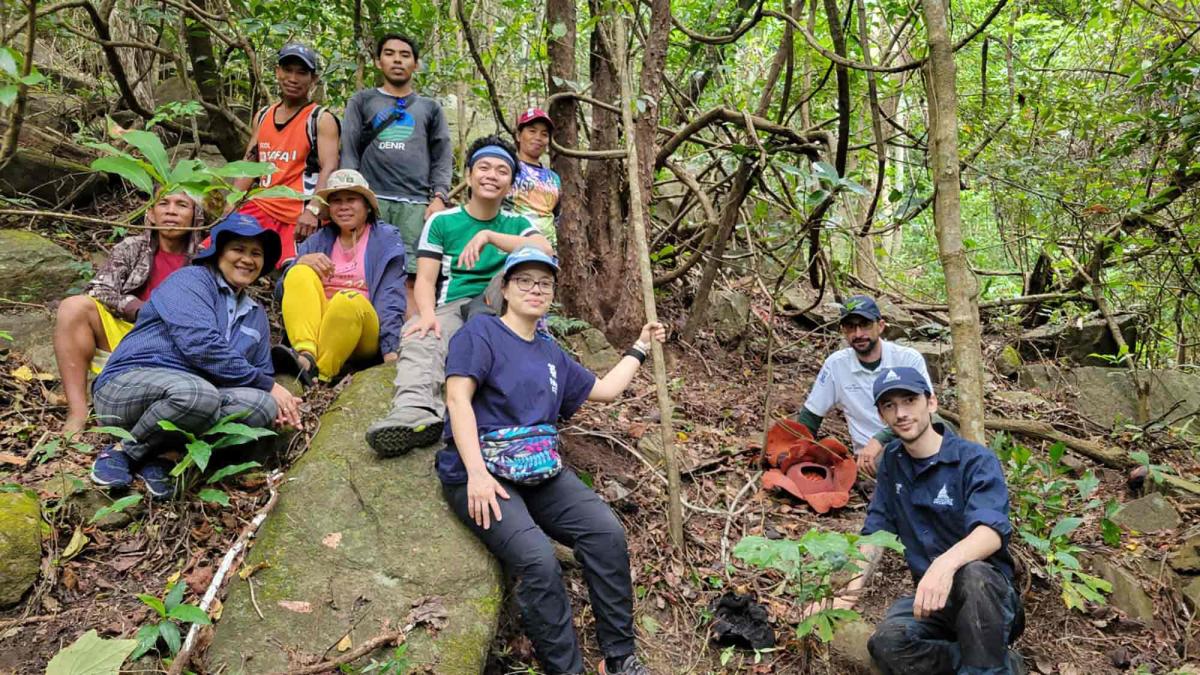
After years of failed attempts, Molina and her USBG collaborators were able to propagate Rafflesia-infected host material using two complementary approaches: rooting infected stem and root cuttings, and grafting infected root tissues onto established Tetrastigma vines. This latter practice was learned from Sofi Mursidawati at Bogor Botanic Garden in Indonesia. The team confirmed infection through molecular and histological testing, providing evidence that the parasite remained alive inside its host.
Then, finally, there were buds.
In 2025, one graft produced two Rafflesia buds, the first evidence of bud initiation outside Southeast Asia. Though the buds did not survive to bloom, the achievement marked a major scientific step forward. For a plant with high bud mortality in the wild, the emergence of buds in cultivation demonstrated that the botanical parasite had survived transport, grafting, and growth far from its native habitat.
For Molina, the breakthrough was profoundly emotional. She had spent more than a decade returning to the same challenge, often with hope followed by disappointment. Each year, she said, she would tell collaborators in the Philippines that “this is the year,” only to come back and explain that it had not worked. When she learned that Rafflesia buds had appeared at the USBG, the moment felt like confirmation that the invisible plant she had spent years trying to cultivate was alive.
“I actually cried when I was told that we have buds in DC,” Molina says. “It was so long.”
The bloom may still be years away. The science is still unfolding. Researchers continue to study what triggers Rafflesia to emerge from dormancy, how to improve bud survival, and how to use knowledge of the plant’s genetics, chemistry, microbiome, and host relationships to support future propagation.
But the milestone is already significant.
The work establishes replicable greenhouse propagation protocols for Rafflesia-infected Tetrastigma, offers a practical framework for confirming infection before buds emerge, and shows that infected tissues can persevere beyond the lifespan of the original plant material. Together, these advances create new possibilities for safeguarding one of the world’s most endangered plant groups.
Still, Molina is clear that the work is not simply about bringing Rafflesia to the Western Hemisphere. The deeper goal is to strengthen conservation where Rafflesia naturally grows.
“I actually cried when I was told that we have buds in DC,” Molina says.
In the Philippines, Molina, the USBG, and other collaborators have worked with local partners, government agencies, municipalities, and community members to share propagation and grafting techniques that can support in situ conservation, the protection and recovery of species within their native ecosystems. That means helping build local capacity to propagate and protect Rafflesia in the forests where it belongs.
This community-centered approach is central to the work of Molina and the USBG. Conservation, she emphasizes, cannot be disconnected from the people who live near and steward the forests that sustain rare species. By teaching propagation techniques and supporting local conservation efforts, the project helps communities develop practical tools to protect Rafflesia and the host vines, and the forest ecosystems on which it depends.
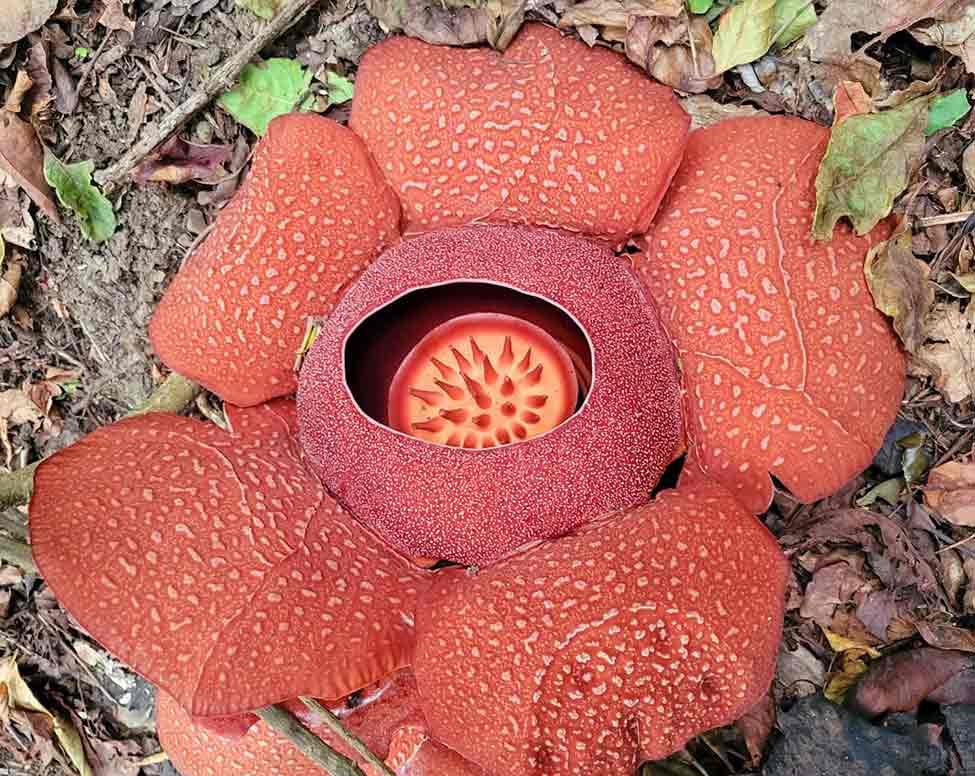
The long-term vision is both ecological and community-focused: healthier forests, stronger local conservation practices, and future opportunities for sustainable ecotourism that can make intact forests more valuable than cleared land. In places where rare blooms can attract visitors, Rafflesia has the potential to support alternative livelihoods while reinforcing the importance of forest protection.
That is one reason Molina sees the work as a partnership, not a one-way transfer of expertise.
“Now that we’ve been successful in ex situ propagation, we also have to continue teaching the local Filipino community how to do this,” Molina says. “Once it blooms, tourists can go there, and that can provide an alternative livelihood so they don’t have to clear their forests. Having a Rafflesia there changes the game.”
The project brings together scientific research, horticultural experimentation, field conservation, community training, and international collaboration. It also reflects Molina’s belief that conservation depends on humility: listening across borders, disciplines, and communities; sharing knowledge; and recognizing that the survival of a species is inseparable from the landscapes and people around it.
That same philosophy shapes Molina’s work at Pace.
Her students know Rafflesia well. Many have heard her stories, seen photos of the massive flower, and learned how a plant that looks like an evolutionary oddity can reveal profound lessons about biodiversity, ecology, adaptation, and extinction. That student-centered approach is reflected in the publication itself: one of the coauthors, James Hill, was a Pace biology student who contributed to the histological analysis of Rafflesia-infected host tissues. For Molina, teaching students about Rafflesia is part of a larger mission: helping the next generation see plants not just as background scenery, but as essential living systems inextricably linked to our own existence.
“I always involve students in my research,” Molina says, “because it’s not just important to cultivate Rafflesia, but also to cultivate the next generation of scientists who will carry on this mission.”
For students, Rafflesia also raises the kind of question that can change how they understand the natural world.
“People always ask if this is a parasitic plant, why rescue it, why save it?” Molina says.
Her answer is rooted in ecology. Plant parasites, she argues, are not merely biological curiosities. They function as important ecological players, shaping host populations, influencing competition, and reflecting the health of larger ecosystems. To protect Rafflesia is to protect more than a flower. It is to protect the relationships among plants, pollinators, forests, and communities.
That is the kind of research impact that defines Pace University’s faculty.
Across disciplines, Pace scholars are asking urgent questions, building partnerships, involving students, and applying their expertise to challenges that matter far beyond campus. Molina’s work is a vivid example: research rooted in deep scientific inquiry, sustained by international collaboration, and directed toward real-world conservation outcomes.
“I always involve students in my research, because it’s not just important to cultivate Rafflesia, but also to cultivate the next generation of scientists who will carry on this mission.”
A plant long considered impossible to cultivate has been propagated outside of its native range. A critically endangered species has new tools for conservation. A collaboration with a national botanic garden. Local partners in the Philippines are gaining techniques that can support recovery efforts in native habitats. And Pace students are learning from a scientist whose work shows that research can be rigorous, collaborative, and globally consequential.
For Molina, cultivating Rafflesia is only part of the mission.
The larger goal is to cultivate conservation advocates: students, scientists, partners, and communities who will carry the work forward.
Because once a species is gone, it cannot be brought back. And sometimes, saving what remains begins with learning how to grow what cannot yet be seen.

Pace Professor Cathryn Lavery, PhD, challenges the Hollywood myths surrounding human trafficking and prepares students to recognize the grooming, coercion, trauma, and exploitation happening in homes, relationships, online spaces, and everyday communities.

Dyson Professor Melvin Williams speaks with USA Today about the first trailer for Shrek 5, explaining how Fiona's slimmer appearance reflects longstanding gender expectations surrounding aging and body image in popular culture.

Pace University’s award-winning documentary film team, PaceDocs, today released its latest film, Stories Come Together. It follows a successful premiere at the Jacob Burns Film Center, which last week brought together students, alumni, faculty, and supporters to celebrate the lasting impact of the University’s documentary filmmaking program.
Get a first look inside the new performing arts spaces opening at One Pace Plaza East this fall. In this video, Senior Director of Operations and Production Laurie Brown-Kindred answers student and faculty questions about new studios, labs, sound stages, rehearsal spaces, and what the move means for Sands College of Performing Arts.


This fall, Pace University’s Sands College of Performing Arts will expand into exciting new spaces at One Pace Plaza East, bringing new studios, labs, production spaces, sound stages, faculty offices, and student resources to the heart of the New York City Campus.
In a new video, Senior Director of Operations and Production Laurie Brown-Kindred answers questions from students and faculty about what to expect, including how the new spaces will be used, where classes will take place, and what resources will be available when the building opens for the Fall 2026 semester.
Watch the video to learn more about the future of performing arts at Pace—and get a first look at what’s ahead.
From a 390-foot crane to thousands of new light fixtures, the transformation of One Pace Plaza East is a story told in big numbers, bold spaces, and behind-the-scenes precision. Go inside the construction of Pace’s future-facing downtown campus hub—one seat, studio, stage, and catwalk at a time.
Inside the newly revitalized One Pace Plaza East, Pace University’s Commercial Dance students got their first glimpse of a space built for the way they move, create, and collaborate. What began as a social media shoot became a live lesson in experiential learning, as Sands students choreographed, directed, and performed original movement in minutes—offering a joyful preview of Pace’s next chapter in the performing arts.

The future of the arts at Pace is under construction. Inside One Pace Plaza East, Sands College of Performing Arts students and faculty are preparing to create, collaborate, and perform in spaces built for bold ideas and bright lights.
Starting on July 1, 2026, the Graduate PLUS Loan program will be phased out, and there will be new limits on graduate student loans. Read more about these important changes to graduate student financial aid, how it affects current and incoming grad students, and how new graduate students can fill in the funding gap.


Starting July 1, 2026, big changes are coming to federal student loans, including the elimination of the Graduate PLUS Loan Program, which many graduate students used to cover the costs of their degree. At Pace, we are committed to helping graduate students understand these changes and explore the funding options available, and so we offer this overview of the changes and suggestions for how you can secure funding.
Whether you’re new to graduate school financing or not, federal loans can feel like a maze of acronyms and fine print. Here’s an overview of what funding is available to graduate students, so you have the context to understand what’s changing and how it affects you.
Graduate students have traditionally had access to two main types of federal loans:
For many graduate students, Grad PLUS Loans were a critical piece of the funding puzzle. Their elimination is a major change. What we want you to know is this: graduate students should review alternative financing options, and Pace is available to assist in that process.
On July 4, 2025, H.R.1 — more commonly known as the “One Big Beautiful Bill Act” (OBBBA) — was signed into law. This new legislation brought many changes to the U.S. tax code and federal spending, including significant changes to higher education policy. For graduate students, the provisions below have a direct impact on how you’ll fund your degree:
Let’s take a closer look at each one.
The biggest change that directly affects graduate students is that, starting July 1, 2026, graduate students will no longer be able to take out Grad PLUS loans.
As outlined above, Grad PLUS loans allowed graduate students to borrow up to their full cost of attendance. But the borrowing limits weren’t the only thing that made them appealing. Unlike private loans, Grad PLUS loans required no cosigner; only a basic credit check; and came with federal protections, including eligibility for Public Service Loan Forgiveness (PSLF), a program that forgives remaining federal loan balances for borrowers who work in qualifying public service roles after 10 years of payments.
Effective July 1, 2026, Grad PLUS loans will no longer be available to new borrowers. Graduate students will instead be limited to Graduate and Professional Direct Unsubsidized loans, which carry lower borrowing caps and do not offer the same federal protections — changes we’ll explain in the next section.
The second biggest change that directly impacts graduate students is how the limits for Federal Direct Unsubsidized Loans have been restructured. These limits aren’t new — Direct Unsubsidized loans have always had borrowing caps — but with Grad PLUS loans phased out, they now represent the ceiling on federal borrowing rather than a baseline.
Graduate programs designated as “professional degrees” may borrow up to $50,000 per year, with a lifetime limit of $200,000 in Direct Unsubsidized Loans. As defined by the OBBBA, a professional program is one that leads to a professional degree, typically at the doctoral level, which prepares students for licensed practice in a regulated profession.
The programs currently designated as “professional” are:
All other programs are considered “graduate degree” programs, with a lower cap of $20,500 per year and a lifetime limit of $100,000 in Direct Unsubsidized loans. Notably, the following programs have been reclassified from “professional” to “graduate” under the new legislation, meaning students in these fields are only eligible for aid at the lower limit:
In all cases, these borrowing limits are not guaranteed to cover the full cost of a program, and graduate students may need to supplement with additional loans or other sources of financial aid. We’re committed to helping you understand and explore every option available to you, so we’ll cover these supplemental sources in more detail later in this guide.
The OBBBA significantly reduces the number of federal loan repayment options available to borrowers. As of July 1, 2028, these income-driven repayment (IDR) plans will no longer be available:
The Saving on a Valuable Education (SAVE) plan, which tied payments to income and offered forgiveness after 20–25 years, was terminated early following a 2025 court ruling. As such, it is no longer accepting enrollments.
If you’re currently on one of these plans, the repayment options available to you after July 1, 2028 will depend on when you first borrowed. Borrowers who took out PAYE, ICR, or SAVE loans before July 1, 2014 will need to move to one of the following:
Borrowers who took out PAYE, ICR, or SAVE loans between July 1, 2014 and July 1, 2026 will need to move to the RAP, the Standard Repayment Plan, or the 2014 IBR, which is an updated version of the Original IBR that caps payments at 10% of discretionary income and offers forgiveness after 20 years.
The options for borrowers who take out new loans on or after July 1, 2026 are narrower still. Neither the Original nor the 2014 IBR will be available to new borrowers, leaving only two paths forward: RAP and the Standard Repayment Plan. For many graduate students, this means less flexibility in terms of how you manage repayment after graduation, and potentially a longer road to loan forgiveness.
Note that if you’re employed by a government or not-for-profit organization, you might be eligible for the Public Service Loan Forgiveness (PSLF) Program. The PSLF Program forgives the remaining balance on your Direct Loans after 120 qualifying monthly payments have been paid and you’ve been working full-time for an eligible employer.
Making sense of these changes can feel overwhelming, and it’s understandable to worry about whether you’ll be able to afford a graduate degree in light of them. Just know that Pace’s representatives are here to help you find your footing; we encourage you to reach out if you have any questions or need support.
After July 1, 2026, these rules apply to all graduate students who start a new graduate program — either a recognized professional program or a graduate program. You’ll still be able to apply for Direct Unsubsidized loans, but you’ll need to take on additional private loans or secure other means of financial aid to make up for any gaps in funding to cover the full cost of attendance.
Financial aid for the 2025–2026 academic year is not changing. Any graduate student who borrowed a Federal Direct Loan — either an Unsubsidized or a Grad PLUS loan — for their current program before July 1, 2026 is grandfathered in under current rules. That means you can continue to borrow Grad PLUS loans up to your cost of attendance (minus all other aid) for up to the remaining length of your program or until you finish your program, whichever comes first.
Example: Many graduate programs at Pace are classified as 2 year programs, which is considered 2 years at full-time enrollment. If you have been enrolled for one year already, no matter how many credits you have taken, you will only be grandfathered for one more year.
To maintain this eligibility, Pace graduate students must remain continuously enrolled in Fall and Spring Semesters at a minimum of six credits per semester. Any leave of absence will end this eligibility.
For additional details on the OBBBA impacts on student loans, including changes to Parent PLUS Loans, FAFSA applications, and repayment plans, see Pace University’s page on The One Big Beautiful Bill Act and Financial Aid.
| July 4, 2025: | The One Big Beautiful Bill Act (OBBBA) was signed into law |
| October 1, 2025: | FAFSA opened for the 2026–2027 academic year |
| June 30, 2026: | Federal FAFSA deadline for the 2025–2026 academic year |
| July 1, 2026: | The new federal grad rules take effect:
|
| June 30, 2027: | Federal FAFSA deadline for the 2026–2027 academic year |
| June 30, 2028: | Deadline for current graduate borrowers to enroll in either the IBR or RAP repayment plans |
| June 30, 2029: | Access to Grad PLUS loans ends for all grandfathered student borrowers |
Despite the end of the Grad PLUS program, there are still federal loans and federal student aid options available for new graduate students. It’s important that you understand all the options still available to you; here’s a breakdown:
With the changes to federal funding, most graduate student borrowers will now need to rely on a mix of funding sources, including private loans and other sources of financial aid. Here are some resources to help get you started:
Private Education Loans are credit-based loans borrowed by the student. Pace University does not recommend any particular private lenders. We will accept and certify a loan from any lender the student chooses. You may utilize Pace University's ELM Select page to review a historical list of lender options.
Organizations, such as private corporations, non-profit organizations, and local community organizations, offer scholarship opportunities to students. Pace’s Third Party Scholarship Resources page lists several ways that students can find third-party scholarship opportunities.
The Financial Aid Office also recommends that students research local scholarship opportunities through community groups, high school clubs, religious institutions, parent and student employers, and professional associations such as the:
Graduate Assistantships are tuition reimbursements and stipends available to students who have shown academic accomplishment, skills, and related experience. Full, part-time, and quarter-time assistantships (in research and/or administrative positions) are awarded by the academic department through which the student is admitted. Students will need to file the Graduate Assistantship application, available in the application for admission, to be considered for an Assistantship. Students cannot have a graduate scholarship and a graduate assistantship.
There are several prestigious fellowships and scholarships available to nominated or recommended Pace students. See the full list of awards and their requirements on our Graduate Scholarship and Awards page.
Pace University’s Solution Centers, located on the New York City, Pleasantville, and White Plains (Law) campuses, provide students with a centralized place to go for all questions about financial aid. You can also find links to additional resources on our Financial Aid Resources page.
New York State funds the Education Debt Consumer Assistance Program (EDCAP), a program of the Community Service Society of New York (CSS), to help current borrowers with the student loan repayment system and assist future students in applying for financial aid. If you’re looking for additional assistance in navigating graduate loans, EDCAP offers free loan counseling for New Yorkers. Between Pace’s own resources and programs such as EDCAP, there’s support available to you every step of the way as you navigate graduate degree financing changes, so don’t hesitate to use it.
What is the OBBBA?
The One Big Beautiful Bill Act (OBBBA) is a budget reconciliation bill that was passed on July 4, 2025. This Act has now been rebranded as the Working Family’s Tax Plan. It brought many different changes to the U.S. tax code, including simplifying loan programs, capping borrowing, and reducing long-term federal lending exposure. The OBBA heavily reshaped student financial aid, including major changes to graduate borrowing and shifting more responsibility from the federal government to schools, employers, and private funding sources.
What is an unsubsidized federal loan?
A Direct Unsubsidized Loan is a federal student loan available to graduate students regardless of financial need. Interest begins accruing as soon as the loan is disbursed, and the student is responsible for paying all interest, during school and after. These loans have fixed interest rates and annual and lifetime borrowing limits.
What’s changing with graduate student loans?
The biggest change to graduate student loans with the OBBBA is that Graduate PLUS loans will end for new borrowers after July 1, 2026. Instead, graduate students will rely primarily on Direct Unsubsidized Loans, which have strict annual and lifetime caps. This means new borrowers may not be able to cover the full cost of attendance with federal loans alone.
Are other student loan rules changing?
Yes, other student loan rules are changing. The OBBBA introduces new borrowing limits, simplifies repayment into fewer plans, and replaces existing income-driven options with a new repayment structure. These changes affect how much students can borrow and how repayment and forgiveness work after graduation.
What if I already have Graduate PLUS Loans?
If you already have Graduate PLUS loans and stay in the same program, you can typically continue borrowing under current rules for a limited time (either for the remaining length of your program or until you finish your program) up to the cost of attendance. You must remain continuously enrolled through the Fall and/or Spring semester in a minimum of 6 credits per semester.
Note that the published length of Pace’s programs is based on enrolling full time. If a student that has been in a full-time four year program for three years and hasn't finished goes part time, they will only have one more year of eligibility, not three.
A leave of absence will end this eligibility. New students do not have access to this program.
What happens if I reach the maximum borrowing limit?
If you reach the maximum borrowing limit — either annual or lifetime — you’ll need to cover any remaining costs through scholarships, fellowships, assistantships, employer benefits, or private loans. This makes early financial planning critical, especially for higher-cost graduate or professional programs.
Securing financial aid can feel like a complex process, which is why Pace University’s Financial Aid Office remains dedicated to supporting the Pace Community throughout these changes and beyond. We encourage prospective students to visit our Financial Aid page to learn more about the funding options at Pace.
We encourage you to connect with the Financial Aid Office if you have questions about loans, grants, scholarships, or other aid options. Appointments are available in person, by phone, virtually, or as walk-ins. Just click on our Qless contact request to schedule an appointment and a financial aid representative will be with you as soon as possible.
Haub Law Professor Bennett Gershman joins Bloomberg Law's UnCommon Law podcast to examine how the U.S. Department of Justice makes charging decisions, discussing prosecutorial discretion, selective prosecution, and the importance of preserving the Justice Department's independence from political influence.
