Image
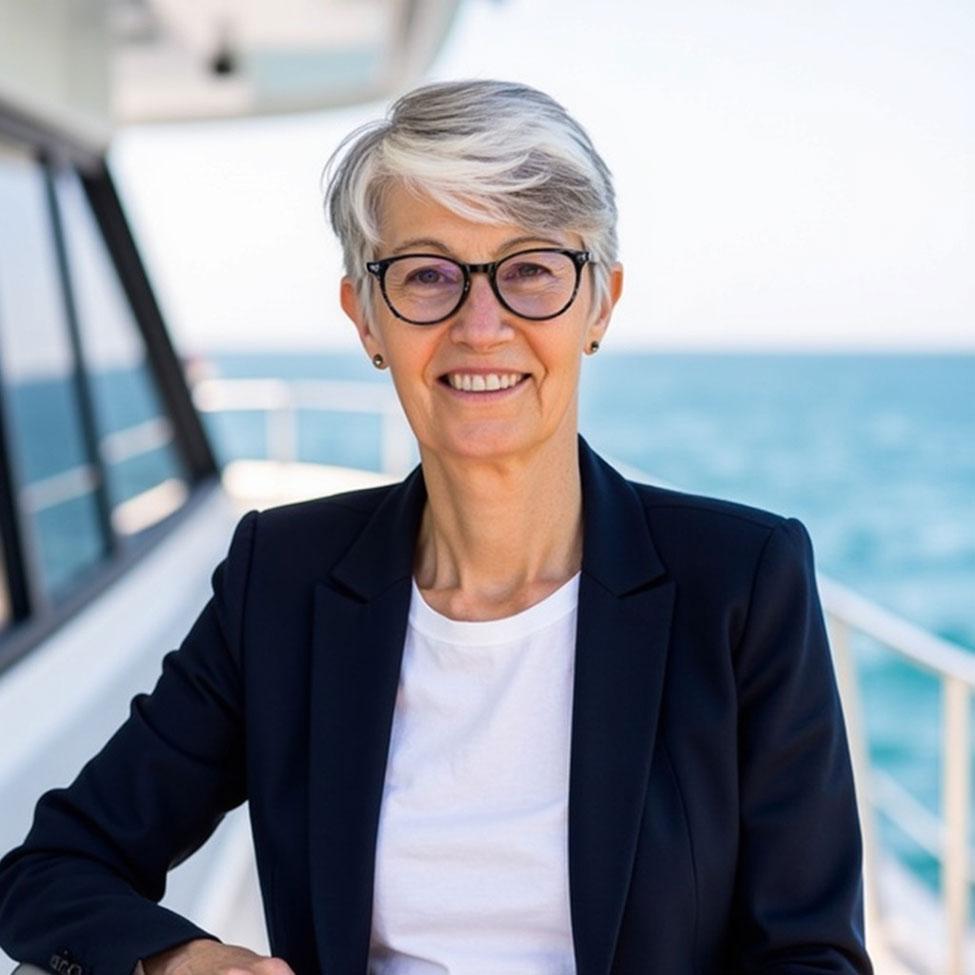

Belinda Anderson, PhD, MA(Ed), LAc, began her career as a molecular biologist. But even as she studied the mechanisms of modern science, she remained curious about questions that biomedicine alone could not always answer.
“I always had the feeling that science wasn’t the whole story,” says Anderson, associate dean and professor of allied health in Pace University’s College of Health Professions.
That curiosity led her to Chinese medicine, a field she had encountered personally through acupuncture and herbal treatments. While continuing her work as a scientist, she pursued a master’s degree at the Massachusetts College of Pharmacy and Health Science’s New England School of Acupuncture and became a licensed acupuncturist.
Her career since then has been defined by integration: connecting ancient healing practices with modern research, clinical care, and health education.
Anderson has participated in acupuncture clinical trials, studied how acupuncture can be implemented in community-based clinics, and helped clinicians incorporate research and evidence-based medicine into their practice. More recently, her work has examined real-world clinical evidence drawn from electronic health records.
Unlike a traditional clinical trial, which studies a treatment under tightly controlled conditions, real-world research can reveal how acupuncture is delivered across different practices and patient populations. Researchers can examine anonymized records to understand how patients with conditions such as chronic pain respond to treatment, how clinicians make decisions, and how symptoms change over time.
Anderson also serves as a consultant on an NIH-funded study examining acupuncture access, utilization, and outcomes among Medicare beneficiaries with chronic lower-back pain. The project addresses a significant gap in care. Although Medicare began covering acupuncture for chronic lower-back pain in 2020, only acupuncture delivered under supervision within a health system clinic can be reimbursed because licensed acupuncturists cannot directly bill Medicare and around 80% of licensed acupuncturists work in private practices. This significantly limits the ability of seniors to access acupuncture treatment.
“The common language for healthcare is, ‘Show me the evidence,’” she says. “Any therapeutic intervention that has evidence from scientific studies to be beneficial should be considered for patients.”
For Anderson, the project represents how far acupuncture has come—and how far the healthcare system still needs to go.
Thirty years ago, she says, many colleagues viewed acupuncture with deep skepticism. Moving from molecular biology into Chinese medicine meant going “from being a professional who was respected to being someone who people thought was a quack.”
Today, acupuncture is increasingly incorporated into hospitals, medical centers, and multidisciplinary treatment plans. Physicians regularly refer patients for care, and a growing body of research supports its use for a wide range of different conditions beyond just pain.
Yet access remains uneven. Many patients cannot afford treatment because insurance coverage is limited, while some clinicians remain reluctant to recommend therapies they do not fully understand.
Anderson believes the best response to skepticism is evidence.
“The common language for healthcare is, ‘Show me the evidence,’” she says. “Any therapeutic intervention that has evidence from scientific studies to be beneficial should be considered for patients.”
“The goal of being a clinician is to help patients heal, be well, and live full and satisfying lives,” she says.
That philosophy also shapes her clinical work. A licensed acupuncturist since 2004, Anderson specializes in women’s health and fertility. From 2009 to 2018, she practiced at the New York University Fertility Center, working alongside reproductive endocrinologists and treating patients undergoing assisted reproductive procedures, including in vitro fertilization.
The collaboration offered a powerful example of integrative medicine: different healthcare traditions working together according to their strengths.
Modern biomedicine is indispensable for emergencies, serious illnesses, and life-threatening events, Anderson explains. Complementary therapies offer additional support for chronic pain, reproductive health concerns, digestive conditions, mental health challenges, and other long-term conditions.
“The goal of being a clinician is to help patients heal, be well, and live full and satisfying lives,” she says.
Anderson has taken this mentality of collaboration and healing and translated it into the Pace classroom, working directly with many master level programs. Most recently as a guest lecturer for the Occupational Therapy, MS program, she introduced students to traditional Chinese medicine as a complementary health approach and its role in supporting health, wellness, and healing.
“The goal wasn't to teach students how to perform acupuncture, but rather to help them understand when it may be an appropriate recommendation for clients and how it can complement occupational therapy (OT) services” explained Clinical Assistant Professor Alison Rebels, OTD. “Dr. Anderson’s lecture gave students a chance to learn about collaborating with other healthcare professionals and explore career pathways for OTs who may be interested in pursuing additional training or dual credentials in acupuncture.”
Students were also given the chance to experience auricular acupuncture first hand using a protocol with needles in the ear, meant for stress relief.
Beyond Pace, Anderson serves on the board of the National Certification Board for Acupuncture and Herbal Medicine, as deputy editor of Explore: The Journal of Science and Healing, and as co-chair of the Research Working Group of the Academy of Integrative Health and Medicine.
Across those roles, her mission remains consistent: evaluate treatments rigorously, educate clinicians, expand access, and build a healthcare system in which evidence and patient needs matter more than whether a therapy was once considered conventional or alternative.

From celebrating 120 years of Pace pride to earning national recognition, launching new centers, advancing sustainability, and empowering students to lead, this semester offered 10 inspiring reminders of Pace’s momentum—and the community driving it forward.

Through research, teaching, and interdisciplinary collaboration, Pace faculty from Dyson College and the College of Health Professions are helping students understand human trafficking as a complex human rights issue—one that demands knowledge, compassion, and care.

From virtual patients to real-world readiness, students are training in high-stakes scenarios before they ever enter a clinic. Nancy Owen reveals how AI is reshaping that experience at Pace’s Center for Excellence in Healthcare Simulation.