Image
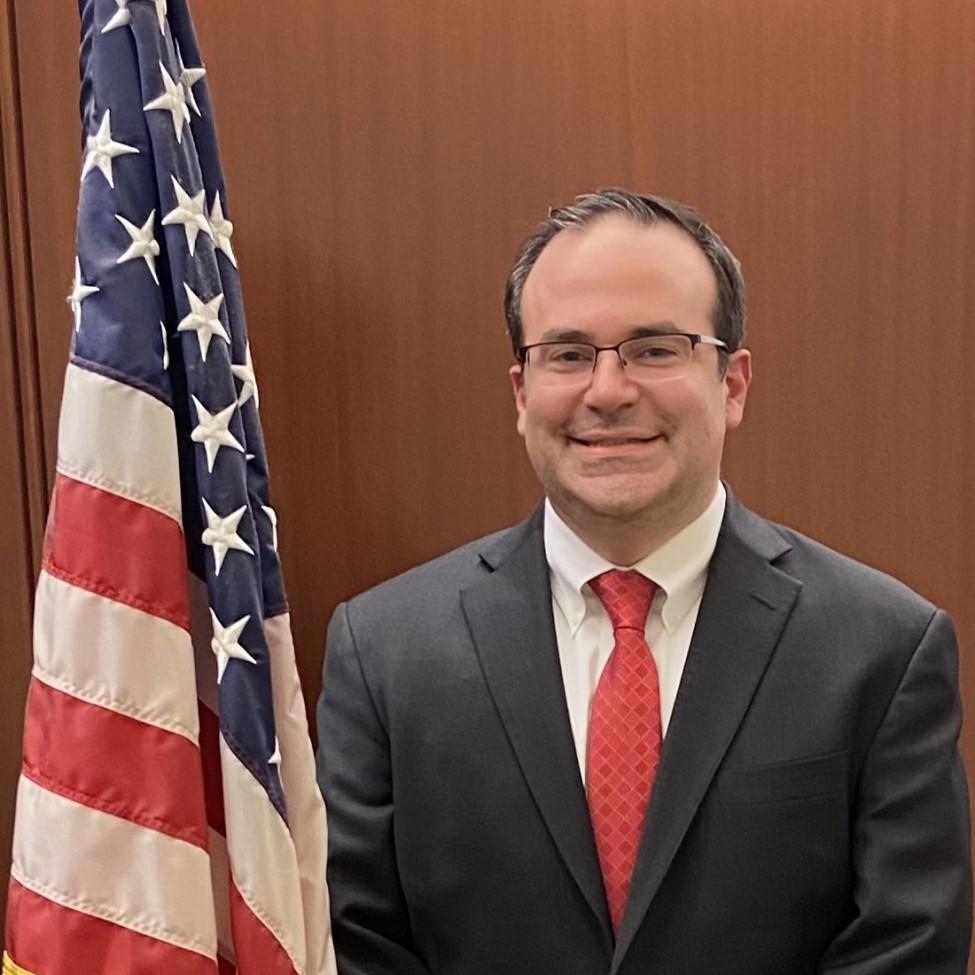
A 2010 Haub Law alumnus, the Honorable Joseph A. Marutollo was appointed as a United States Magistrate Judge for the United States District Court for the Eastern District of New York on September 25, 2023. Previously, he was an Assistant United States Attorney in the Civil Division of the United States Attorney's Office for the Eastern District of New York, serving as Chief of the Civil Division. Judge Marutollo also serves as an adjunct professor at the Elisabeth Haub School of Law at Pace University. We sat down with him to chat about his experience at Haub Law, on the bench, and beyond.
During your time at Haub Law, you participated in the Federal Judicial Honors Program (FJHP), how did you find that experience?
The FJHP offers law students the opportunity to work closely with federal judges and gain knowledge about the inner workings of the federal court system. I had the good fortune of interning for the Honorable Richard J. Sullivan, who, at the time, was a U.S. District Judge for the Southern District of New York. In 2018, Judge Sullivan was subsequently sworn in as a U.S. Circuit Judge for the U.S. Court of Appeals for the Second Circuit.
Interning for Judge Sullivan was one of the most rewarding experiences of my career. Judge Sullivan assigned me to draft opinions and prepare legal memoranda involving a host of legal issues. Importantly, over the course of the internship, Judge Sullivan personally took time out of his busy schedule to regularly meet with me and provide helpful feedback on my writing and analysis. My experience with Judge Sullivan was perfect preparation for my subsequent work as a federal prosecutor and now as a federal magistrate judge.
During my internship, I also observed Judge Sullivan’s tireless work ethic and his meticulous preparation for each of his cases—qualities that I have tried to emulate in my own career. Judge Sullivan is truly the epitome of what a judge should be: reasonable, prudent, and committed to the true administration of justice.
Judge Sullivan kindly served as one of the featured speakers at my judicial investiture ceremony in Brooklyn in 2024 and he remains a wonderful mentor and role model to me.
What did you take with you from the FJHP into your career post-law school?
Besides the insight into federal litigation and the work of federal practitioners, FJHP also showed me the enormous effect an internship could have on a student’s career. Judge Sullivan frequently remarked that it is imperative to “pay it forward.” Similar to Judge Sullivan’s role in my career path, I have tried to “pay it forward” by serving as a mentor for my interns. While at the U.S. Attorney’s Office, I regularly worked to hire Haub Law interns for the summer internship program. Now, as a federal magistrate judge, I routinely hire Haub Law students for fall, spring, and summer internships. I hired a Haub Law and FJHP alumna, Katelyn (Rauh) Climaco '21, to be one of my first two law clerks, and she did a terrific job.
I am also thrilled to now be one of the judges in the FJHP program. I currently have an extraordinary 2L student assigned to my chambers. I am honored to be the first Haub Law alumnus to ever serve as a federal judge in the Eastern District of New York, and I know many more Haub Law alumni will join the federal bench in the years to come—especially given the magnificent work of FJHP.
Who were some of your favorite professors and what were some of your most memorable experiences from your time at Haub Law?
In addition to my positive experience with the FJHP, I am grateful to have served on the Pace Law Review, where I received extensive training in legal writing and legal editing. I am also thankful to have had myriad smart and caring professors at Haub Law, including Professors Michael Mushlin, Carol Barry, Michelle Simon, and Emily Gold Waldman.
Since graduating in 2010, you have remained active with Haub Law, most recently in serving as an Adjunct Professor – what is your favorite part of being a professor?
At Haub Law, I teach Legal Skills to first-year law students in the Flex JD program. The Flex JD Program offers flexible scheduling options to help law students balance their professional and personal commitments with their goals of obtaining a law degree. It has been extremely rewarding to see my students develop their legal writing and advocacy skills over the course of this two-semester class.
What advice do you have for students graduating from law school who want to pursue a career in public service?
Attending Haub Law afforded me the opportunity to pursue a career in public service. I have spent my entire legal career in the public sector and have enjoyed it immensely. I strongly encourage all law students to consider working in public service at some point in their careers, as the work is both important and fulfilling. I also encourage all law students to follow Abraham Lincoln’s sage advice to a young lawyer starting his career. Lincoln – who, interestingly, signed the act of Congress that created the Eastern District of New York in 1865 – told the young lawyer that “the leading rule for the lawyer is diligence. Leave nothing for tomorrow, which can be done today. Never let your correspondence fall behind. Whatever piece of business you have in hand, before stopping, do all the labor pertaining to it which can then be done.” Lincoln added that “work, work, work is the main thing.” Lincoln’s advice is powerful and practical, especially for those considering working in the public interest.

As the Pace Women’s Justice Center marks 35 years of advocacy, Executive Director Cindy Kanusher, JD, examines the legal obstacles facing survivors, the shortcomings of the justice system, and what it takes to help thousands of people find a path forward.

Professor Emily Gold Waldman has been awarded the 2026 Goettel Prize for Faculty Scholarship.

Haub Law launches the Environmental Law Fifty Fund to support innovative research, scholarship, and collaboration among junior environmental law scholars.