Image
At Pace University, undergraduate research is more than an opportunity to explore new ideas. It's a chance for students to work alongside experienced faculty to learn research methods, develop critical, innovative thinking, acquire a range of professional skills, and contribute to discoveries that extend well beyond the classroom.
That commitment to hands-on experiential learning is at the heart of Pace's Faculty Undergraduate Research Mentor Award, which recognizes faculty members who demonstrate exceptional dedication to guiding and supporting undergraduate researchers.
Established in 2024 following a generous gift from a Pace alumnus who was inspired by the impact of faculty mentorship, the award celebrates professors who make research accessible, encourage intellectual curiosity, and prepare students for success in their chosen fields.
This year's recipients, Rita K. Upmacis, PhD, and Michael J. Rubbo, PhD, both of Dyson College of Arts and Sciences, exemplify that commitment. Through their work in chemistry and environmental science, they are helping students build confidence, develop practical research skills, and discover their potential as scientists and scholars.
Dyson College of Arts and Sciences, Chemistry and Physical Sciences
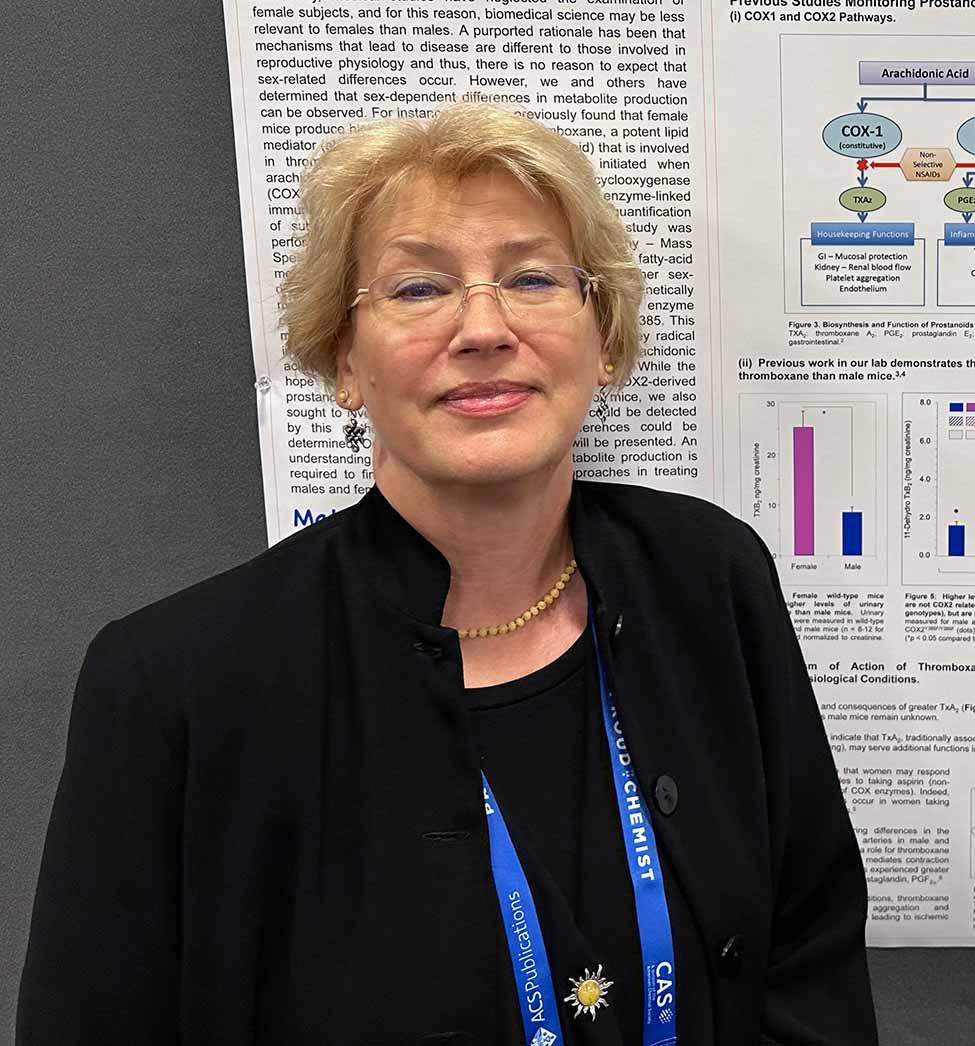
For Professor of Chemistry and Physical Sciences Rita K. Upmacis, PhD, scientific discovery and student mentorship go hand in hand.
Over her 16-year career at Pace, Upmacis has mentored 40 undergraduate students in hands-on research, providing them with the technical knowledge, critical thinking skills, and practical experience needed to pursue careers in academia, industry, and the health sciences.
Her own research spans several areas of chemistry, including the role of sex-dependent metabolites in inflammation and disease, the development of new chemical compounds with potential applications as antiparasitic drugs, and innovations in chemistry education. An accomplished researcher with 45 peer-reviewed publications and nine patents, Upmacis brings students directly into the scientific process.
Under her guidance, students present their findings at University, regional, and national conferences and contribute as coauthors to published research. These experiences help students develop the confidence and communication skills needed to engage with the broader scientific community while building career pathways and credentials for their future careers.
For Upmacis, preparing students to tackle complex scientific challenges is both a responsibility and a privilege.
"We are faced with many global challenges, many of which represent opportunities for scientists," she says. "Encouraging students to seek out careers in STEM is incredibly important, and shaping the next generation of scientists is a tremendous privilege."
While grateful for the recognition, Upmacis finds the greatest satisfaction in the accomplishments of her students.
"It's a wonderful honor to receive this recognition," she says. "Interacting with students and seeing them grow and succeed is truly the greatest reward of all."
Dyson College of Arts and Sciences, Environmental Studies and Science
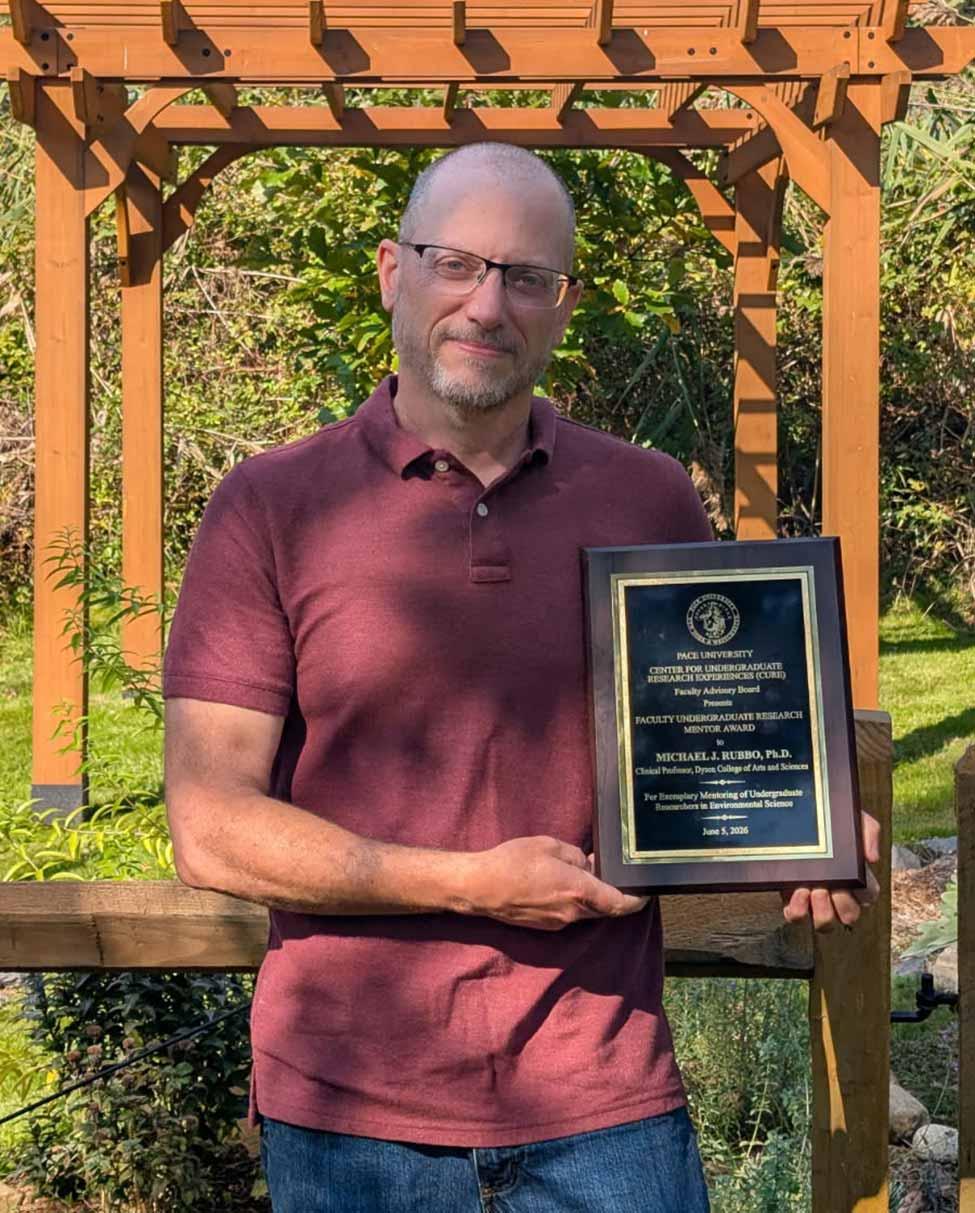
For Clinical Professor Michael J. Rubbo, PhD, the natural world offers an extraordinary classroom, and some of the most compelling research questions can be found right in our own communities.
Rubbo's research explores the ecology of suburban environments, particularly how human development influences biodiversity and the health of local ecosystems. His work examines wildlife populations, pollution in lakes and streams, and the spread of invasive plants. He also collaborates with local communities, sharing research findings that can inform conservation and land-use planning.
That connection between scientific inquiry and real-world impact is central to his approach to teaching.
Rubbo makes undergraduate research accessible to students by incorporating authentic research experiences into his courses. Through these projects, students investigate environmental questions, analyze their findings, and learn how scientific research can inform decisions affecting the communities around them.
"I strive to make research accessible to all students, doing this mainly through class projects," he says. "Watching students grow over the course of a project, gaining confidence in their knowledge and abilities is incredibly rewarding."
Rubbo also encourages students to take their work beyond the classroom by presenting their findings at conferences or sharing them with local communities. Although public presentations can initially be intimidating, he sees them as an essential part of students' professional development.
"While this makes them incredibly nervous, they always come out of this with a sense of pride and a better appreciation for the need of sharing their findings," he says.
For Rubbo, the award is especially meaningful because it recognizes the time, care, and personal investment that go into helping students become independent researchers.
"This recognition demonstrates Pace's commitment to undergraduate research and, for me, Pace's appreciation for the time and effort I have spent working to provide students with authentic research experiences that provide the skills they need to launch their careers," he says.
Whether they're investigating complex chemical processes or studying the environmental challenges facing local communities, Pace undergraduate researchers benefit from faculty mentors who see their potential and give them the training and tools to realize it.
Through the Faculty Undergraduate Research Mentor Award, Pace celebrates educators who do more than share their expertise. They create opportunities for students to ask meaningful questions, contribute new knowledge, and take an active role in shaping their futures.
Interested in exploring undergraduate research at Pace? Visit the Center for Undergraduate Research Experiences (CURE) to learn more about research opportunities, faculty mentorship, and how to get involved.

Pace University’s undergraduate psychology program jumped 34 spots in the latest U.S. News & World Report rankings, building momentum for a STEM-designated program rooted in research, critical thinking, and real-world experience.

Your one-stop destination for undergraduate research at Pace! Explore upcoming CURE events, student research presentations, webinars, funding opportunities, and resources to help you get involved, share your work, and take your research further.

Pace faculty have opportunities to advance their research while creating meaningful experiences for undergraduate students. Explore CURE funding, faculty webinars, and events that support research and mentorship.