Image
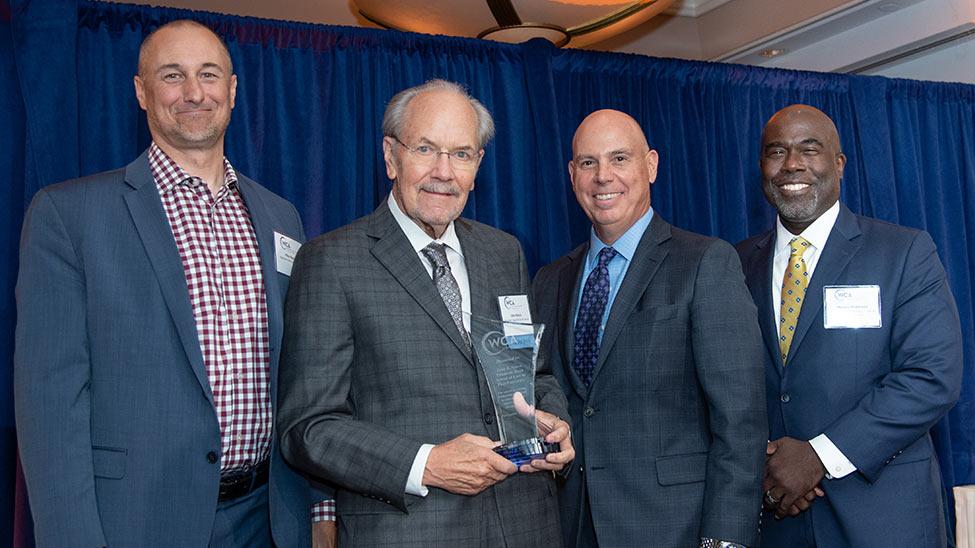

On November 20, 2024, the Westchester County Association honored Distinguished Professor Emeritus John R. Nolon, founder of the Pace Land Use Law Center, with the Alfred B. DelBello Visionary Award. Established to commemorate Al DelBello’s extraordinary legacy of public service and his commitment to making our community better, this award recognizes leaders whose vision and dedication shape a more sustainable and viable future. Professor Nolon was celebrated for his pioneering contributions to sustainable land use and smart growth policies, which have profoundly influenced the field and the region.
Alfred B. DelBello’s illustrious career included serving as Lieutenant Governor of New York State, Mayor of Yonkers, and Westchester County Executive. His innovative leadership in healthcare, economic development, and public advocacy remains a source of inspiration across generations. The award was especially meaningful to Professor Nolon, who’s professional relationship with DelBello spanned more than three decades, encompassing roles as Yonkers Deputy Director of Development, housing consultant for Westchester County, and collaborator in President Carter’s Development Choices for the 1980s initiative.
“Through his leadership, his scholarship, and his advocacy, John has created a remarkable legacy in the field which extends across the globe through the mentorship and knowledge that he has imparted to thousands of students over his career.”
Reflecting on their shared work, Professor Nolon remarked, “Much of what I’ve achieved through the Land Use Law Center has been shaped by the wisdom and vision I gained working alongside Al.” Their collaboration laid the groundwork for transformative policies and initiatives that continue to benefit communities.
This year, the Land Use Law Center will host its 23rd Annual Alfred B. DelBello Land Use and Sustainable Development Conference, a cornerstone event that honors DelBello’s enduring impact. The conference serves as both a tribute to his legacy and a platform for advancing innovative approaches to sustainable development.
During the award presentation, Horace E. Anderson, dean of the Elisabeth Haub School of Law at Pace University, highlighted Professor Nolon’s profound influence on students and the field. “Through his leadership, his scholarship, and his advocacy, John has created a remarkable legacy in the field which extends across the globe through the mentorship and knowledge that he has imparted to thousands of students over his career,” he said.

As the Pace Women’s Justice Center marks 35 years of advocacy, Executive Director Cindy Kanusher, JD, examines the legal obstacles facing survivors, the shortcomings of the justice system, and what it takes to help thousands of people find a path forward.

Professor Emily Gold Waldman has been awarded the 2026 Goettel Prize for Faculty Scholarship.

Haub Law launches the Environmental Law Fifty Fund to support innovative research, scholarship, and collaboration among junior environmental law scholars.