Image
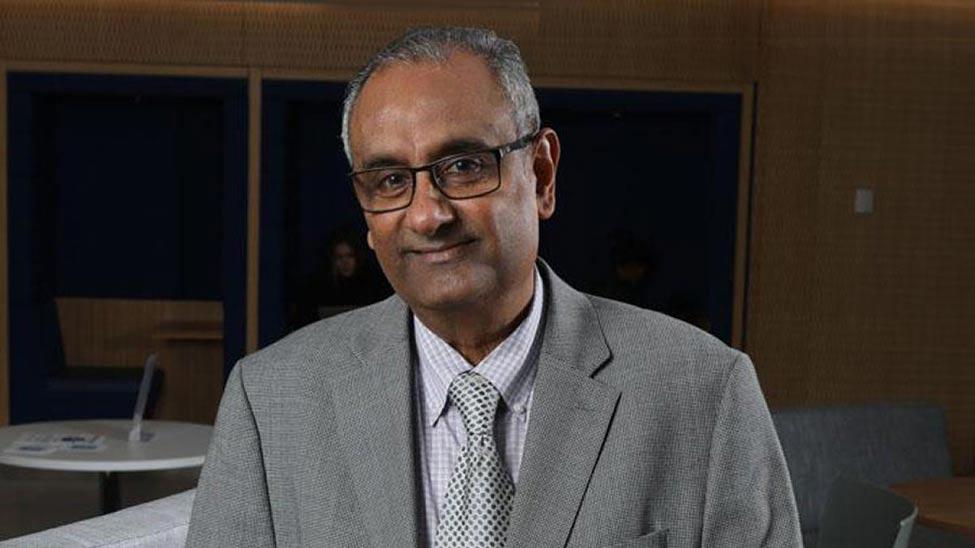
Associate Professor Mirjana Pantic, PhD, and a team of Pace students and alumnae presented research in Australia on how Gen Z navigates the workplace. Their findings revealed a strong preference for hybrid work, open communication, and real-time feedback—insights that are already making an impact beyond the classroom.

Associate Professor of Media and Communications Mirjana Pantic, PhD, presented research at the annual International Communication Association conference in Gold Coast, Australia, that was the result of a collaboration with students Penelope Arias ’25, Rachel Hutchings ’25, Lucy Mitchell ’25, and alumnae Tasha Lee ’24, and Diane Ragin ’23 in the MA in Communications and Digital Media, which is offered through the Media, Communications, and Visual Arts department on the Pleasantville campus.
Conducted in the summer of 2024, the timely study, titled Generation Z in the Workplace, explored how Generation Z (“Gen Z”), born between 1997–2012, navigate the professional world and how they communicate intergenerationally.
Pantic’s inspiration for conducting this research was a keen interest in understanding the professional landscape of this generation, including Pace students.
“I have been teaching Gen Z for years, and I thought they differ in comparison to my millennial students. My thought was that it would be quite beneficial to explore Gen Z's characteristics, workplace behavior, and expectations of a workplace as it will help the current generation at Pace and elsewhere prepare for the job market, but also to give an idea to managers on how to approach this unique generation.”
As part of their research process, students examined existing studies about the key differences between Gen Z and other generations in the workplace, primarily millennials, Gen Xers, and Baby Boomers, including the current literature on Gen Z communication preferences in the workplace. They then gathered focus groups of and directed questions on their experiences toward currently employed Gen Z workers. Upon analyzing their responses, the students compared the findings to the existing published research and concluded that there are indeed key differences between Gen Z and other generations.
Pantic and her students discovered that members of this generation prefer a relaxed, comfortable environment with easy communication, place an importance on in-person interactions for receiving feedback, and embrace collaboration in the workplace. They also emphasized the importance of work-life balance and opted for a hybrid work environment.
Mitchell found that awareness of these generational differences could lead to clearer, better workplace communication, and the findings were personally helpful to her as she aspires to a supervisory position in her organization, where she works full-time.
She said, “Recently, I oversaw a Gen Z intern and implemented some of the things we learned from our research as part of his training. That intern is considering coming back as a permanent employee when he completes his undergraduate studies, so hopefully some of those tactics helped him feel comfortable and confident in the workplace.”
“Working with Professor Pantic was amazing and unexpectedly made communication research one of my favorite courses in the program. Her teaching style and method of providing direction to students were straightforward and informative. She was an excellent mentor and was always available to answer our questions and did an excellent job checking in on us throughout the semester,” Arias said.
Pantic, whose research centers around digital journalism, social media, participatory journalism, and intercultural communications, said, “I was impressed with the students’ writing and use of academic sources but also their understanding of research with human subjects. For this project, they recruited participants on their own, and the entire process was intense, as we had about a month to collect and analyze data. I think gaining this type of research experience and then having the study presented at a conference has been invaluable.”
More on this research can be found in an article on Pantic’s Substack.
Pace University’s Elisabeth Haub School of Law is once again ranked #1 in the country for Environmental Law by the latest U.S. News and World Report rankings, released today. Haub Law was also ranked #19 in the nation for its trial advocacy program as well as #18 for Dispute Resolution. Several other programs at Haub Law were recognized in the top rankings this year, including International Law, Health Law, Tax Law and the Law School's Part-Time Program.


Pace University’s Elisabeth Haub School of Law is once again ranked #1 in the country for Environmental Law by the latest U.S. News and World Report rankings, released today. Haub Law was also ranked #19 in the nation for its trial advocacy program as well as #18 for Dispute Resolution. Several other programs at Haub Law were recognized in the top rankings this year, including International Law, Health Law, Tax Law and the Law School's Part-Time Program.
“For five years in a row, Haub Law has received the number one ranking for Environmental Law,” said Dean Horace E. Anderson Jr. “Our Environmental Law Program extends beyond the classroom, offering opportunities through our renowned Environmental Litigation Clinic, our Food and Farm Business Law Clinic, our Sustainable Business Law Hub, numerous internship and externship opportunities, and much more. We are also tremendously proud of the continued success of our trial advocacy program. Our students learn by example, both in and out of the classroom, and we are fortunate to have top advocates guiding our students. Haub Law continues to excel in all facets – with leading-edge programs, top faculty, innovative scholarship – attracting high performing students who will guide us as future leaders and advocates.”
Established in 1976, the Pace | Haub Law Environmental Law Program has a global footprint, addresses today’s most pressing challenges, and is recognized both nationally and internationally as a leading legacy in environmental law. The program’s continued evolution includes new partnerships, innovative programs, and leading faculty scholarship that is shaping the future of environmental law and policy on a national and global scale. Initiatives such as the Sustainable Business Law Hub, the Environmental Law and Policy Hack Competition, the Future Environmental Law Professors Workshop which trains new and aspiring professors pursuing a career in environmental law, create new opportunities for training, policy, and research that address global environmental challenges. Other well-known programs and opportunities at the school include the annual hosting of the preeminent environmental law moot court competition, the Jeffrey G. Miller National Environmental Law Moot Court Competition. The Law School also hosts lectures and panels throughout the year featuring environmental scholars, advocates, and policymakers, and it recognizes leading international environmentalists through the annual presentation of the Elisabeth Haub Award for Environmental Law and Diplomacy, considered one of the world’s most distinguished awards in the field of environmental law.
“For five years in a row, Haub Law has received the number one ranking for Environmental Law. Our Environmental Law Program extends beyond the classroom, offering opportunities through our renowned Environmental Litigation Clinic, our Food and Farm Business Law Clinic, our Sustainable Business Law Hub, numerous internship and externship opportunities, and much more."
The environmental law program also offers an opportunity for several different joint degrees with the Yale School of the Environment. For over twenty-five years, Haub Law students have had the option to pursue a JD from Haub Law and a Master’s in Environmental Management (MEM) from the Yale School of the Environment. Recently, this relationship has expanded, and to further bolster the program, three new joint degree options were recently added, including a JD/Master of Environmental Science (MESc), JD/Master of Forestry (MF), and a JD/Master of Forest Science (MFS).This unique relationship enables Haub Law students–who are already earning a degree at the number one environmental law school in the country–to pair their JD with an interdisciplinary master’s degree at Yale. Haub Law also proudly co-hosts the New Directions in Environmental Law Conference (NDEL) held at Yale Law School as a collaborative event organized by students from Haub Law, Yale Law School, Yale School of the Environment, and Vermont Law & Graduate School.
Haub Law offers more than 40 environmental law courses, as well as dozens of internship and externship opportunities. In recent years, the Law School has expanded its environmental law faculty, attracting prominent scholars in the field as full-time and visiting assistant professors, all of who are frequently sought after to speak on prestigious panels, offer media commentary, and more. Students have the opportunity to research emerging areas of environmental law alongside experts in the field through the Environmental Law Program’s various centers and institutes, including the Pace Energy & Climate Center and Land Use Law Center, and can directly represent clients through the Environmental Litigation Clinic and the Food and Farm Business Law Clinic. These opportunities provide Haub Law students with the tools they need to be national and international leaders in environmental law.
"Our Environmental Law Program reflects the necessity of a rigorous classroom education coupled with varied experiential opportunities,” said Jason J. Czarnezki, Kerlin Distinguished Professor of Environmental Law and Associate Dean for Environmental Law Programs and Strategic Initiatives at Haub Law. “I am immensely proud that the work of our Environmental Law Program has been recognized by U.S. News and World Report for the fifth year in a row with the #1 ranking. Our faculty is made up of experts in their respective areas of environmental law, producing research and scholarship that leads to open dialogue, thoughtful problem solving, and actively working with students to be environmental leaders of the future. The environmental challenges we face are global and we are committed to training forward thinking students who are ready to hit the ground running at graduation to work on real world solutions to these challenges.” Haub Law recently announced the appointment of an accomplished leadership team to continue to guide its top ranked Environmental Law Program into the future.
In recent years, the trial advocacy program at the Elisabeth Haub School of Law has continued to gain notoriety, ranking #19 in the nation this year by the latest U.S. News and World Report rankings. Haub Law is recognized among the top 10% of schools in the nation for its trial advocacy program. In the last few months alone, the advocacy program has had several significant successes in trial competitions, including placing first and second in the 17th Annual NLLSA Moot Court Competition Held in Puerto Rico. Additionally, late last year, Haub Law’s trial team reigned as regular season champions for the National Trial League Competition. Over the last year, Haub Law has had 40+ Mock Trial and Moot Court Teams, with an average of over 150 student participants on these teams as a whole. Further, as a founder of the preeminent International Criminal Court Moot Court Competition (ICC Moot) held annually in The Hague, Netherlands, Haub Law hosted the 2025 Regional Round for the Americas and Caribbean of the ICC Moot, with a Haub Law team qualifying to advance to the global ICC Moot Court Competition.
“Our advocacy program has grown tremendously over the years into a top-tier and very competitive program,” said Louis V. Fasulo, Professor of Trial Practice and Director of Advocacy Programs. “Led by experienced coaches, many of whom are Haub Law alumni, our teams consistently compete in national and international competitions, regularly finishing at or near the top, while also receiving individual accolades in recognition of their performances. Haub Law has committed itself to training and graduating the next generation of impactful advocates and these latest rankings reflect that. There is a continued strong upward trajectory on the horizon for Haub Law’s advocacy program.”
Haub Law had several other programs recognized in this year’s rankings, including the Tax Law program. The school has a longstanding history of educating students in business and tax-related matters. Recently, Haub Law proudly hosted the American Tax Policy Institute (ATPI) and Pace Environmental Law Review (PELR) Symposium on Tax Lax, the Environment, and Climate Change. The symposium, held on Pace University’s downtown campus, explored the intersections of tax law, climate change, and environmental policy, bringing together leading experts, policymakers, scholars, and practitioners to discuss the critical role of tax policy in addressing pressing environmental challenges and advancing sustainability. The innovative symposium, a joint effort between the American Tax Policy Institute (ATPI) and the Pace Environmental Law Review (PELR), two organizations dedicated to advancing scholarship and policy discussions in their respective fields, is another example of the ways that Haub Law brings traditional educational concepts to life through cross collaboration.
Haub Law’s Health Law program has also seen recognition in the rankings. A leader in the health law field, Haub Law offers two options for its Advanced Certificate in Health Law and Policy – one for students enrolled in the School’s JD program and a second option for attorneys and non-attorney professionals looking for a flexible option to advance their careers. Recently, it was announced by Haub Law that Lauren Roth, an accomplished scholar in health law and business law, will join the faculty as an Associate Professor of Law beginning in Fall 2025. Professor Roth will teach courses in corporations, contracts, and health law while also contributing her expertise and leadership to Haub Law’s Health Law and Policy Certificate program.
Alternative Dispute Resolution has become an area of prestige at Haub Law as well, with a resulting recognition in the rankings. The school offers robust curricular and extracurricular opportunities for students to explore and develop skills in alternative dispute resolution (ADR) processes, and learn about the law governing those processes. Over the past years, we have made significant strides in the field of ADR through outstanding student achievements, impactful faculty scholarship, and notable faculty engagement with the broader ADR community and beyond. Recently, Professor Jill I. Gross, Vice Dean for Academic Affairs at the Elisabeth Haub School of Law at Pace University, a well-respected ADR scholar, published a new book, The Federal Arbitration Act: Successes, Failures, and a Roadmap for Reform. The school is also home to The Amelia A. Gould Representation in Mediation Clinic, which offers students the opportunity to advocate for otherwise pro se parties in mediation. In one of the only clinics in the country devoted to representing clients in mediation, students devote their time to meeting with clients, drafting mediation briefs, serving as advocates in mediation, and negotiating settlement agreements on behalf of clients. Students also participate in simulated mediation exercises, facilitated by mediators in the community, as a confidence and collaboration building experience. The Fairbridge Investors Rights Clinic at Haub Law provides students with hands-on experience navigating the complexities of securities and cryptocurrency disputes – fielding inquiries from investors, offering guidance on FINRA arbitration for stock market losses and AAA arbitration for cryptocurrency losses. Through this work, students deepened their understanding of financial regulations and arbitration procedures. Additional recognitions in the rankings this year include Haub Law’s part-time program and international law program.
Dr. Pradeep Gopalakrishna brings global insight and real-world experience to the classroom, guiding Lubin students toward marketing success.

We had the opportunity to speak with Professor Pradeep Gopalakrishna, PhD, the chair of the Marketing Department at Pace University’s Lubin School of Business, about his 29-year career with the university. Originally trained as a mechanical engineer in India, he pursued an MBA in marketing and management at the University of North Texas, driven by a deep curiosity about business.
With expertise in consumer behavior, strategic marketing, and cross-cultural studies, he has authored numerous articles and developed real-world case studies. At Lubin, he champions experiential learning, guiding students through hands-on projects and industry collaborations. His passion for mentorship has helped students secure internships and full-time roles in marketing.
In the 1980s, as a mechanical engineering student at Bangalore University in India, I noticed a prevalent trend among engineering graduates: many pursued a management degree to explore various business functions. Marketing, in particular, stood out as a priority for many, including myself. This curiosity led me to pursue an MBA in Marketing and Management at the University of North Texas in 1981.
During my MBA journey, I navigated a competitive job market, taking on roles that, while modest, laid the foundation for a fulfilling career. I maintained strong ties with the university, which eventually led to an invitation from my professors to further engage in academia after completing my MBA.
When I teach marketing, I often challenge my students to reflect on its critical role within an organization. I ask, why is marketing essential to study? I direct their attention to an income statement, where marketing represents the top-line activity—the only function responsible for generating revenue, driving demand, and fueling growth. It’s this profound impact that continues to inspire my passion for marketing and shape my teaching approach.
In the mid-1990s, I had been teaching at Hofstra University for six to seven years when I began exploring academic opportunities beyond Long Island. At the time, I even considered positions in the Midwest. Around that time, Pace University was seeking a visiting professor, and I joined as an associate professor of marketing.
Pace’s proximity to the Financial District and Wall Street, along with its strong industry connections—particularly with marketing firms such as IPG, Ogilvy, and WPP—made Lubin an excellent platform for expanding my professional network. Being near Madison Avenue allowed me to engage with leading firms and strengthen both my academic and industry relationships.
My initial academic interest centered on services marketing, which was the focus of my dissertation. As I expanded my network with academic professionals abroad, my research evolved into cross-cultural marketing, examining consumer behavior across diverse markets.
Writing has also been a significant passion of mine, particularly crafting case studies on real companies to analyze consumer preferences and marketing strategies. My teaching and research encompass several core areas, including consumer behavior, services marketing, strategic marketing, and cross-cultural marketing. Over the course of my career, I’ve authored more than 50 articles, contributing to academic and professional discourse in these fields.
Change is a constant in the business world, particularly from a practitioner’s perspective, underscoring the importance of academic research keeping pace with industry evolution. While academia and industry operate in distinct spheres, it is crucial for research to align with real-world practices and trends. In today’s fast-paced environment, maintaining relevance requires actively bridging these two domains.
My classroom fosters a dynamic learning environment where students develop transferable skills through debates, discussions, case studies, and both individual and group presentations. A hallmark of my teaching philosophy is experiential learning, where students work on real-world projects with actual or simulated clients.
For instance, each year, I guide Norwegian students in creating a marketing plan for a real client. One particularly memorable project involved launching a new e-health platform for Norway’s leading bank, DNB, in the New York City region. Students conducted extensive consumer behavior research and developed a comprehensive product launch strategy for the United States. These hands-on experiences equip students with critical thinking, research, and problem-solving skills that are directly applicable to their careers.
Notably, the project presentation was accepted by the client, who then proceeded with the launch. Additionally, one of the students from the program later accepted a position with DNB in Oslo, Norway.
To continue to stress the industry nexus with the classroom, I believe in forging and maintaining relationships with employers in the New York City area. For over fifteen years now, I have been taking students to meet with business professionals of the New York Mets at Citifield, and Brooklyn Nets at Barclays Center. Several students have succeeded in securing internships and full-time positions as a result.
My professional aim has always been to integrate teaching with research. I actively incorporate my research into the classroom, using it to enrich discussions, provide real-world insights, and bridge the gap between theory and practice.
One of the biggest challenges I faced upon arriving in the United States was adapting to cultural differences and language barriers. Being outspoken by nature, adjusting to a new cultural context required patience and a willingness to learn.
Supporting student success, particularly when it leads to internships and full-time employment, has been one of my greatest achievements as an educator.
In today’s social media-driven world, strong written and verbal communication skills are essential for navigating the rapidly evolving marketing landscape.
I emphasize the importance of analytical skills above all else, alongside curiosity and communication. In today’s social media-driven world, strong written and verbal communication skills are essential for navigating the rapidly evolving marketing landscape.
#LubinLife means being collegial—staying connected and engaged, both as a student and as a faculty member—by fostering relationships, contributing to the academic community, and supporting lifelong learning.
In addition to these courses, I also occasionally teach internationally focused courses sponsored by the Center for Global Business Programs.
Twenty-four students, undergraduate and graduate, and five faculty members in the Economics department presented their original research at the Eastern Economic Association (EEA) annual conference, one of the major conferences for professional economists in the United States.

Twenty-four students, undergraduate and graduate, and five faculty members in the Economics department presented their original research at the Eastern Economic Association (EEA) annual conference, one of the major conferences for professional economists in the United States. The four sessions sponsored by Pace University at the conference were organized by Assistant Professor Eric Osborne, PhD, and included research on topics in labor economics, health economics, public economics, and savings/financial markets.
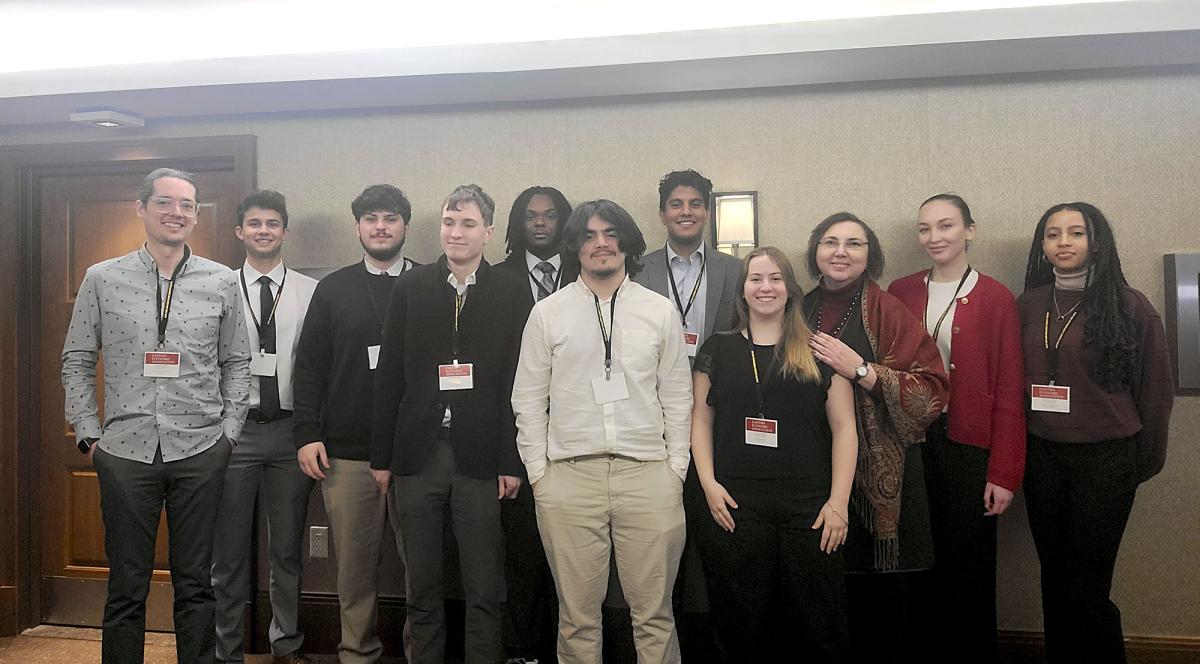
In these collaborative student-faculty sessions, Professor Gregory Colman, PhD presented his work, “Youth E-cigarette use, Underage Access and FDA Compliance”; Associate Professor Veronika Dolar, PhD, presented, “The Impact of Income Inequality on Sport Achievement: Cross-National Analysis of Winter Olympic Games”; Lecturer Kier Hanratty, PhD, presented, “The Effect of Tax Caps on School Quality and Home Prices”; Assistant Professor Eric Osborne, PhD, presented “Covid-19 School and Child Care Center Closures and Female Labor Force Participation”; and Professor and Chair Anna Shostya, PhD, presented “Improving Economic Performance and Social Well-being Metrics.”
The participation of students and faculty at the EEA conference is a testament to the longstanding, quality student-faculty research and experiential learning opportunities offered by the department.
Elisabeth Haub School of Law Professor Bennett Gershman shares his legal insight with PIX11 News on the federal murder charges facing Luigi Mangione, offering expert analysis on the potential for the death penalty.
Dyson Professor Melvin Williams speaks with USA Today, analyzing how Elon Musk and Tesla have become lightning rods in America’s political divide—shifting from bipartisan appeal to partisan battleground.
Professor Gershman pens an op-ed in the New York Law Journal, warning that the Trump administration’s use of federal policing powers is edging the country closer to an authoritarian state.
Philosophy Professor James Brusseau joins The Dr. Phil Podcast to explore the ethical and emotional risks of AI replicating human relationships. Reflecting on his experience building a chatbot version of himself, Brusseau notes that while AI can simulate voice, it falls short of capturing true human depth.
Newsweek, Haub Law Professor Amelia Wilson criticizes the proposed “Dual Loyalty Disclosure Act,” calling it a threat to citizenship rights that promotes an ultranationalist agenda and suggests dual citizens are inherently untrustworthy.
Sands College of Performing Arts Professor Grant Kretchik is spotlighted in Success Magazine for co-hosting the podcast In the Podlight, which uplifts the next generation of talent with industry insights rooted in diversity and representation.