
Academics and Programs
Is a master’s in computer science worth it? Explore career paths, earning potential, and how Pace’s programs can boost your tech career.
Elisabeth Haub School of Law at Pace University student Harrison Bench ’27 has been named a 2026 winner of the American Bar Association Section of Environment, Energy, and Resources (ABA SEER) Law Student Writing Competition in the Energy and/or Resource Recovery category.


Elisabeth Haub School of Law at Pace University student Harrison Bench ’27 has been named a 2026 winner of the American Bar Association Section of Environment, Energy, and Resources (ABA SEER) Law Student Writing Competition in the Energy and/or Resource Recovery category. His winning paper, “Gone with the Wind: The Legal Implications of the Interior-TotalEnergies Settlement Agreement,” was selected as part of the national competition, which encourages law student involvement and fosters dialogue and scholarship on environmental, energy, and natural resources law.
The recognition is the latest achievement for Harrison, whose experience at Haub Law has spanned environmental scholarship, advocacy, leadership, and hands-on legal work. A Sustainable Business Law Hub Student Scholar, Harrison is pursuing a joint degree program between Haub Law and the Yale School of the Environment, earning his JD and Advanced Certificate in Environmental Law at Haub Law and a Master of Environmental Management at Yale, with both degrees expected in May 2027.
“This recognition is especially meaningful to me because energy law and policy are at the heart of the work I hope to pursue throughout my career,” said Harrison. “Haub Law has given me opportunities to explore environmental and energy issues from so many different perspectives and through a wide range of practical experiences. I am grateful for the faculty, mentors, and programs that have encouraged me to pursue these interests and helped me grow as both a student and future environmental lawyer.”
Haub Law has given me opportunities to explore environmental and energy issues from so many different perspectives and through a wide range of practical experiences.
— Harrison Bench '27
Harrison’s connection to ABA SEER extends well beyond the writing competition. He serves as Student Co-Chair of the Section’s Environmental Law Society Network, which connects environmental law students across the country with opportunities for professional development, substantive learning, and networking. He has been actively involved with ABA SEER since his first year of law school, participating in its national conferences and programming.
At Haub Law, Harrison has also served as a Symposium Editor for the Pace Environmental Law Review, a Land Use Law Scholar, and a student intern with the Global Center for Environmental Legal Studies (GCELS). Through GCELS, he helped draft and submit motions to the International Union for Conservation of Nature (IUCN) World Conservation Congress and traveled to Abu Dhabi for the 2025 Congress, where he participated in international environmental policy discussions and served as a student speaker.
His environmental law experience has also extended into government and private practice. While at Haub Law, Harrison has worked with the U.S. Environmental Protection Agency’s Region 2 Office of Regional Counsel, the New York State Department of Public Service, and the Sustainability Advisory Practice at Paul, Weiss, Rifkind, Wharton & Garrison LLP. Most recently, he served as a Summer Associate at Hodgson Russ LLP. His broader interests center on identifying and promoting law and policy solutions to climate and energy challenges across the public, private, and nonprofit sectors.
“Harrison’s achievement reflects on his initiative as a student. He is hard working, sharp, and he takes advantage of the breadth of opportunities available through Haub Law’s Environmental Law Program,” said Professor Josh Galperin, Associate Dean of the Environmental Law Program and Faculty Director of the Sustainable Business Law Hub. “He has pursued his interests in environmental and energy law through scholarship, experiential learning, professional leadership, international engagement, and interdisciplinary study. We are incredibly proud to see ABA SEER recognize his work and look forward to all that he will accomplish as he continues to build his career in environmental law.”
The ABA SEER recognition follows another recent writing honor for Harrison. In 2025, he earned second place in the New York State Bar Association Environmental and Energy Law Section’s William R. Ginsberg Memorial Essay Contest for his paper, “Liar, Liar, BESS on Fire,” which examines battery energy storage systems, safety concerns, and the legality of local zoning moratoria enacted against BESS facilities.
Earning your master’s degree in a science field shows employers that you have the skills, discipline, and passion needed for leadership or specialized positions. At Pace, our STEM-designated MS programs are designed to prepare students for advanced, in-demand careers by combining rigorous academics with real-world application. Read more about the top MS degrees that will lead you to well-paying and fulfilling careers.


Earning your master’s degree shows employers that you have the skills, discipline, and experience needed for leadership or specialized positions. It’s also one of the best resources for preparing for a higher-paying role or for switching to a new career in a different industry.
A science master’s degree does more than prepare you for scientific and technical careers; it’s a badge of honor that you have the drive, passion, and talent to work alongside some of the best professionals in your field. If you’re thinking about getting your Master of Science degree, you’re already ahead of the game.
To help you in your decision, keep reading for details about some of the more popular science master’s degrees and the well-paying careers they can lead you to.
A Master of Science (MS) degree is a graduate-level program with a strong emphasis on scientific inquiry, research, and quantitative or analytical skills. MS programs are typically designed to deepen subject-matter expertise, strengthen problem-solving abilities, and prepare students to apply evidence-based methods in professional or academic settings.
Academically, MS programs focus on theoretical foundations and practical application within a specific discipline (such as information technology, engineering, data science, biology, or related fields). Instruction usually combines classroom-based coursework with hands-on experiences, which may include laboratory research, applied projects, or technical simulations.
Many programs culminate in a thesis or capstone project, allowing students to demonstrate mastery through original research or a real-world application of their skills. An MS degree can serve as preparation for further graduate study, such as a Ph.D., especially for students interested in research, academia, or advanced scientific inquiry, or as a way to advance to specialist, technical, analytical, or leadership roles.
Whether you earn a Master of Science or a Master of Arts (MA) depends as much on the college program as your field of study. Every university and academic institution has its own traditions and standards for how it defines and awards degrees.
The Master of Arts degree originated in medieval Europe and was bestowed on university graduates when they were recognized as instructors. The Master of Science degree came later, being established in the late 19th century to better recognize science as a distinct field for advanced study.
Today, MA degrees are established for fields that focus on the humanities and social sciences, such as business (the MBA), education, communication, and counseling. In comparison, MS degrees focus on fields and areas of study that are considered more technical, quantitative, and require advanced, specialized knowledge.
In areas such as healthcare, technology, environmental science, and data science, MS programs focus on building deep subject-matter understanding alongside practical, career-ready skills. Through advanced coursework, applied research, and real-world problem-solving, students gain the analytical, technical, and strategic capabilities needed to work in complex, fast-evolving industries.
Many Master of Science degrees at Pace University carry a STEM designation, a classification granted by the U.S. Department of Homeland Security (DHS) (PDF). STEM stands for science, technology, engineering, and mathematics, and the designation applies to academic programs that emphasize quantitative, analytical, and technical skill development.
At Pace, STEM-designated MS programs are designed to prepare students for advanced, in-demand careers by combining rigorous academics with real-world application. These programs focus on developing in-demand technical and critical thinking skills that employers actively seek, such as problem-solving, data analysis, innovation, and experience with emerging technologies.
Generally, STEM-designated MS programs:
For international students studying in the United States on an F-1 visa, a STEM designation offers a significant additional benefit. Graduates of STEM-designated MS programs may be eligible for a 24-month extension of Optional Practical Training (OPT) beyond the standard 12 months. This allows eligible students to gain up to 36 months of professional work experience in the U.S. after graduation.
This extended OPT period can provide:
Many science master’s degrees prepare students for highly technical, in-demand fields such as healthcare, computer science, and engineering—careers that offer strong earning potential and long-term growth. But at their core, these programs are about much more than a paycheck. They bring together driven students and expert faculty who are committed to solving real-world problems and creating meaningful change.
From addressing climate change and advancing healthcare innovation to shaping the ethical future of artificial intelligence, these science master’s degrees equip graduates with the skills, knowledge, and perspective to move their careers forward and help build a better future along the way.
All salary values are based on estimates sourced from Glassdoor in January 2026 for the New York Metropolitan area.
If you’re interested in becoming an expert in AI deployment, strategy, or governance, consider a master’s in applied AI. Students build practical skills and work with advanced tools to design, implement, and manage large language models (LLMs) and machine learning systems within workflows and production-ready solutions such as chatbots, forecasting pipelines, and human-in-the-loop decision dashboards.
For those more interested in the development of AI theories and modules, there is the master’s in artificial intelligence. This degree is ideal for those interested in becoming AI researchers, developers, or engineers across a wide range of industries, including healthcare, finance, engineering, education, art, and entertainment.
Make breakthroughs in health, manufacturing, biotechnology, and more with a master’s in biochemistry and molecular biology. Studying bioinformatics, genomics, and molecular techniques in state-of-the-art laboratories will set you up for a successful career in biotechnology, pharmaceuticals, academic research, or other advanced and important fields.
To master a range of computer technologies, including AI, cloud computing, and database systems, you can pursue a master’s in computer science. By building expertise in a range of computer science topics, you’ll be well-positioned to guide organizations toward better decision-making based on data and expertise in computer theory and practice.
To build your portfolio and expertise as a cybersecurity expert, you can get a cybersecurity master’s degree. Refine your skills in specialized labs run by cybersecurity experts, training with state-of-the-art tools and programs to protect people and their data against increasingly sophisticated cyber-attacks, phishing scams, data theft, and more.
If you want to be essential to how organizations create actionable insights and make strategic decisions, then consider pursuing a master’s in data science. As a student, you’ll conduct research on how to create knowledge from data and build skills in using analytical programming languages, data science tools, and applications for careers in data analytics, machine learning, and big data.
For those who are passionate about making a difference for tomorrow’s generations, a master’s in environmental science and policy can be the key to having an impact in research, advocacy, and governance. Students learn how science-generated knowledge can be applied to help design policies in other fields, including AI, and how to navigate the policy-making process.
Anyone interested in using economic data and impacting public and private policies to shape markets, communities, and governments would benefit from a master’s in economic analysis. Graduates often pursue lucrative careers as policy analysts, economists, consultants, or researchers, influencing decision-making at local, national, or global levels.
Provide the support and care to people across the lifespan, from pediatrics to geriatrics, with a master’s in nursing, family nurse practitioner. An FNP program trains registered nurses in advanced primary care, providing opportunities to provide hands-on patient care and work toward becoming a licensed nurse practitioner.
If you want to dive into how organizations manage money, risk, and performance, then you’re a great fit for a master’s in financial operations. This field blends finance, data analytics, and technology to support data-driven business decisions, and graduates of these programs go on to excel in fintech, financial analysis, operations management, or systems optimization roles.
If you’re passionate about crime solving, a master’s in forensic science will prepare you to apply scientific methods to criminal investigations and legal cases. As a student, you’ll train in fully equipped forensic chemistry and biology facilities, building the skills and experience to work in crime labs, law enforcement agencies, or legal settings, analyzing evidence such as DNA, toxicology, and digital data.
Build the skills that enable you to design, manage, and optimize technology solutions that support organizational goals with a master’s in information systems. Businesses need innovative IT leaders with the skills to analyze data, understand complex systems, and make strategic decisions that deliver impactful results across industries. Graduates commonly pursue careers as systems analysts, IT managers, consultants, or technology strategists across industries.
Passionate about helping people live healthier and better lives? A master’s in nutrition and dietetics combines nutrition science with practical training to promote health and prevent disease through food and dietary guidance. Graduates master the skills and knowledge to help people eat well, prevent disease, and manage chronic conditions.
Design, build, and maintain complex software systems with a master’s in software development and engineering. Students master the ability to overhaul a company’s tech processes, digitize business processes, and build and maintain more efficient systems. Graduates are highly sought-after as software engineers, developers, or technical leads in technology-driven fields.
Applying for a Master of Science degree program at Pace University is straightforward. Be aware that graduate applications do vary by program and student type. You can see specific application requirements for graduate applicants, visiting applicants, and non-degree applicants on our graduate admissions page.
Generally, the process requires a few simple steps:
Some programs may also require the submission of GRE scores, so double-check the school-specific requirements.
Pace offers financial aid assistance in the form of scholarships, grants, Federal work study, and student loans. Check the financial aid options for graduate students early to see which ones you can apply for and what the requirements are.
Pace Tip: Maximize your chances and your benefits by applying for multiple types of financial aid, including graduate assistantships, Federal Work Study, and scholarships. Reach out to the Student Solutions Center for assistance in finding and applying for financial aid.
Is a Master of Science a good degree?
Yes! An MS is a strong choice for anyone who wants advanced, practical skills tied to in-demand careers. Whether you’re a recent bachelor’s graduate or a seasoned professional interested in career advancement, a master of science is especially valuable in competitive and high-paying fields such as technology, healthcare, science, data, and business analytics. A master’s degree signals to employers that you have specialized expertise and can apply problem-solving experience.
Which Master of Science degree is the best?
There’s no single “best” MS degree. The best-fitting master of science degree depends on your interests, strengths, and career goals. The best program is one that aligns with growing industries, offers hands-on experience, and prepares you for roles you’ll find meaningful and sustainable long term. Consider programs, such as those at Pace University, which offer access to state-of-the-art equipment, learned and experienced faculty, and access to some of the biggest organizations and networking opportunities in the world, right in the heart of New York City.
What is the Master of Science degree for?
An MS degree is designed to deepen technical knowledge, analytical skills, and real-world application in a specific field. It prepares graduates for specialized professional roles, leadership positions, certifications, or further doctoral study.
What science master’s degree pays the most?
The highest-paying MS degrees are often in fields like computer science, software engineering, data science, and financial technology. Salaries vary by industry and experience, but these fields tend to offer strong earning potential and career growth.
If you’re ready to take the next step in your career, explore the Master of Science programs at Pace University. With the demand for Science, Technology, Engineering, and Mathematics (STEM) jobs set to surge 15% through 2031, now is a great time to explore your options with Pace’s STEM designated master’s programs.
All of our programs provide the skills and knowledge to succeed across every industry, from tech and healthcare to finance, business, education, environmental research and beyond. Reach out to Pace today for more information and guidance on fulfilling your education goals.
Is a master’s in computer science worth it? Explore career paths, earning potential, and how Pace’s programs can boost your tech career.

Introducing Lauren Pizzella, recent graduate of the Health Science, BS program. Lauren is now a current student in the Master of Science in Health Informatics program where she has earned a full-time position at Westchester Medical Center, following her fieldwork experience at the same location. We connected with Laurent to get her insight into both programs and learn about the opportunities fieldwork can unlock!

Start your business career on the right path with our guide to the best business degrees.
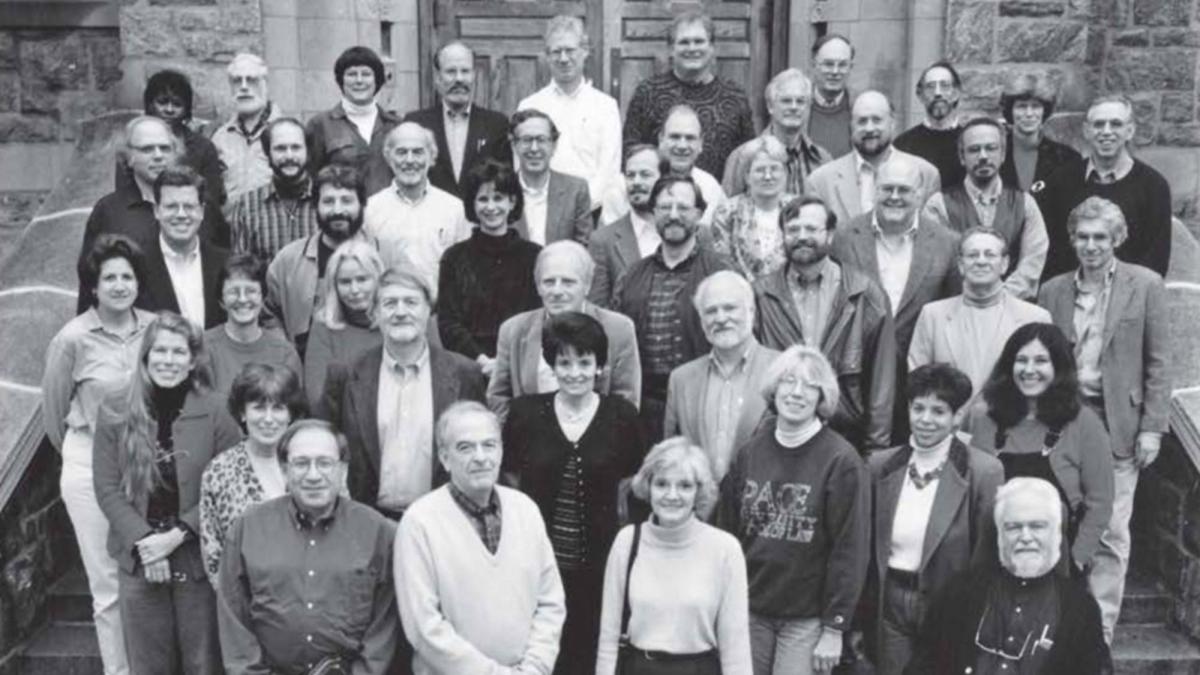
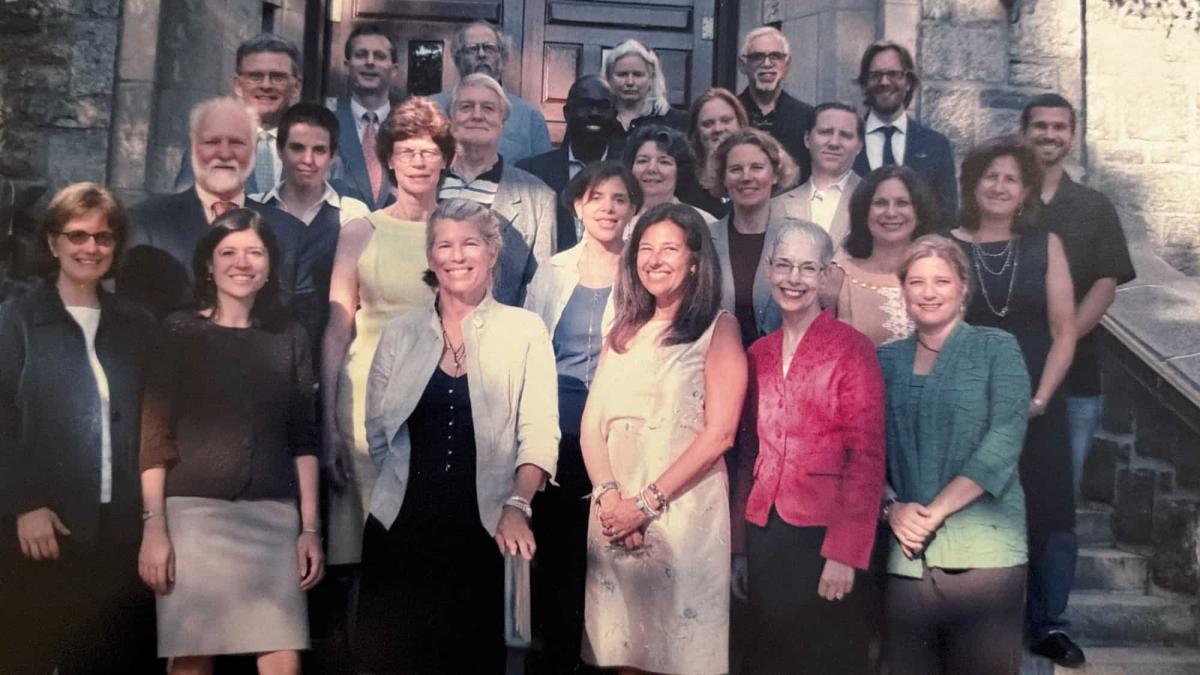
For five decades, Haub Law faculty have inspired generations of students. Here, several professors reflect on what has made teaching at the Law School meaningful and to share one lesson they hope students carry with them.


For five decades, Haub Law faculty have inspired generations of students. Here, several professors reflect on what has made teaching at the Law School meaningful and to share one lesson they hope students carry with them.
Faculty member since 2006
“The students! In every class, they inspire me with their interest, enthusiasm, and drive to prepare for meaningful careers.”
Faculty member since 1999
“Teaching at Haub Law over the past 27 years has been the most rewarding aspect of my professional career. It is humbling and inspiring to watch students’ understanding of the law grow, and to see them apply what they learned to the practice of law during law school and beyond.”
Faculty member since 1999
“As Director of the Equal Justice America Disability Rights Clinic, I felt great satisfaction assisting students in making the transition from student to attorney while developing practical lawyering skills and providing critical legal services to persons with disabilities and their families.”
Faculty member since 1985
“One of the most amazing aspects of the law is that it has a huge depth and breadth of opportunity. Never think that you are stuck using your degree in one way. If you are unhappy, think broadly and change your direction.”
Faculty member since 1988
“’The power of listening.’ Lawyers love to talk and, often, they speak before fully assessing the facts of a lawsuit or negotiation. Learn to ask “green light” questions that bring forth a fuller understanding of the interests involved and lead to better outcomes. Carry that approach with you throughout your career.”
Faculty member since 1991
“Lawyers are democracy’s bulwark. We challenge those who would curtail rights and intrude on rules of fairness and civility. Be animated by this critical role.”
Faculty member since 2021
“Be curious. Law isn’t about memorizing rules or using certain clever-sounding vocabulary. It is about asking questions, especially questioning yourself and your own assumptions.”
Faculty member since 2003
“As lawyers, we take an oath to support the Constitution. Democracy and the rule of law are choices we have to make again and again.”
Faculty member since 1984
“If my students remember one lesson, I hope it is that justice is not an abstract ideal or a lofty word—it is something real that must be achieved every day. Justice cannot exist without competent, ethical, and dedicated lawyers committed to making it a reality.”
Faculty member since 1986
“In addition to doing your best to competently serve your clients, remember to be kind, respect others, and to seek justice, always.”
Faculty member since 1990
“A law degree is a powerful tool for change.”
Faculty member since 2003
“Law school is not only challenging—it is also an opportunity. Use your time here, including your summers, to explore different areas of law and different forms of legal practice. Ask questions, seek advice, and take advantage of the many resources available to you.” More advice from Professor McDonnell
When Pace University renamed its law school in honor of Elisabeth Haub in 2016, it celebrated more than a transformative partnership. It recognized a shared commitment to environmental stewardship, public service, and the belief that law can be a powerful force for protecting people and the planet.


When Pace University renamed its law school in honor of Elisabeth Haub in 2016, it celebrated more than a transformative partnership. It recognized a shared commitment to environmental stewardship, public service, and the belief that law can be a powerful force for protecting people and the planet.
Years later, as Elisabeth Haub School of Law marks the 10th anniversary of its naming during the Law School’s 50th anniversary year, that vision continues to guide the Institution and inspire environmental leaders around the world.
Elisabeth Haub devoted her life to conservation, environmental protection, and philanthropy. Long before sustainability became a global priority, she championed efforts to preserve natural resources and support organizations dedicated to environmental stewardship. Her commitment to protecting the natural world became a defining legacy—one that continues today through the work of her family and the institutions that bear her name.
We want to continue the legacy of my grandmother, Elisabeth Haub, who was a pioneer in environmental protection, and endowing this law school in her name ensures her vision will continue to impact future generations.
—Christian W.E. Haub, 2016
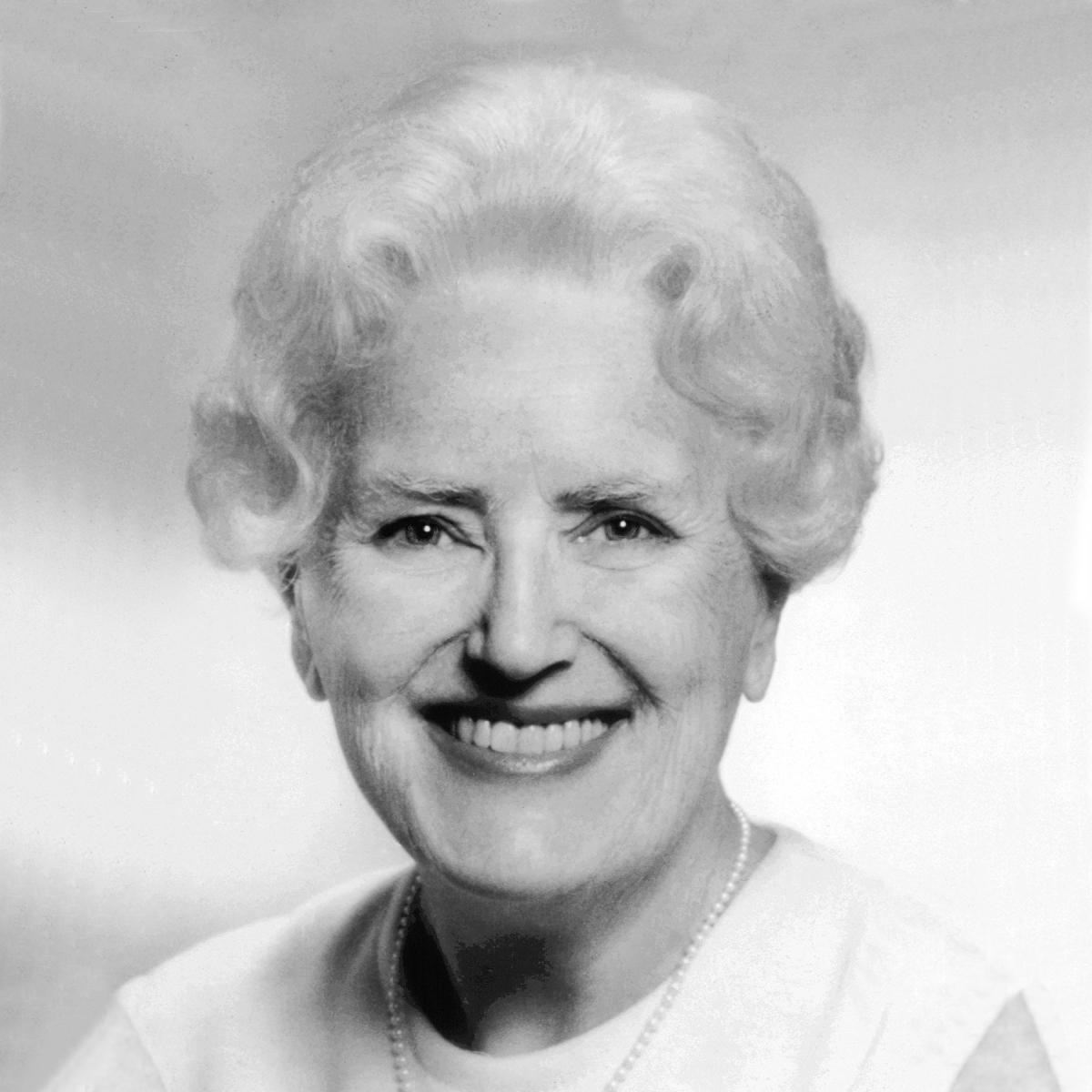
The decision to rename the Law School in her honor reflected a natural alignment between Elisabeth Haub’s values and Pace’s longstanding leadership in environmental law. For decades, the Law School has educated lawyers, policymakers, advocates, and scholars committed to addressing some of the world’s most pressing environmental challenges. The Haub name strengthened that connection and affirmed a shared belief that environmental protection and the rule of law are inseparable. In doing so, the Elisabeth Haub School of Law also became just one of two ABA-accredited law schools in the United States named solely in honor of a woman, an enduring recognition of Elisabeth Haub’s extraordinary legacy and leadership.
One of the most enduring expressions of that legacy is the Elisabeth Haub Award for Environmental Law and Diplomacy. Established in 1979, the award has long recognized individuals whose work has advanced environmental protection through law, policy, and international cooperation. Over the years, recipients have included heads of state, diplomats, jurists, policymakers, scientists, and environmental advocates whose leadership has helped shape environmental governance on a global scale. Among its laureates are architects of the Paris Climate Agreement, leading climate activists, international negotiators, and United Nations experts whose work has shaped environmental law and policy around the world.
In 2016, the award entered a new chapter when the Elisabeth Haub Foundation and Elisabeth Haub School of Law partnered to create the Elisabeth Haub Award for Environmental Law and Diplomacy in its current form. The collaboration united a distinguished tradition of environmental recognition with the Law School’s internationally respected environmental law program, further elevating the award’s global profile and reinforcing its role as one of the field’s most prestigious honors.
The award celebrates individuals whose leadership demonstrates the values that defined Elisabeth Haub’s life: environmental stewardship, international cooperation, and a commitment to addressing complex global challenges. Through the award, the School continues to recognize those whose work advances environmental protection and inspires meaningful change around the world.
The Haub family’s commitment to environmental stewardship and education remains as strong today as it was a decade ago. Steadfast friends and benefactors of Pace University, subsequent generations of the family have continued to advance Elisabeth Haub’s vision through philanthropy, environmental leadership, and support for educational opportunity. In 2026, Liliane and Christian Haub were recognized at Pace University’s Spirit of Pace Awards, which honor individuals whose professional achievements, service, and longstanding support have strengthened the University community. Their recognition reflects the enduring legacy of leadership and generosity that has connected the Haub family to Pace University for generations.
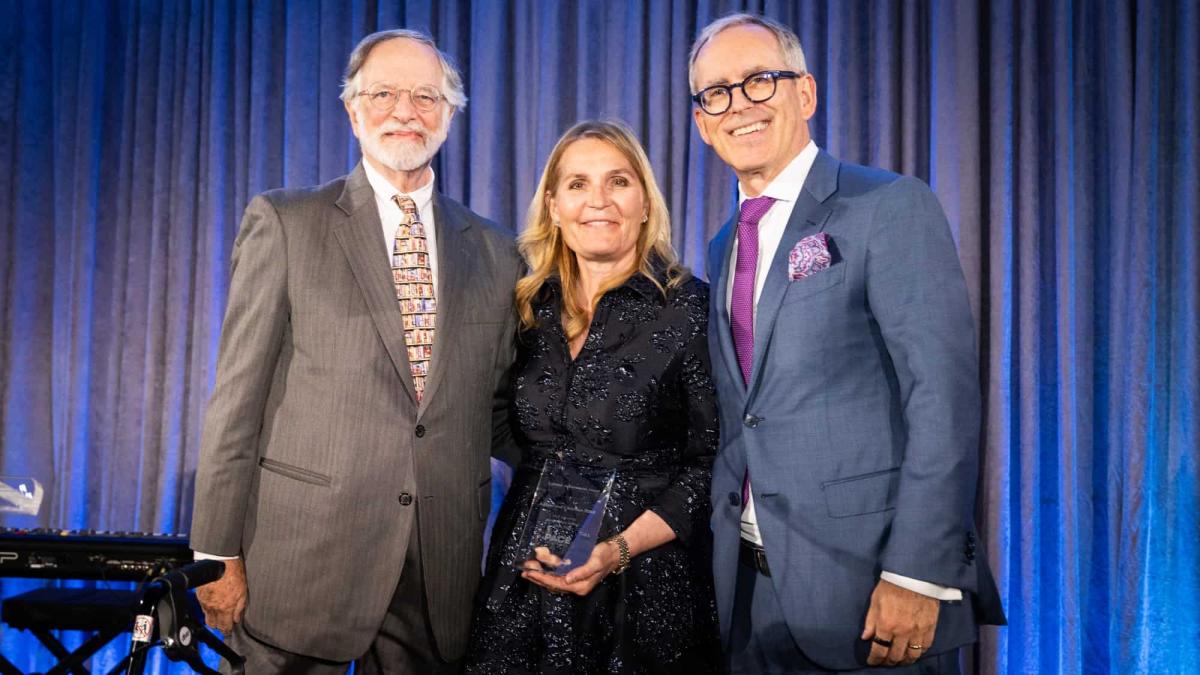
Liliane Haub, who has served on Pace University’s Board of Trustees for more than ten years, has dedicated much of her career to environmental conservation and sustainability initiatives around the world. Through leadership roles with organizations focused on conservation, environmental education, and land preservation, she has continued the family’s longstanding commitment to protecting the natural world. Christian Haub, Chief Executive Officer and Managing Partner of the Tengelmann Group, has carried forward the entrepreneurial and philanthropic traditions of a sixth-generation family enterprise while remaining deeply connected to the environmental values championed by his grandmother. In recent years, Liliane and Christian’s children have continued the family’s legacy through their own participation and support of the Law School, reflecting a multigenerational commitment to advancing legal education and environmental stewardship.
As the Law School celebrates its 50th anniversary, the 10th anniversary of the Haub naming offers an opportunity to reflect not only on a remarkable partnership, but also on a legacy that continues to grow. From Elisabeth Haub’s pioneering environmental advocacy to the international impact of the Elisabeth Haub Award for Environmental Law and Diplomacy, and from the continued leadership of the Haub family to the students and scholars carrying that work forward, the Haub legacy remains a defining part of the School’s identity.
A decade after the renaming, Elisabeth Haub’s vision continues to inspire action, foster innovation, and demonstrate the power of law to advance environmental protection and the public good.

At the 62nd annual Spirit of Pace Awards, the Pace Community came together to raise more than $1.2 million in support of student scholarships and programs—marking a historic success for Pace’s signature gala.
For five decades, Haub Law faculty have inspired generations of students. Here, several professors reflect on what has made teaching at the Law School meaningful and to share one lesson they hope students carry with them.

For four decades, Dean Angie D’Agostino has been a constant presence at the Elisabeth Haub School of Law: guiding students, shaping campus life, and helping define the Law School community. As she enters a well-deserved new chapter, her legacy is deeply intertwined with the Law School’s history and can be found in the generations of students, alumni, faculty, and staff whose lives she has touched.
The Elisabeth Haub School of Law at Pace University is pleased to announce that Professor Philipp Schlüter will join its full-time faculty as Assistant Professor of Law.

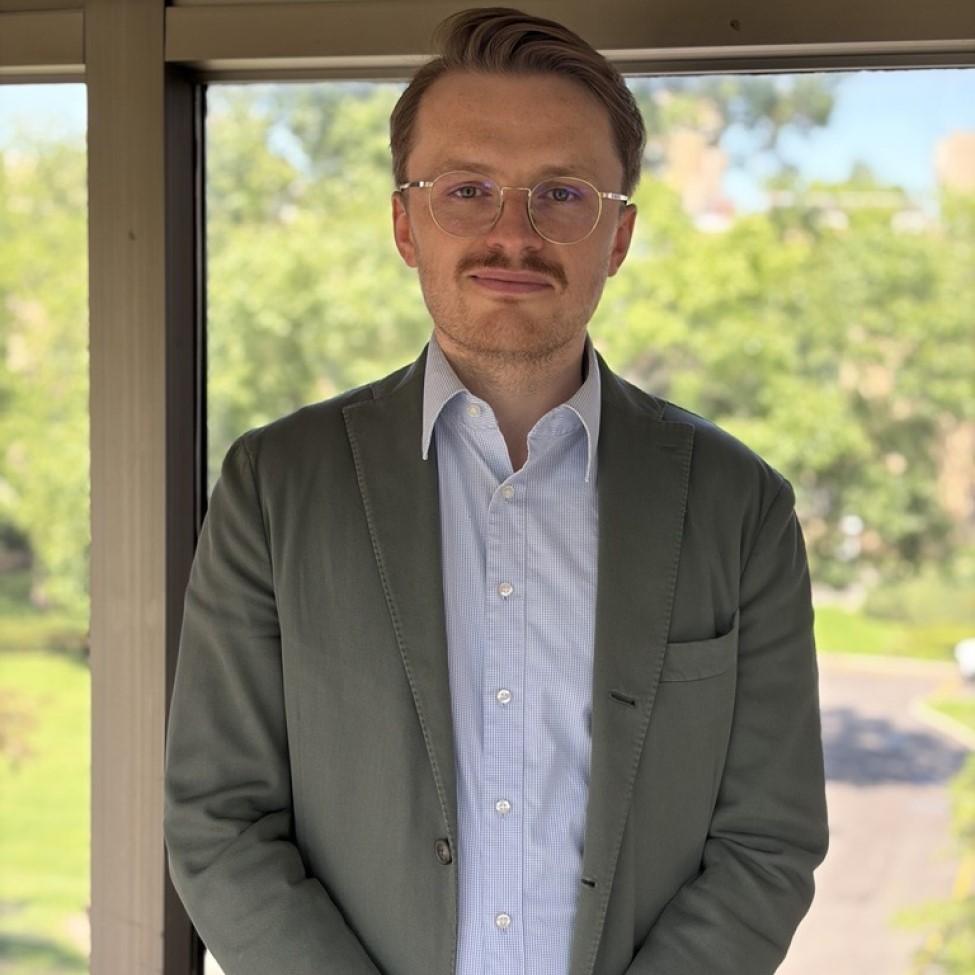
The Elisabeth Haub School of Law at Pace University is pleased to announce that Professor Philipp Schlüter has joined its full-time faculty as Assistant Professor of Law. Professor Schlüter brings an outstanding international and comparative perspective to the Law School. He will teach Commercial Law (Sales), Contracts, Civil Procedure, and Remedies.
Professor Schlüter’s scholarship spans the core fields of private law—including contract, tort, property, and unjust enrichment—as well as civil procedure, remedies, and bankruptcy. Across these areas, his research examines the relationship between legal form and substantive outcomes, drawing on comparative law to explore how formalism and functionalism shape legal doctrine.
“We are thrilled to welcome Professor Philipp Schlüter to the Haub Law faculty,” said Horace E. Anderson Jr., Dean of the Elisabeth Haub School of Law. “Professor Schlüter brings a thoughtful international and comparative perspective that will enrich both our curriculum and our scholarly community. His expertise across private law, civil procedure, and comparative legal systems will provide our students with valuable insight into the ways legal doctrines develop and evolve across jurisdictions.”
Prior to joining Haub Law, Professor Schlüter held academic positions at the University of Freiburg and the Max Planck Institute for Comparative and International Private Law in Hamburg, and worked at the German Federal Chancellery in Berlin and UNIDROIT in Rome, among others. Most recently, he served as a Senior Research Fellow at the University of Freiburg, where he taught Contracts, Property, Torts, and U.S. Contract Law and received the Quinn Emanuel Urquhart & Sullivan Faculty Teaching Prize.
Professor Schlüter has published extensively on private law and civil procedure in leading German legal journals and scholarly publications and has presented his research at academic institutions and conferences in both the United States and Germany. He received his legal education in Germany, earning his doctorate in law from the University of Freiburg. He also holds an LLM from Yale Law School and is on track to complete his JSD there this September.
“I am delighted to join the faculty at Haub Law and to become part of its academic community,” said Professor Schlüter. “I look forward to working with students in the classroom, continuing to develop my scholarship, and engaging with colleagues across the Law School. I am especially excited about the opportunity to bring my comparative perspective to both my teaching and research.”
Professor Schlüter’s appointment is the latest addition to Haub Law’s full-time faculty. The Law School recently welcomed Professor Allison Pincus as Assistant Professor of Law and welcomed Professor Jason J. Czarnezki back to the faculty as Professor of Law and Faculty Director of Bar Strategy and Performance.
The Elisabeth Haub School of Law at Pace University is pleased to announce that it has selected Professor Aisha Saad to receive the 2026–2027 Haub Environmental Law Distinguished Junior Scholar Award.


The Elisabeth Haub School of Law at Pace University is pleased to announce that it has selected Professor Aisha Saad to receive the 2026–2027 Haub Environmental Law Distinguished Junior Scholar Award. Presented annually, the award recognizes an emerging environmental law professor who exhibits scholarly excellence and promise at an early stage in their career. The Haub Environmental Law Faculty solicits nominations from law professors throughout the country and selects a recipient from that pool of nominees.
Professor Saad is an Associate Professor of Law at Georgetown University Law Center, where her areas of expertise include environmental law, business organizations and securities regulation, and torts. Her scholarship brings together interests in environmental law and corporate governance, examining important questions about the relationship between law, business, and environmental and social challenges.
“We are delighted to recognize Professor Saad with this year’s Haub Environmental Law Distinguished Junior Scholar Award,” said Margot J. Pollans, Gilbert and Sarah Kerlin Distinguished Professor of Environmental Law and Associate Dean for Faculty Development at Haub Law. “Her scholarship brings a thoughtful and interdisciplinary perspective to important questions at the intersection of environmental law and corporate governance. We look forward to welcoming her to Haub Law and engaging with her work as part of our Future Environmental Law Professors Workshop.”
Prior to joining Georgetown Law, Professor Saad was a Dickerson Fellow at the University of Chicago Law School, a fellow at the Harvard Law School Program on Corporate Governance and editor of the Harvard Law School Forum on Corporate Governance, as well as the inaugural Bartlett Fellow at Yale Law School. Professor Saad is also an Honorary Research Associate at Oxford University and leads executive education programming for Oxford’s Sustainable Law Program. Her work has been published or is forthcoming in the Boston College Law Review, Nature Climate Change, the Columbia Business Law Review, the Berkeley Business Law Journal, the Berkeley Journal of Middle Eastern and Islamic Law, and in edited volumes by Routledge and Palgrave MacMillan.
“I am honored to receive the Haub Environmental Law Distinguished Junior Scholar Award and to join the remarkable group of scholars who have received this recognition,” said Professor Saad. “The award is especially meaningful to me because of Haub Law’s longstanding leadership in environmental law and its commitment to ambitious scholarship in the field. I am grateful to the Haub Environmental Law Faculty for recognizing my work at a formative stage in my scholarly career, and I very much look forward to visiting in September to share my work and engage with faculty, students, scholars, and others in the broader environmental law community.”
Professor Saad holds a JD from Yale Law School, a doctorate in Geography and the Environment from Oxford University (where she studied as a Rhodes Scholar), and a BS in Environmental Health Science from UNC Chapel Hill.
As the 2026–2027 Haub Environmental Law Distinguished Junior Scholar, Professor Saad will present her scholarship to the Haub Law community as part of the Law School’s annual Future Environmental Law Professors Workshop. The workshop brings together current and aspiring environmental law academics and provides insight and guidance on entering the academic teaching market.
Professor Saad joins a distinguished group of past recipients of the award, which for more than a decade has recognized emerging scholars making important contributions to environmental law and related fields.
Haub Law Professor Emily Gold Waldman provides legal analysis to Chalkbeat on a Michigan school district policy requiring teachers to choose from a list of 32 pre-approved classroom messages or undergo legal review before displaying other signs. Professor Waldman says she has not seen another district adopt restrictions this specific, adding that the policy reflects broader efforts by school systems to avoid classroom discussions surrounding controversial topics.
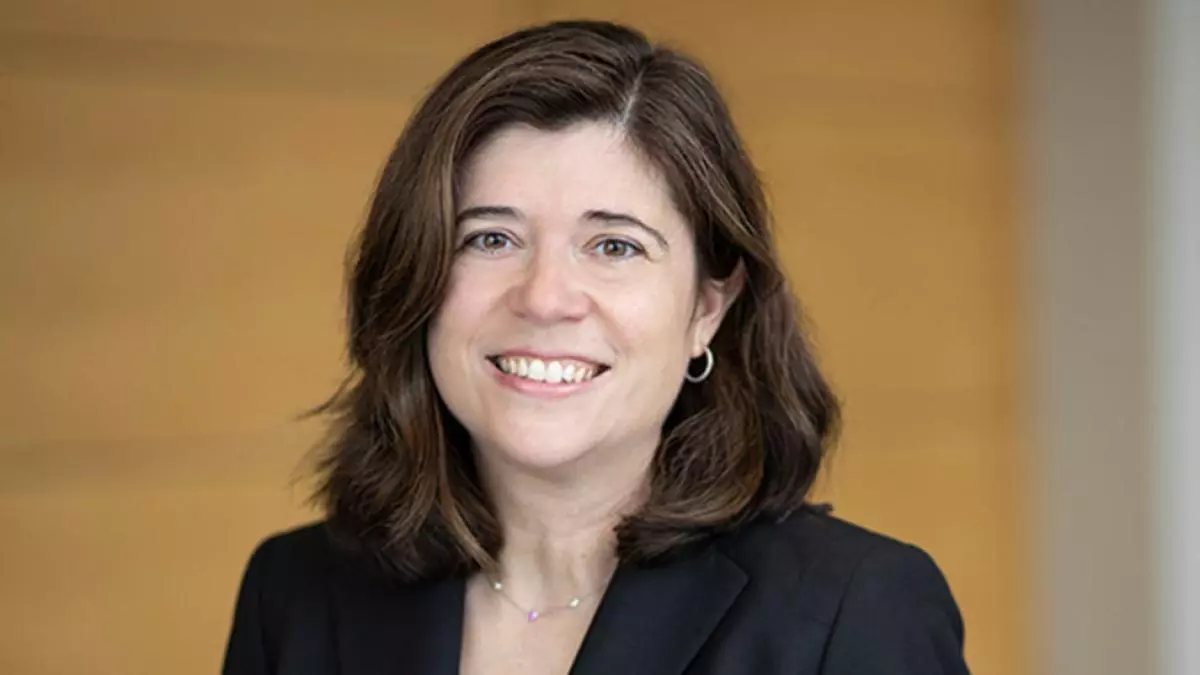
Haub Law Professor Sara Gonzalez-Rothi is featured in POLITICO discussing federal Clean Water Act permitting requirements for data centers. Professor Gonzalez-Rothi explains that public permitting processes give communities an important opportunity to understand and weigh in on projects with significant environmental impacts before construction begins.
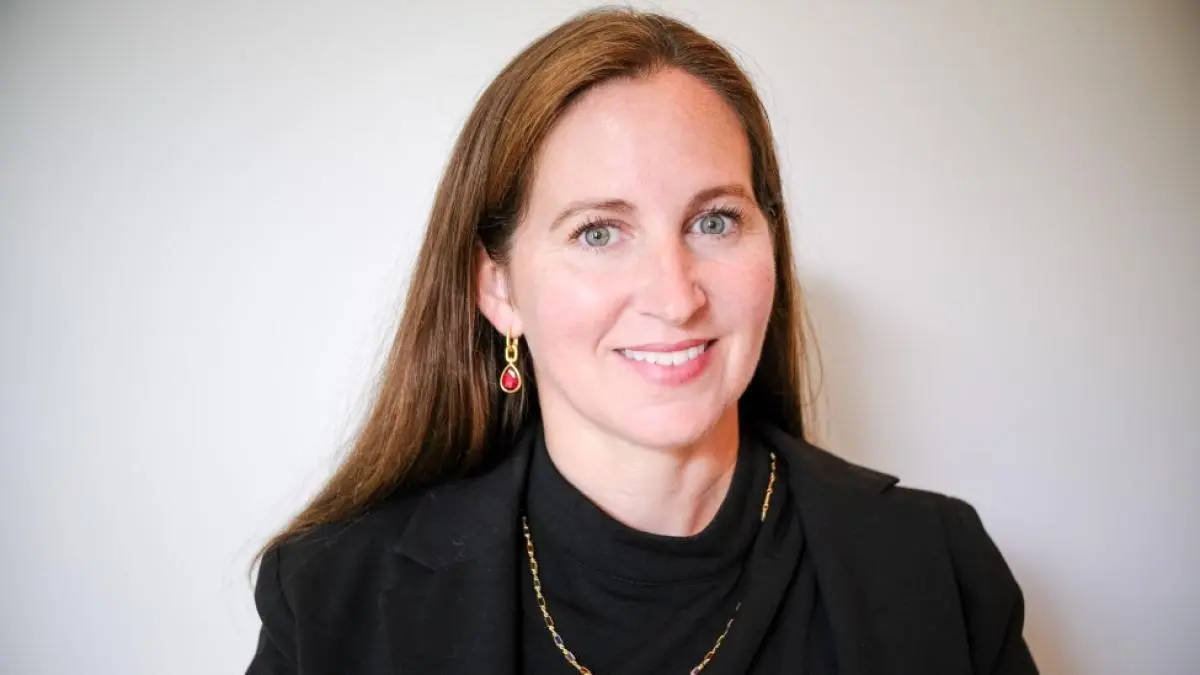
Haub Law Professor Bennett Gershman writes a piece in amNewYork examining a federal judge's ruling in Trump v. IRS. Gershman explores the court's findings that former President Donald Trump and Acting Attorney General Todd Blanche orchestrated a fraudulent lawsuit for personal benefit, writing that the case raises fundamental questions about executive power, the independence of the Justice Department, and accountability under the law.

The Sands College of Performing Arts BFA program is highlighted in Backstage for its expanding accessibility efforts. Danielle Pretsfelder Demchick, co-vice president of advocacy for the Casting Society, points to Pace as an example of a university investing in accessibility, calling it "one of the top BFA programs in the country."