Image
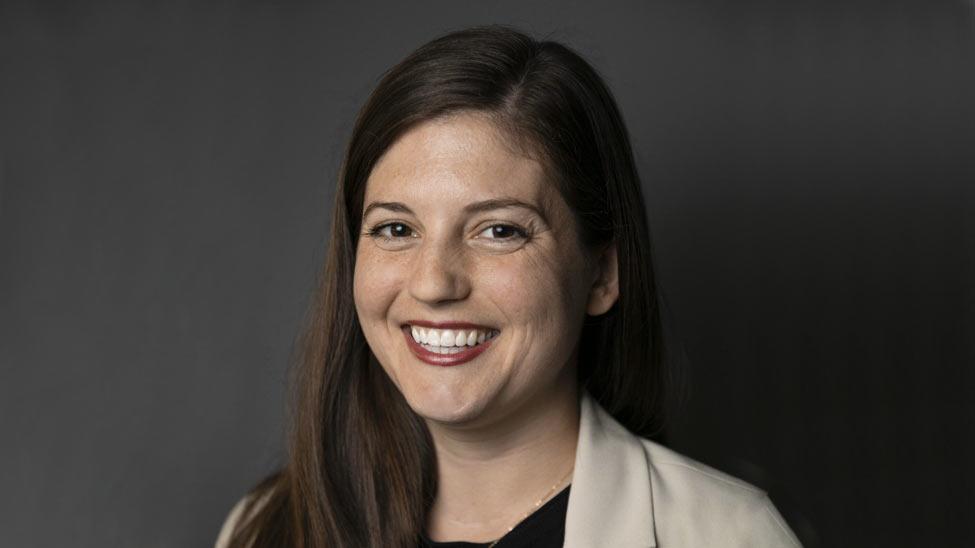
Professor Greer Donley of the University of Pittsburgh School of Law has been selected as the winner of 2019–2020 Haub Law Emerging Scholar Award in Women, Gender & Law for her paper Contraceptive Equity: Curing the Sex Discrimination in the ACA’s Mandate, 71 Ala. L. Rev. 499 (2019).
Professor Greer Donley of the University of Pittsburgh School of Law has been selected as the winner of 2019–2020 Haub Law Emerging Scholar Award in Women, Gender & Law for her paper Contraceptive Equity: Curing the Sex Discrimination in the ACA’s Mandate, 71 Ala. L. Rev. 499 (2019). Professor Donley is an Assistant Professor and the Director of the joint degree program in law and bioethics at the University of Pittsburgh School of Law. She teaches Legislation and Regulation, Bioethics and FDA Law.
Professor Donley’s research interests include reproductive rights, bioethics, FDA law and healthcare innovation. Her scholarship has explored a broad range of healthcare issues including parental autonomy rights over prenatal end-of-life decision-making, the legal and medical necessity of abortion care during pandemics, contraceptive equity in the Affordable Care Act, and regulations surrounding the consumption of pharmaceuticals in pregnant and lactating women. Her scholarship has appeared or is forthcoming in the Minnesota Law Review, Alabama Law Review, Journal of Law & the Biosciences, Journal of Law, Medicine, & Ethics, and Hastings Center Report.
Professor Donley received her J.D. from the University of Michigan Law School and her B.A. from Claremont McKenna College. Prior to her academic work, Professor Donley worked at Latham & Watkins LLP. She also clerked for Judge Robert Sack of the U.S. Court of Appeals for the Second Circuit.
“Professor Donley's thought-provoking article skillfully applies constitutional principles and precedents to argue that the exclusion of men from the ACA's contraceptive mandate violates the Equal Protection Clause,” said Professor and Associate Dean Emily Gold Waldman.
The Haub Law Emerging Scholar Award in Women, Gender & Law is presented annually in recognition of excellent legal scholarship related to women, gender and the law published by a full-time law professor with five or fewer years of full-time teaching experience. After an open call for submissions, papers are reviewed on a blind basis by four members of the Haub Law faculty with expertise in this area. This year’s judges were Noa Ben-Asher, Bridget Crawford, Darren Rosenblum and Emily Gold Waldman. Haub Law invites the award recipient to present their winning scholarship to the Haub Law community.
Professor David Cassuto writes about the ethical and scientific consideration of combating Zoonotic diseases.
NEW YORK, N.Y., July 21, 2020 – After fourteen years of excellent service and leadership by Andreas Manolikakis, Pace University announced that Professor Ion Cosmin Chivu has been appointed the new program chair of the Actors Studio Drama School Master of Fine Arts (MFA) program, effective July 1, 2020.
“We are pleased to have Professor Chivu at the helm of the Actors Studio Drama School (ASDS). As a member of the Actors Studio and longtime faculty member of the Pace School of Performing Arts at Dyson College of Arts and Sciences, he brings vast experience to this leadership position that includes his successful career as a director in the theater world. We are looking forward to his innovative ideas for teaching and learning that will inspire ASDS students and faculty alike,” said Richard B. Schlesinger, interim dean, Dyson College of Arts and Sciences.
A tenured associate professor since 2016, Chivu joined the Pace faculty in 2011 as a tenure-track assistant professor in what is now the Pace School of Performing Arts (PPA) with a mandate to create Bachelor of Arts programs in Acting and Directing that would be combined to create an International Performance Ensemble program. He has served as director of this successful program since its inception. A lifetime member of the Actors Studio and a member of the Lincoln Center Directors Lab, Chivu has completed Artist Residency programs with the Drama League, Society of Stage Directors and Choreographers, and the Old Globe Theater in San Diego, and is the founder of InterArt Theatre Group.
Recognized as a vital force in the theater world, Chivu has received multiple awards for his work. He has directed numerous professional and university productions in America, Austria, England, Germany, Greece, Italy, Romania, and Thailand. His production of “The Mutilated” by Tennessee Williams was nominated for the 2014 Drama League Award in the Best Revival category and was a New York Times and Time Out critics’ pick. Other projects include directing “Beautiful Province” by Clarence Coo, winner of the 2012 Yale New Drama Series, presented at Lincoln Center Theater 3; Irwin Shaw's “Bury the Dead” at HERE Arts Center and at the 2014 Sibiu International Festival; and “Something Cloudy, Something Clear” by Tennessee Williams, produced by the Provincetown TW Festival. In America, Chivu has directed more than 30 plays in New York City (Lincoln Center, Cherry Lane, The Actors Studio, HERE Arts Center, UBU Rep, The Players), Massachusetts (The Provincetown Tennessee Williams Theater Festival, Ko Festival), California, and New Jersey.
Chivu has received the Pace International Outstanding Faculty Award recognizing his commitment to internationalizing the curriculum and has been granted Kenan Funding for Faculty Development. He has sponsored and mentored students participating in the Annual Meeting of the Society of Fellows of Dyson College and the Dyson Summer Undergraduate research program, as well as supervising students working on their Honors Theses. He has overseen the PPA Masters Series at Schimmel Center, which brings well-established actors, writers, directors, designers, and theater professionals to Pace to share their craft and invaluable perspectives on the creative process.
Chivu holds a Bachelor in Fine Arts in Theater Arts from the G. Enescu Art Academy, in Iasi, Romania, and a Master of Fine Arts in Dramatic Arts/Directing at the Actors Studio Drama School, then at the New School.
“We want to thank Andreas Manolikakis, who has served as program chair for the Actors Studio Drama School at Pace since the program’s inception in Dyson College in 2006. He has been the steward of the program’s mission and maintained its close connection to The Actors Studio. Please join us in thanking him for his many years of service to ASDS,” said Schlesinger.
About the Actors Studio Drama School, MFA Program: Housed within the Dyson College of Arts and Sciences at Pace University, and the only MFA program created and sanctioned by the Actors Studio, the School offers the authenticity, continuity, and authority of the Stanislavski System and the Method. A fundamental principle of the Stanislavski System and the work of the Actors Studio is to help the artist to discover, liberate, and disclose his or her individual expression. The School provides the special conditions that allow the student-artist to feel safe, to trust, to take risks, and to grow, as delivered through its unique curriculum, superb faculty, and excellent facilities.
About Dyson College: Pace University’s liberal arts college, Dyson College offers more than 50 programs, spanning the arts and humanities, natural sciences, social sciences, and pre-professional programs (including pre-medicine, pre-veterinary, and pre-law), as well as many courses that fulfill core curriculum requirements. The College offers access to numerous opportunities for internships, cooperative education and other hands-on learning experiences that complement in-class learning in preparing graduates for career and graduate/professional education choices.
Pace University has a proud history of preparing its diverse student body for a lifetime of professional success as a result of its unique program that combines rigorous academics and real-world experiences. Pace is ranked the #1 private, four-year college in the nation for upward economic mobility by Harvard University’s Opportunity Insights, evidence of the transformative education the University provides. From its beginnings as an accounting school in 1906, Pace has grown to three campuses, enrolling 13,000 students in bachelor’s, master’s, and doctoral programs in more than 150 majors and programs, across a range of disciplines: arts, sciences, business, health care, technology, law, education, and more. The university also has one of the most competitive performing arts programs in the country. Pace has a signature, newly renovated campus in New York City, located in the heart of vibrant Lower Manhattan, next to Wall Street and City Hall, and two campuses in Westchester County, New York: a 200-acre picturesque Pleasantville Campus and the Elisabeth Haub School of Law in White Plains. Follow us on Twitter or on the Pace News website.
A new imaging system on the Pleasantville campus provides fresh teaching, learning, and research capabilities.
Thanks to a grant from the National Science Foundation, the Dyson College of Arts and Sciences Departments of Biology and Chemistry and Physical Sciences have a new piece of equipment set to dramatically enhance and expand scientific research at Pace.
Described as a high-throughput imaging system, the state-of-the-art device allows faculty and students to gather and measure data that can be used in diverse areas of neuroscience research. It can process a large amount of data quickly, easily, and thoroughly, and gives the Pace science community access to the same microscopy and image analysis capabilities as can be found in laboratories at establishments including the Carnegie Institution for Science in Baltimore and the National Cancer Institute. It was installed on the Pleasantville campus earlier this year.
“It is incredibly convenient and useful for imaging many specimens at one time,” Kristie Oluyemi ’20, a behavioral neuroscience major, said.
Developed at MIT in 2010 and made commercially available by Union Biometrica, the machine will provide students with greater opportunities to experience working with large data sets, collaborate across departments and publish research findings. Some of the data generated will also be used in Pace University’s teaching laboratories to help strengthen STEM students’ quantitative and qualitative research skills.
“This system, in conjunction with the existing infrastructure, will enable us to do experiments that very few academic places have the capability to perform,” Assistant Professor of Biology Sally Marik, PhD said. Professor Marik served as the principal on the grant application. She worked with fellow biology professors Nancy Krucher, PhD and Aaron Steiner, PhD, and Professor of Chemistry Sergey Kazakov, PhD.
Professors Alexander K.A. Greenawalt and Bridget J. Crawford co-write an article for The Hill about the Princeton University controversy involving the legacy of Woodrow Wilson’s name.
Gerald Olvera ’18 goes from small town American kid, to dedicated Navy Helicopter Crewman, to Sgro Fellow at A&E Network.


Gerald Olvera ’18 goes from small town American kid, to dedicated Navy Helicopter Crewman, to Sgro Fellow at A&E Network.

I was born and raised in a small town in Indiana called Rome City. I was always an adventurous, outdoorsy kid with an affection for both water and flight, so after high school, I enlisted in the Navy and became an aircraft mechanic. I first worked on hydraulic and pneumatic systems, and later became a helicopter crewman, so, instead of just working on the aircraft, I started flying in them. I served eleven years on active duty, three years as a reservist, and one year with the State Department. Throughout the eleven years, I circumnavigated the globe three times, went to forty-four countries, and have been on every continent. Before I entered the reserves, I deployed ten times, each for different durations. I really enjoyed my experience.
The military taught me how to learn, meaning how to ingest information quickly, segment it, store it, process it, and then recall it whenever needed. The Navy also gave me the confidence to talk to people, and I think public speaking skills are really important today. After I left active duty, I also wanted to help younger sailors with their careers, so that was great, because it taught me that yes, my career is important, but the future generation is more important than me right now. I still get calls today for advice.
In 2012, I anticipated a downsize in the military, so I planned to become a contractor with the Navy and work as a civilian. The transition to get out of active duty back to civilian life is tough. I visited my brother in Westchester, and he convinced me to stay in New York, for the opportunities he felt were abundant there. I had nothing, but moved and got a couple of part-time jobs right away. College was on my radar, but I did not know where to go. At a social gathering, I met a Pace alumna, and upon learning that I was a vet, she advised me to check out Pace and its beautiful Pleasantville campus, just ten minutes from where I lived. She told me it had a great student veteran program and connected me with Rob Rahni. He saw me right away, and explained from start to finish, how my GI Bill could support me.
I wanted flexibility in my courses, so I selected Liberal Studies as a major. I picked media as a concentration, and signed up for a film editing class, and other communications classes, such as writing for print media and writing for digital media. I fell in love with editing the most. I had many questions, and would often pull aside Professor LaRosa, Media, Communications and Visual Arts (MVCA). She actually took time out of her day to get a hold of people who would help me edit. That was really welcoming, and I became fascinated with it. LaRosa saw my interest and encouraged me to sign up for her Digital Editing II class, a challenge she thought I could handle.
I went to Career Services, and they encouraged me to attend an upcoming Job Fair at the Goldstein Fitness Center. The first booth I saw when I walked in was for the A&E Network. The HR rep told me that I was a perfect candidate for the Sgro Fellowship, but that somebody was already in the program, so she asked if she could hold onto my resume if I was interested. I said, "Absolutely." Months later, I was living in Brooklyn and working as a production assistant when I got the call from A&E. LaRosa was excited for me, and when I told her that I really wanted the job, she said, “We want you to get it, too."
It’s an 18-month rotational program that covers all of global and technical operations, from post-production to engineering, and includes international sales, advertising, marketing, and some IT and cyber security. I’ve also been involved in production and shot a couple of Live PD episodes. Currently, I’m working as a business analyst and quality assurance representative, with a focus on Cloud-based media supply chain management.
I've literally been popping onto the Pleasantville campus on my way home from Stamford, CT and talking to students, who have been like, "Hey, I know you." I’m also helping two current students with their films, by serving in roles as a veteran who has PTSD and a homeless man who helps a troubled teen find his way back home. We start filming Post-Traumatic on March 30, 2019. This will be an eye-opener for anyone who doesn’t understand the complexities faced by many veterans who suffer from this disorder. The Lighthouse will be filmed in mid-April.
As far as advice, I’d say that you will never understand true potential until you exceed your limitations -- I'm a firm believer in this, because I never thought I was going to be in the position I'm in right now. Don’t waste your time worrying about where you started, visualize where you want to finish. Then, focus on how to get there. Also, don’t forget there is always help, and don’t be afraid to ask. I accepted a lot of help along the way, and I turned around and gave that help back. My goal is to pay it forward by continuing to give that help back.
NEW YORK (June 24, 2020) – The National Science Foundation (NSF) has awarded Pace University Seidenberg School of Computer Science and Information Systems Professor Zhan Zhang, Ph.D., a $175,000 grant to research wearable technology for emergency healthcare workers.
“This is my long-standing research interest,” said Professor Zhang, who has been doing research in the healthcare technology field since 2011. “Emergency care work is inherently important to society as it deals with life-threatening injuries and emergency situations. Improving the work efficiency of emergency care will lead to better patient outcomes and decreased medical errors.”
Zhang’s almost decade of work in the field has brought him to his current project: designing and developing novel technologies to support decision making and collaboration in highly dynamic medical environments. In these situations, decisions must be made quickly and acted upon immediately, such as when paramedics work to keep someone’s heart beating while transporting them to a hospital.
Throughout the two-year term of the grant support, Dr. Zhang aims to develop wearable devices that can be used by paramedics to collect real-time patient data in a hands-free manner, and to communicate with emergency room and trauma teams at the receiving hospital. For example, paramedics transporting a patient can use smart glasses to transmit what they are seeing to colleagues awaiting the patient at the hospital. This enables them to act upon observations and instructions delivered by colleagues with relevant expertise. The result would be more efficient and effective patient care until the paramedics could deliver the patient to the hospital.
“In this time of global pandemic, there is no research work more vital than leveraging technology to rapidly diagnose and treat patients. Dr. Zhang’s work will empower emergency medical technicians with real time information to analyze a patient’s condition and apply the best available treatments on the spot,” said Jonathan H. Hill, DPS, Dean of the Seidenberg School of Computer Science and Information Systems.
“I feel extremely excited to work on this challenging yet understudied research problem that has significant scientific and societal impacts,” Professor Zhang added.
At Pace’s Seidenberg School of Computer Science and Information Systems (CSIS), students experience the best of IT education at one of the first comprehensive schools of computing in the nation. Strategically located in the heart of NYC’s tech scene, the Seidenberg School places students on the doorstep of New York’s most promising companies, whether they are established tech giants or exciting new startups. Through partnerships with leading corporations, banks, federal agencies, and global entities, the School's curricula and programs are designed to give students the latest in computer science theory and invaluable hands-on practice to ground it. The faculty includes numerous cybersecurity experts who operate labs and centers providing students with practical experience and connections that lead to impressive internships and jobs.
Pace University has a proud history of preparing its diverse student body for a lifetime of professional success as a result of its unique program that combines rigorous academics and real-world experiences. Pace is ranked the #1 private, four-year college in the nation for upward economic mobility by Harvard University’s Opportunity Insights, evidence of the transformative education the University provides. From its beginnings as an accounting school in 1906, Pace has grown to three campuses, enrolling 13,000 students in bachelor’s, master’s, and doctoral programs in more than 150 majors and programs, across a range of disciplines: arts, sciences, business, health care, technology, law, education, and more. The university also has one of the most competitive performing arts programs in the country. Pace has a signature, newly renovated campus in New York City, located in the heart of vibrant Lower Manhattan, next to Wall Street and City Hall, and two campuses in Westchester County, New York: a 200-acre picturesque Pleasantville Campus and the Elisabeth Haub School of Law in White Plains. Follow us on Twitter or on the Pace News website.
Pace University’s Seidenberg School of Computer Science and Information Systems announced its new Cybersecurity Certificate Programs in conjunction with Cyber Intelligence 4U. The new programming is available in-person and online and can be tailored for individual and organizational needs.

Pace University’s Seidenberg School of Computer Science and Information Systems announced its new Cybersecurity Certificate Programs in conjunction with Cyber Intelligence 4U. The new programming is available in-person and online and can be tailored for individual and organizational needs.
The curriculum fills the gap between the business and technology perspectives and prepares students for new roles in cybersecurity that are needed across the organization. The programs include:
“The worldwide demand for cyber expertise at the business level has already begun to skyrocket,” said Jonathan Hill, Dean of the Seidenberg School of Computer Science and Information Systems at Pace University. “It is not an IT problem anymore; it is the number one business issue that must be addressed immediately.”
“We're excited to these offer cutting-edge courses at Pace”, commented Program Director and Cyber Expert Ariel Evans. “We have over 4000 graduates in the New York Tri-State area over the past two years. Course content is created and taught by unparalleled subject matter experts from leading companies.”
Online cohorts began on May 1, with fresh opportunities for students to participate available in the future. The first in-person cohorts are planned for Fall 2020.
Pace University recently launched a Master of Science in Cybersecurity, beginning in Fall 2020.
To learn more about the program and partnership between Pace University and Cyber Intelligence 4 U, visit the Cybersecurity Certificate Programs page.
At Pace University’s Seidenberg School of Computer Science and Information Systems, students experience a best-of-breed technology education at one of the first comprehensive schools of computing in the nation. Strategically located in the heart of NYC’s tech scene, the Seidenberg School places students on the doorstep of New York’s most promising companies, whether they are established tech giants or exciting new start-ups. Through partnerships with leading corporations, banks, federal agencies, and global entities, the School's curricula and programs are designed to give students the latest in computer science theory and invaluable hands-on practice to ground it. The faculty includes numerous cybersecurity experts who operate labs and centers providing students with practical experience and connections that lead to impressive internships and jobs.
Cyber Intelligence 4U is an educational services company that provides cybersecurity educational programs that fill the gaps in traditional education to universities, organizations, and individuals. The mission of Cyber Intelligence 4U is to increase the cyber resiliency of organizations by training and developing the skills and knowledge of the individuals and enabling them to make strategic decisions regarding cybersecurity management. Cyber Intelligence 4U’s intellectual property is based upon 3 years of research with the Fortune 1000 and cyber insurance industry and curriculum approaches cybersecurity risk from a business perspective. Cyber Intelligence 4U’s Enterprise Cybersecurity Program has graduated over 4,000 students in under two years and is utilized at major universities and organizations worldwide. The technical program offerings provide cybersecurity training and workforce enhancement training for individuals to significantly augment their current cybersecurity skill level.

New Curriculum, Online Courses Offer Flexible, Convenient & Cost-Effective Options for Students and Professionals Seeking to Advance Careers
NEW YORK (May 26, 2020) – Responding to the needs of the workforce, advances in online learning technology, and continuous business evolution and disruption, Pace University’s Lubin School of Business is launching an accelerated and revamped MBA program this fall that is faster, flexible, and more convenient for students, the University today announced.
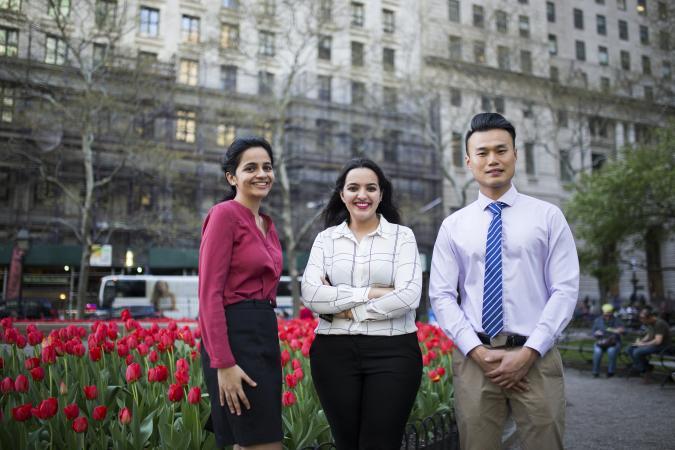
Curriculum: The new and specialized curriculum, which includes in-person classes and an exclusively online MBA option, is ideal for working professionals and people looking to advance their careers. The new MBA requires 39 credits. There will be 10 focus areas including: accounting, business, business analytics, corporate finance, investment management, information systems, marketing analytics, marketing management, talent management, and strategy and international management, all of which are expected to continue to be in great demand for the foreseeable future.
Speed to Degree: Students can earn the new Pace MBA on an accelerated timetable in as little as one year full-time or two years part-time. These options ideally accommodate the professional responsibilities and schedules of students.
Flexibility of Delivery: The program can be completed on campus, online, and with blended options. The MBA in Business option can be completed 100% online. Whether choosing on campus or online delivery, students will still have access to the same world- class faculty and services that Pace offers including career services, internships, events, and a global professional network.
Pace University has an established reputation in the New York City area for preparing students to be competitive, successful, and ready on day one in their careers, and its new MBA options build on this tradition. Pace is ranked the No. 1 private, four-year college in the nation for upward economic mobility by Harvard University’s Opportunity Insights, and the Lubin School of Business is renowned around the world.
“The new MBA requirements provide exactly what professionals need: world-class scholarship from leading professors in their fields that is fast-paced, flexible, and cost-effective,” said Neil Braun, dean of the Lubin School of Business. “We provide real-world experience and hands-on learning with a personalized approach for each student and Pace’s strong regional network of alumni and partners to help them achieve success and meet their career goals.”
“An MBA is a prerequisite for many careers in competitive fields,” Dean Braun continued. “Our new MBA gives full-time students and working professionals studying part-time the opportunity to achieve this flagship degree with many options to fit their circumstances and move their careers to the next level.”
To learn more about the program and specific course offerings, visit the Lubin School of Business.
Pace University has a proud history of preparing its diverse student body for a lifetime of professional success as a result of its unique program that combines rigorous academics and real-world experiences. Pace is ranked the #1 private, four-year college in the nation for upward economic mobility by Harvard University’s Opportunity Insights, evidence of the transformative education the University provides. From its beginnings as an accounting school in 1906, Pace has grown to three campuses, enrolling 13,000 students in bachelor’s, master’s, and doctoral programs in more than 150 majors and programs, across a range of disciplines: arts, sciences, business, health care, technology, law, education, and more. The university also has one of the most competitive performing arts programs in the country. Pace has a signature, newly renovated campus in New York City, located in the heart of vibrant Lower Manhattan, next to Wall Street and City Hall, and two campuses in Westchester County, New York: a 200-acre picturesque Pleasantville Campus and the Elisabeth Haub School of Law in White Plains. Follow us on Twitter or on the Pace News website.
Globally recognized and prestigiously accredited, the Lubin School of Business integrates New York City’s business world into the experienced-based education of its students at Pace’s suburban and downtown campuses, implemented by one of the region’s largest co-op programs, team-based learning, and customized career guidance. Its programs are designed to launch success-oriented graduates toward upwardly mobile careers.
In-person celebrations to take place when public health guidelines allow
NEW YORK (May 20, 2020) – Thousands of Pace University graduates, their families, and friends gathered online on Wednesday to recognize the accomplishments and successes of the Class of 2020 in a virtual celebration.
The cyber-festivities are by no means a replacement for the traditional pomp and circumstance of in-person Commencement ceremonies, which will take place at a future date, but rather an opportunity for people to come together from near and far to recognize all of the hard work, dedication and long hours of study that so many have completed in order to earn their college or advanced degree.
“You have earned your diplomas through intelligence, persistence, determination and especially, resilience,” Pace University President Marvin Krislov told the graduates. “You’ve excelled in the classrooms, in your labs, jobs, internships, practica, service, performance, and you’ve made friends and mentors in this extraordinary community we call Pace University. I am so happy for all you have achieved and I am so excited to see the future ahead of you.” (Timestamp: 1 hour)
This year a total of 3,624 students are part of the graduating class of 2020, which includes 1,394 New York City students and 713 students in Pleasantville. Additionally, there are 1,517 graduate students across its campuses. At Pace University’s Elisabeth Haub School of Law, they celebrated their virtual ceremony on Sunday when 185 Juris Doctor degrees were conferred, as well as 35 Master of Laws degrees and two Doctor of Science in Environmental Law degrees.
“Because of the pandemic, we will be graduating into a world completely different from the world we knew when we were in college, but I know we’re prepared because for the past four years, we’ve learned how to get grit,” New York City student Heather Farley of the Lubin School of Business at Pace Universitysaid. “For our entire college career, we’ve learned how to persevere when times get tough.” (Timestamp: 45 minutes)
Pleasantville student Brent Cameron of the Dyson College of Arts and Sciences called on his fellow graduates to achieve their goals regardless of the pandemic: “So for those of you who want to be teachers, go out there and teach people to think. Those of you who want to be doctors and nurses, go out there and make people well. For those of you that want to be writers, go out there and write the stories that will change this world. Go out and make those dreams real, because this pandemic will end, and life will continue.” (Timestamp: 54 minutes)
Historically, Pace has been a university where so many graduates have earned degrees and gone onto professional success. It’s one of the many reasons that Pace is ranked number one in upward economic mobility among four-year private universities according to a study conducted by Harvard University’s Opportunity Insights.
Pace University Provost, Vanya Quiñones, PhD, said: “You’re graduating today because of your resilience and your perseverance, your ability to succeed in extraordinary times. This is in part is what Pace teaches. I am proud of you for remaining focused and finishing strong. I know that it will continue to pay off.” (Timestamp: 1 hour 9 minutes)
Pace University has a proud history of preparing its diverse student body for a lifetime of professional success as a result of its unique program that combines rigorous academics and real-world experiences. Pace is ranked the #1 private, four-year college in the nation for upward economic mobility by Harvard University’s Opportunity Insights, evidence of the transformative education the University provides. From its beginnings as an accounting school in 1906, Pace has grown to three campuses, enrolling 13,000 students in bachelor’s, master’s, and doctoral programs in more than 150 majors and programs, across a range of disciplines: arts, sciences, business, health care, technology, law, education, and more. The university also has one of the most competitive performing arts programs in the country. Pace has a signature, newly renovated campus in New York City, located in the heart of vibrant Lower Manhattan, next to Wall Street and City Hall, and two campuses in Westchester County, New York: a 200-acre picturesque Pleasantville Campus and the Elisabeth Haub School of Law in White Plains.