Image
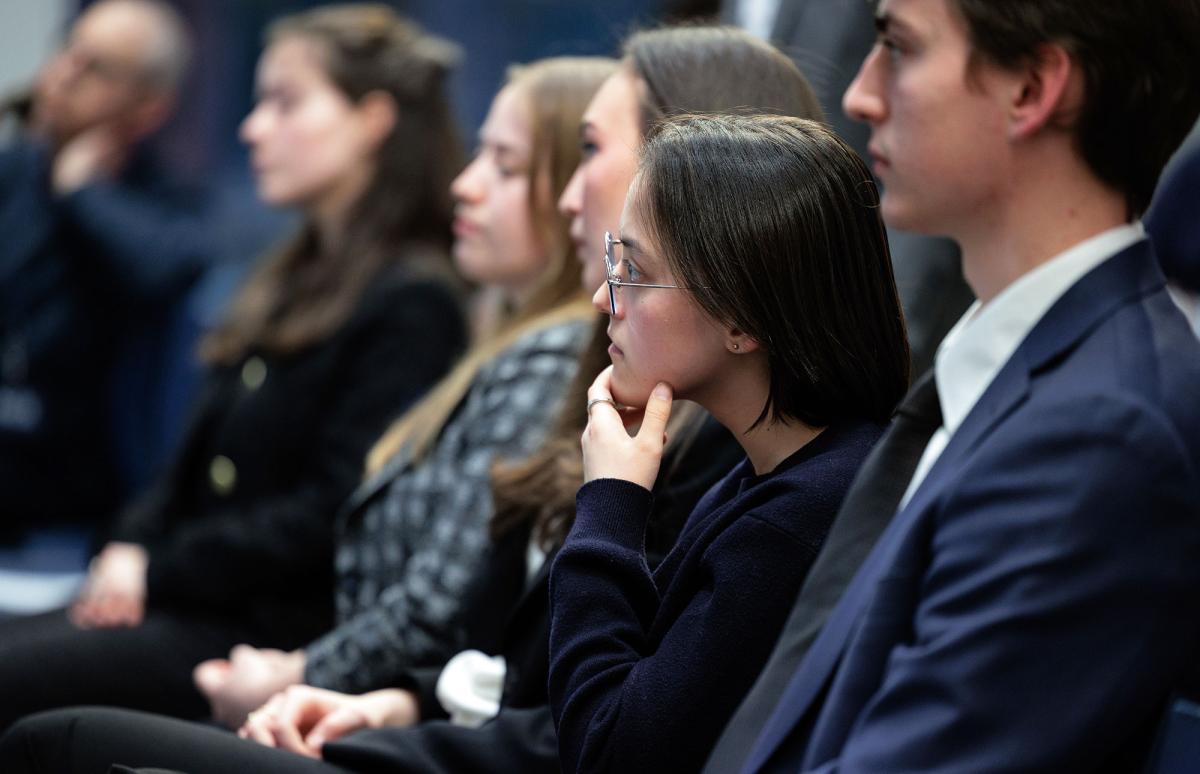

When the president of the Federal Reserve Bank of New York, John Williams, spoke at Pace University in February, it wasn’t just another campus event—it was the result of bold initiative, deep student engagement, and a passion for economics that runs deep within the Economics department and its many experiential learning offerings.
In recognition of Pace‘s consistent award-winning performance in the College Federal Reserve Challenge, Williams had accepted an invitation from Fed team co-captains Liam Chentoufi ’25, Economics, and Suraj Sharma '25, '26, Business Economics, BS/Applied Quantitative Economic Analysis, MS, with backing from Professor Gregory Colman, PhD, and Professor and Chair Anna Shostya, PhD, as well as higher administration, to come to the New York City campus.
He delivered optimistic remarks on monetary policy, inflation, and the US economy, while also acknowledging the many connections the Fed has had with Pace over the years, going beyond a shared location in lower Manhattan, and including employment of more than 100 proud alumni.
What transpired prior to his speech, however, was the icing on the cake for Pace students.
The event included a private Q&A in which Williams spoke to the Economics Society and Women in Economics student organizations (presidents Kristina Krichmaryov ’26, and Kristina Nasteva ’26, respectively, co-organized the event), in which he answered questions on both policy and his journey to Fed president—inspired by Janet Yellen, former chair of the US Federal Reserve.
Brooklyn Bynum ’26, Business Economics, BS/Applied Quantitative Economics, MS, said of the event, “Being able to speak to one of the most brilliant economists of our time was an invaluable experience. After studying the Federal Reserve's work and monetary policy in depth for the last year, it was incredible to speak to one of the people making the decisions.”
For student colleague Sharma, also a member of the Economics Society, the visit was both a significant and exemplary aspect of his Pace Path.
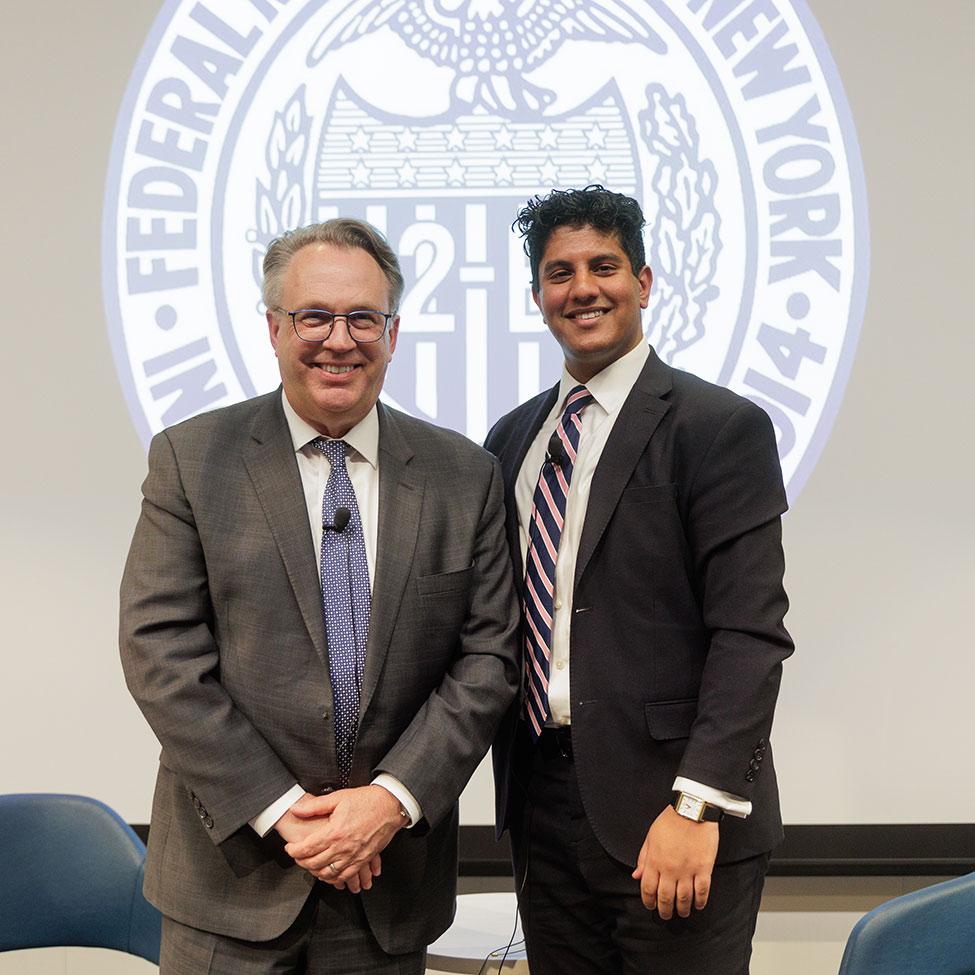
“I came to Pace because of the Fed Challenge team. It’s more than academics — it’s macro in the real world, public speaking, and research. The Fed team, Economics Society, and faculty support have defined my college experience,” he said.
Whether it is hosting prominent economists (Krichmaryov and Nasteva also brought renown labor economist Daniel Hamermesh to campus in October 2024), to placing students in top financial firms, Pace’s economics program punches well above its weight.
“We’re not an Ivy,” Colman said, “but our students are outcompeting Ivy grads when it comes to macro. And this is the most rewarding part of teaching. They’re not just learning—they’re doing.”

For Thomas Scopino ’27, a master's student in Environmental Science and Policy at Pace University's Dyson College of Arts and Sciences, an internship with the New York Public Library offered an unexpected opportunity to explore how environmental policy, energy efficiency, and urban sustainability intersect across New York City.

Through Pace University’s unique relationship with the United Nations, students are taking their education beyond the classroom and onto the global stage, advocating for human rights, engaging with international leaders, and gaining firsthand experience in shaping conversations that can change the world.

How much freedom are we willing to sacrifice in the name of security? As facial recognition and AI-powered surveillance expand worldwide, Political Science Professor and Chair Amy Freedman, PhD, examines what the rise of digital monitoring in Southeast Asia reveals about democracy, individual rights, and the growing power of governments to watch and control their citizens.