Image
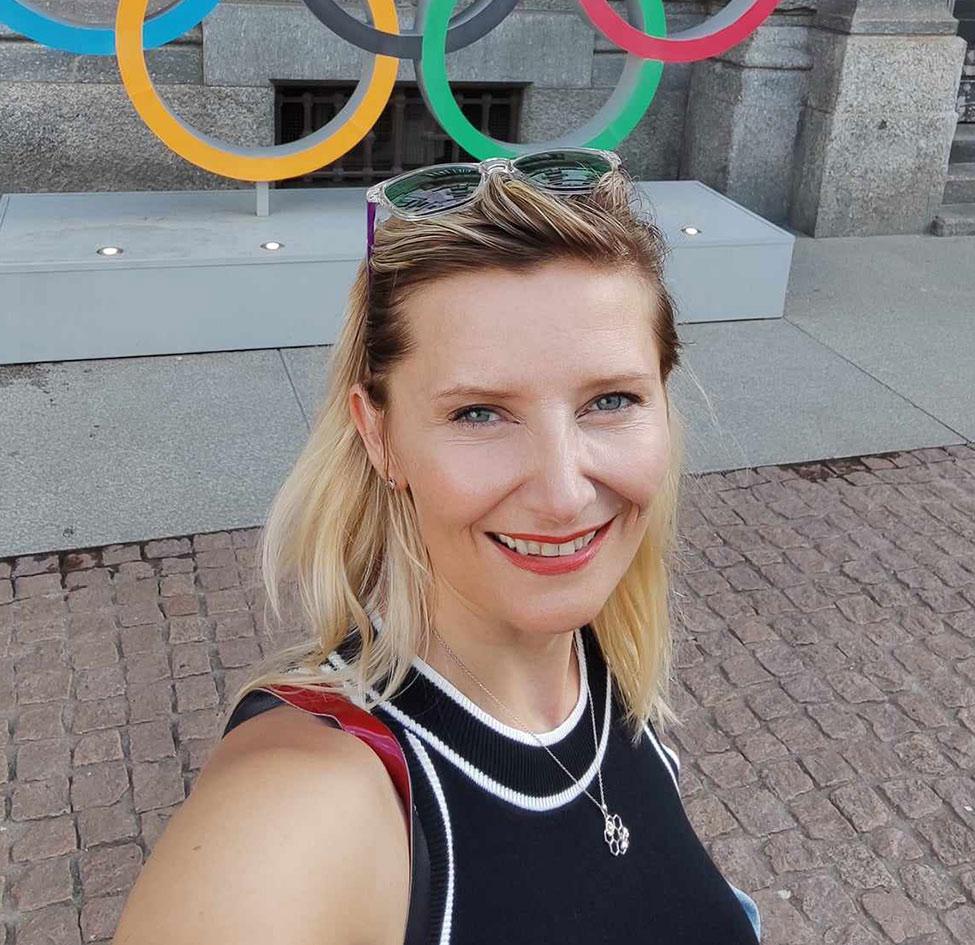
Associate Professor of Economics Veronika Dolar, PhD, is an economist whose research spans labor, health, and sports economics, exploring how deeply structural inequalities shape opportunity—whether in the realm of Olympic performance or everyday life.
As a dedicated faculty member in Pace’s award-winning Economics department, she integrates real-world data and research into both her teaching and the mentoring of undergraduate students, empowering them to produce their own publishable work.
Dolar’s recent work explored how income inequality affects national performance at the Winter Olympic Games. Her findings are both striking and sobering: nations with greater income inequality consistently send smaller delegations and win fewer medals, even after accounting for GDP, population, and institutional factors.
“While anyone can, in principle, qualify for the Olympics, the cost of elite training, coaching, equipment, and facilities make participation inaccessible to many,” she explained.
Using data from every Winter Games between 1992 and 2022, Dolar’s research treats Olympic success as an indicator of how effectively societies convert human capital into achievement. She has isolated the causal impact of inequality on performance, offering a fresh bridge between macroeconomic theory and sports analytics.
Through her research, presented at conferences from the Eastern Economic Association to the Center for Sociocultural Sport and Olympic Research, Dolar has created interactive data visualization tools, accessible to policymakers and journalists, but also students at Pace.
Dolar’s classroom reflects the same passion for connection between theory and practice and illuminates how economic structures shape opportunity in all areas of life.
Her economic inequality course, for example, integrates her own research, allowing students to work directly with the same datasets she uses in her publications. Students then become researchers in the process, replicating analyses using real data—from the World Bank to the Standardized World Income Inequality Database—and extend the work to areas such as education and healthcare.
“Economics isn’t just about money or markets,” she emphasized. “It’s about human potential and fairness—who gets to compete and succeed.”
Dolar also models the power of collaboration through student research in other ways.
An example is her partnership with undergraduate students, such as Fatima Abba ’26, to co-develop a manuscript inspired by Robert Reich’s Wealth & Poverty lecture series. What began as lecture summaries evolved into a project blending theory, data, and narrative to explore global inequality. Supported by the Dyson Student-Faculty Summer Research Award and Omicron Delta Epsilon, it will serve as a foundation for Dolar’s future textbook, Understanding Economic Inequality: An Introductory Guide Through Real-World Economics.
“It was transformative,” she reflected. “The students gained hands-on experience with data, writing, and policy analysis. It showed them that research can become real scholarship.”
In addition, in her fall 2025 introduction to macroeconomics class, an assignment was included, as part of the Archipelago Macroeconomics Project, that is a reflection of students shifting from being passive recipients of traditional economic knowledge to active producers whose analyses become accessible to more broader, public audiences.
Working in teams, and under Dolar’s guidance, they created websites and digital artifacts that analyzed core macroeconomic indicators for Caribbean island economies, comparing them to the US, New York State, and New York City. The result: Pace students with more academic agency, ownership, and collaboration in an otherwise large lecture course.
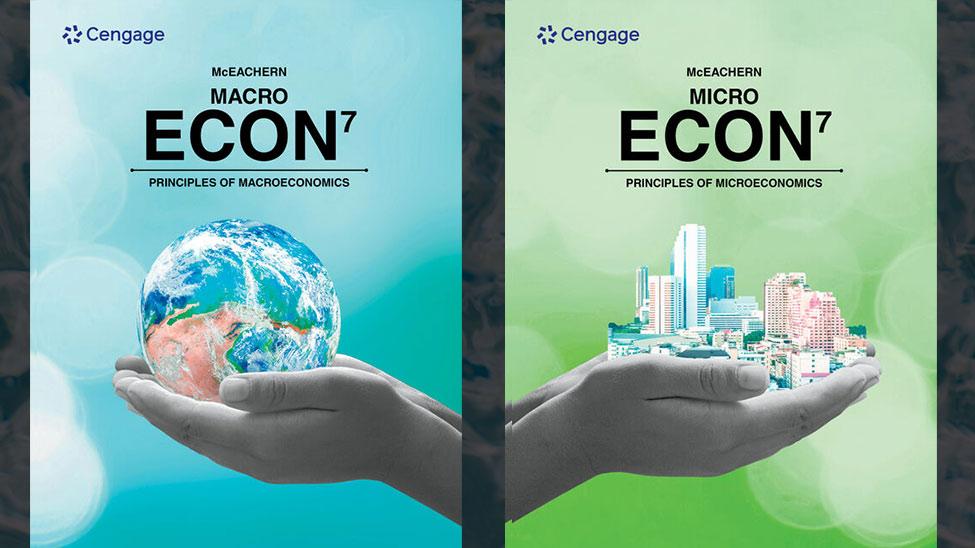
In recent years, Dolar has also taken on the challenge of modernizing and reshaping how economics is taught in classrooms at Pace and beyond, and with that, a chance to make economics engaging and relevant to a new generation of students.
To this end, she has co-authored the 7th editions of ECON MACRO and ECON MICRO (Cengage Learning, 2024), texts that connect theory to everyday examples—from the competition between Ben & Jerry’s and Häagen-Dazs to the recent spike in egg prices.
“Economics, especially macroeconomics, has changed dramatically,” she said. “And our textbooks need to reflect that reality.”
In addition, Dolar has illuminated the continuing exclusion and underrepresentation of women within the economics profession (a trend, by the way, that Pace is bucking) through co-authoring another work, Missing Voices in Economics: Addressing the Gender Gap (Palgrave MacMillan, 2026). The book has been utilized in her Pace course on Economics of Gender, Race, and Class, integrating its findings into classroom discussion and analysis.
Whether in her research, authorship of textbooks, or mentorship of students, Dolar’s passion is clear: helping others understand the world so they can make it better.
“What motivates me is seeing that ‘aha’ moment when students realize economics can explain the forces shaping their lives. That curiosity and empowerment are what make this work so rewarding,” she said.

In a world where everyone can share the news, who decides what's true? Drawing on more than a decade of research, associate professor Mirjana Pantic explores how readers can participate responsibly in the news while separating fact from fiction in her book, Digital News Literacy and Participatory Journalism.

What can dogs teach us about ourselves? Through the Dog Lab, Dyson College assistant professor Molly Byrne, PhD, is using innovative virtual research to uncover new insights into canine and human behavior alike.

Pace University associate professor of biology Jeanmaire Molina’s decade-long effort to cultivate endangered Rafflesia reflects the power of faculty research to advance global conservation through community partnership.