Image
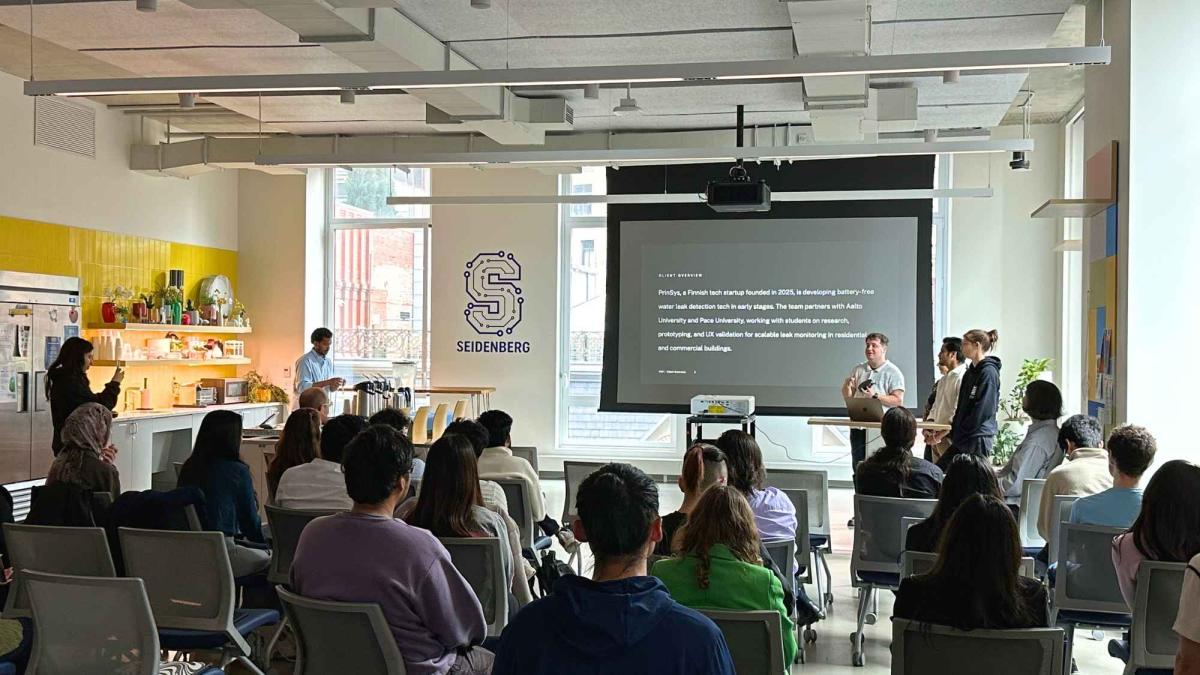

Innovation, storytelling, and immersive technology took center stage at Pace University this spring as the NYC Design Factory at the Seidenberg School of Computer Science and Information Systems hosted its annual Project Gala. Through interactive installations, projection-based storytelling, future-focused infrastructure concepts, and digital exhibits, students explored New York City’s hidden histories, environmental futures, and evolving social landscapes.
The NYC Design Factory serves as a collaborative hub where students, faculty, and industry professionals come together to address challenges in both industry and society through activities and courses. It is a member of the Design Factory Global Network, a global community of innovation hubs located in universities and research centers dedicated to fostering the next generation of innovators. The program is centered around a problem-solving approach that is technology-centered, design-inspired, and human-focused.
These projects demonstrate what becomes possible when students engage with technologies emerging from advanced scientific research and apply them to societal and environmental challenges.
This year’s gala reflected those values through projects developed within the NYC Design Factory and the Human Centered Design MS program, where students explored climate resilience, urban infrastructure, public memory, environmental justice, and civic participation through the lens of New York City’s islands and urban systems, demonstrating how design and technology can help us better understand and reimagine the world around us.
“These projects demonstrate what becomes possible when students engage with technologies emerging from advanced scientific research and apply them to societal and environmental challenges,” said Andreea Cotoranu, director of the NYC Design Factory and clinical professor at Seidenberg. “The teams went far beyond designing individual interfaces or interactions; they envisioned systemic, future-facing concepts connecting technology with the needs of cities, communities, and society at large.”
Many of the featured projects reimagined New York City’s islands as immersive educational experiences. Staten Island transformed the borough’s environmental and industrial history into an interactive projection experience, while The Evolution of Use: Randall’s Island allowed visitors to explore the changing uses of the island through a tactile timeline interface. Sustainability and Urban Planning on Roosevelt Island examined environmentally conscious urban design through an interactive digital map, and Jamaica Bay Islands Projection immersed visitors in the wetlands ecosystem through projection-based storytelling centered on migratory wildlife and conservation.
The Design Factory experience challenges students to think beyond the product itself and consider the people and systems their ideas will impact
Additional installations explored the city’s cultural memory and overlooked spaces. Rockaway – Living on the Edge blended floor projections, wave simulations, and archival storytelling to create an immersive experience of Rockaway’s coastline and identity. Wood • Water • Work recreated City Island’s shipbuilding history through a digital museum environment inspired by the craftsmanship and labor of historic shipyards. Meanwhile, Hart Island examined the island’s long history of institutionalization and exclusion through archival imagery and spatial storytelling.
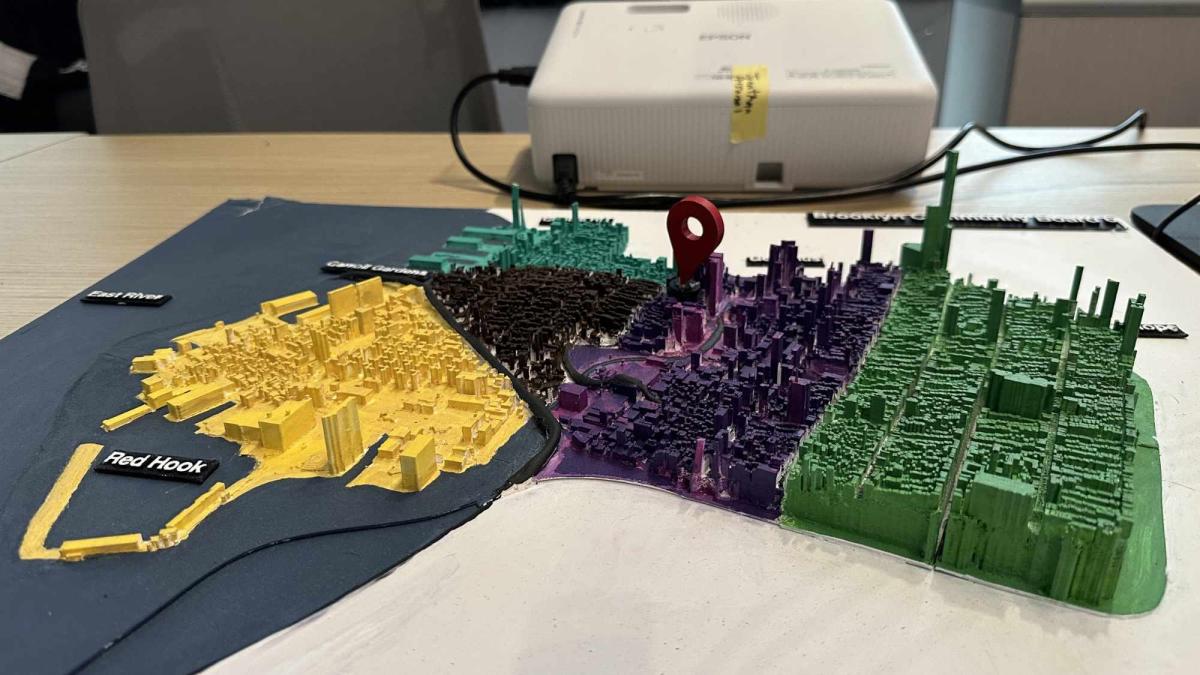
Several projects also focused on civic systems and environmental justice. Brooklyn CB 6 as an Island transformed community-board boundaries into an interactive map examining environmental inequities and neighborhood identity, while Communities on the Line invited visitors to engage with public discourse surrounding homelessness and shelter placement through an immersive telephone-based audio installation.
“The Design Factory experience challenges students to think beyond the product itself and consider the people and systems their ideas will impact,” said Jonathan Williams, D. Des., clinical assistant professor at Seidenberg. “These final projects reflect what can happen when design-led approaches are used to address real-world challenges.”
The gala also featured future-focused infrastructure concepts aimed at addressing future urban challenges. StreetCharge proposed streets capable of wirelessly charging electric vehicles while integrating renewable energy and green infrastructure into the urban landscape. MTA Sub-Zero-Way tackled rising subway temperatures with an underground cooling system designed to improve rider comfort and safety, while Aeropod – Localized Construction Air Control introduced a filtration system intended to reduce airborne pollutants generated by dense urban construction activity.
Other projects expanded the experience beyond the physical exhibition space. NYCIslands.com transformed extensive research about New York City’s 42 islands into an interactive public-facing digital archive featuring maps, educational resources, and community storytelling.
The event also highlighted international collaboration and systems-focused product development through Prinsys Early Leakage Detection, created in partnership with Finnish startup Prinsys and Aalto University. The project explored how proactive infrastructure systems can help property managers detect and respond to water leaks before damage escalates. Combining battery-free sensors, cloud-based monitoring, and a user-centered mobile application, the project demonstrated how thoughtful design can make complex building infrastructure more visible, actionable, and efficient for both residential and commercial spaces.
Together, the projects showcased how immersive technology, systems thinking, and human-centered design can reshape how people engage with history, infrastructure, and the future of urban life.

Discover how Pace student Tyler Yeung co-founded Averent to help indie game developers connect with audiences and improve game discovery.

Pace Seidenberg students tested their cybersecurity skills at the 2026 Northeast Collegiate Cyber Defense Competition.

Discover how Pace students tackled real-world AI challenges during an immersive internship experience at Seidenberg.