Image
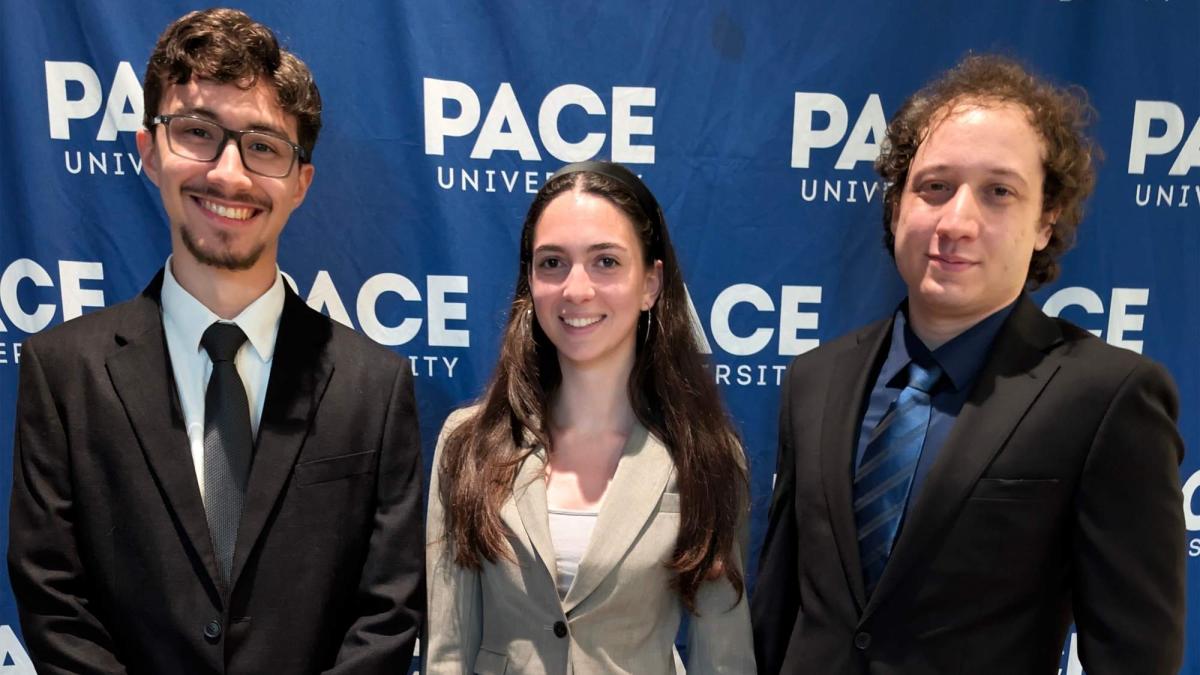

Only months after its launch, the Gale Epstein Center for Technology, Policy and the Environment at Pace University is already emerging as a hub for civic innovation, experiential learning, and environmental advocacy. Housed within Pace’s Seidenberg School of Computer Science and Information Systems, the Center is turning its mission into action through award-winning student projects, sustainability initiatives, and youth-led environmental engagement.
The momentum reflects the vision behind the Center’s creation: bringing together technology and public service to address environmental challenges. Guided by Executive Director John Cronin and supported by philanthropist Gale Epstein, the Center is empowering Pace students to tackle real-world challenges surrounding water quality, public health, and environmental justice.
Our goal is to fulfill the public's right to know the environmental conditions in which they live by making Blue CoLab's information systems and tools available to schools, libraries, and local governments.
One of the Center’s first major successes came through the annual Project Planet competition, which is presented by Speedemissions, Inc., an Atlanta-based clean air testing company, in partnership with The Front Yard at Pace University. Out of 63 student proposals submitted across the University, only five grants were awarded.
A team of Seidenberg students—Silas Gonzalez, Lizi Imedashvili, and Victor Lima—earned one of those grants for a proposal to develop a business incubator connected to the Gale Epstein Center. Their project received $12,000 in funding through a combination of the Project Planet award and matching support from Gale Epstein herself.
The students’ proposal focused on expanding public access to environmental information systems developed through Blue CoLab, a nonprofit initiative connected to the Center’s mission.
Silas Gonzalez explained that “our goal is to fulfill the public's right to know the environmental conditions in which they live by making Blue CoLab's information systems and tools available to schools, libraries, and local governments.”
The project reflects the same emphasis on technology-driven environmental transparency that has become central to the Center’s identity. It also demonstrates the kind of hands-on, mission-focused work Pace leaders hoped the Center would inspire among students.
This spirit of hands-on, mission-focused work was also on display during the Center’s first-ever Student Environmental Congress on the Pleasantville Campus. The event welcomed 28 students from San Miguel Academy in Newburgh, New York, and St. Benedict’s Preparatory School in Newark, New Jersey, for a day focused on technology-driven environmental transparency.
The event centered on the theme “The Future of Urban Rivers.” Students spent the morning presenting research on the environmental conditions affecting their home waterways, the Hudson River in New York and the Passaic River in New Jersey, including studies on water quality, aquatic ecosystems, and pollution. In the afternoon, students broke into working groups to develop recommendations for making urban rivers more sustainable.
“The day was an inspiration,” said Lizi Imedashvili, who serves as the Center’s project manager and helped organize the event. “These students, from some of the nation’s toughest neighborhoods, rose up with an optimism and vision that should grab the attention of every environmental decision maker in America.”
Both of these initiatives reflect the Gale Epstein Center’s commitment to technological innovation, civic engagement, and youth leadership. Even though the Center only officially opened this semester, this approach has already earned it national and international recognition. Earlier this year, John Cronin was appointed to the Millennium Campus Network’s Civic Learning Council, a global leadership body that advances the United Nations Sustainable Development Goals through student-led initiatives on campuses around the world.
Through projects focused on water transparency, sustainability, and environmental justice, Pace students are moving beyond the classroom to develop solutions with real-world implications. The Center’s early successes offer a glimpse of what’s ahead: a growing community of students using technology, innovation, and civic engagement to shape a more informed and sustainable future.

Discover how Pace student Tyler Yeung co-founded Averent to help indie game developers connect with audiences and improve game discovery.

Pace Seidenberg students tested their cybersecurity skills at the 2026 Northeast Collegiate Cyber Defense Competition.

Discover how Pace students tackled real-world AI challenges during an immersive internship experience at Seidenberg.