Image
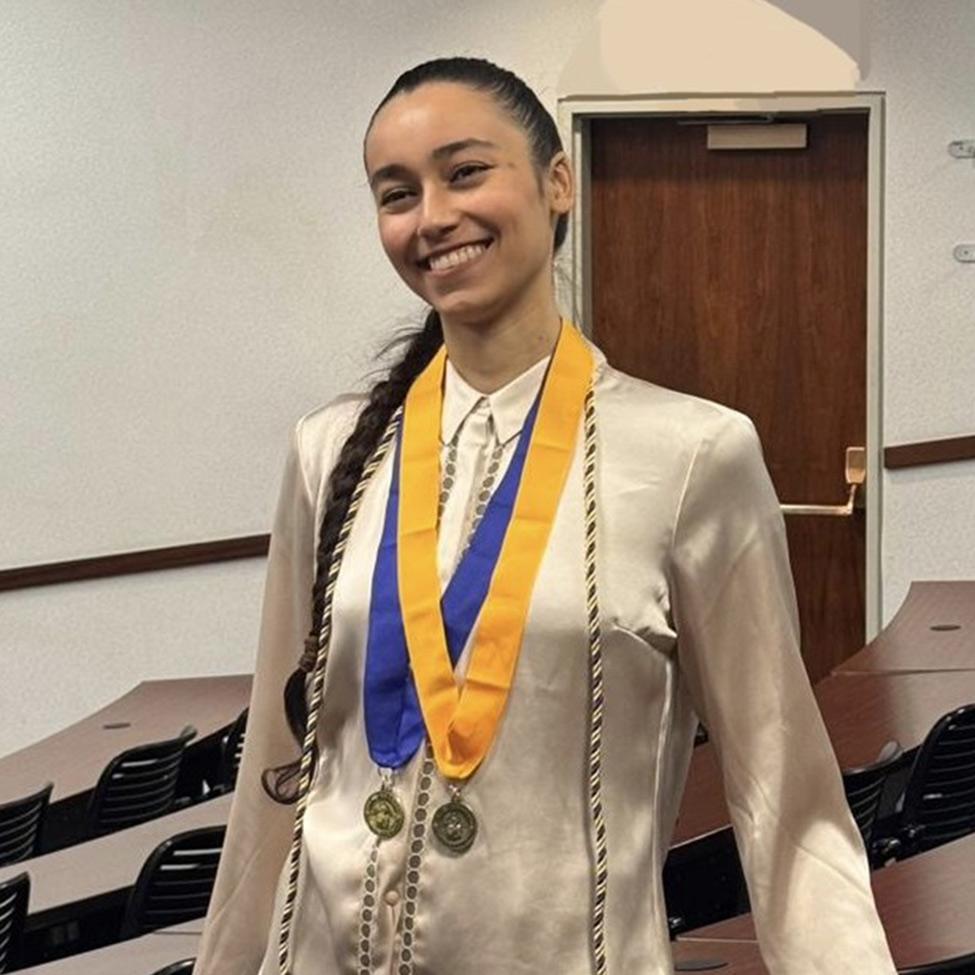
With a strong foundation in laboratory science, faculty-guided research, and clinical experience ahead, Anna Nahata ’26 is preparing for medical school with purpose.

Anna Nahata ’26 found her fit in biology through hands-on science. At Dyson College, she built a strong academic and research foundation through courses in genetics and anatomy, faculty mentorship from Professors Matthew Marcello and David Boerma, and research using Caenorhabditis elegans to study sperm activation and male fertility. Her work earned recognition at Pace’s Biology Research Day and helped her receive highest academic excellence in the BS in Biology program. Now, Nahata is taking a gap year before applying to medical school, using the time to study for the MCAT, work as a medical assistant, volunteer in healthcare settings, and gain additional clinical experience.
Next step: Gap year before medical school
What drew you to biology?
I have always been interested in science and loved hands-on work. It is one thing to read and understand how a process works on paper, and another to witness a reaction in front of you. When I saw how many labs were built into Pace’s science courses, I knew it would be a strong fit.
Which courses helped shape your experience?
Genetics with Professor Matthew Marcello and Anatomy with Professor David Boerma stood out. Both professors explained complex concepts in digestible ways, which made learning less intimidating and more exciting. I continued to do research with Professor Marcello and presented my work on Caenorhabditis elegans as a model to investigate the role of TCP11 in sperm activation and male fertility. That research was presented at the Eastern Colleges Science Conference and Biology Research Day at Pace, and I was selected for highest academic excellence in the BS in Biology program.
What are your post-graduation plans?
I will be taking a gap year before applying to medical school. During that time, I will study for the MCAT, work part-time as a medical assistant, volunteer at South Brooklyn Health Hospital and an animal clinic, and complete an internship as a health aide at Maimonides Medical Center in Brooklyn.

Rajni Jaiswal ’26 is using her MPA from Dyson to support equity, education access, and student success while continuing faculty-mentored research at Pace.

Morgan Strecker ’26 is bringing her fascination with the brain, the nervous system, and human health into a research technician role at Children’s Hospital of Philadelphia.

Through faculty-mentored lab work, award-winning research, and a deep curiosity about the nervous system, Anastasiia Kirdiianova ’26 is launching her next chapter at Dartmouth College.
Through faculty-mentored lab work, award-winning research, and a deep curiosity about the nervous system, Anastasiia Kirdiianova ’26 is launching her next chapter at Dartmouth College.
For Anastasiia Kirdiianova ’26, research became one of the defining experiences of her time at Dyson College. As a BS in Behavioral Neuroscience student, she worked closely with Professors Jeanmaire Molina and Matthew Marcello, gaining hands-on laboratory experience, participating in Pace’s student-faculty research programs, and earning recognition at the Eastern Colleges Science Conference and the Biology Poster Presentation series. Now, Kirdiianova is beginning a full-time laboratory technician II role at Dartmouth College’s Department of Biological Sciences, where she will contribute to neuroscience research focused on the nervous system of C. elegans.
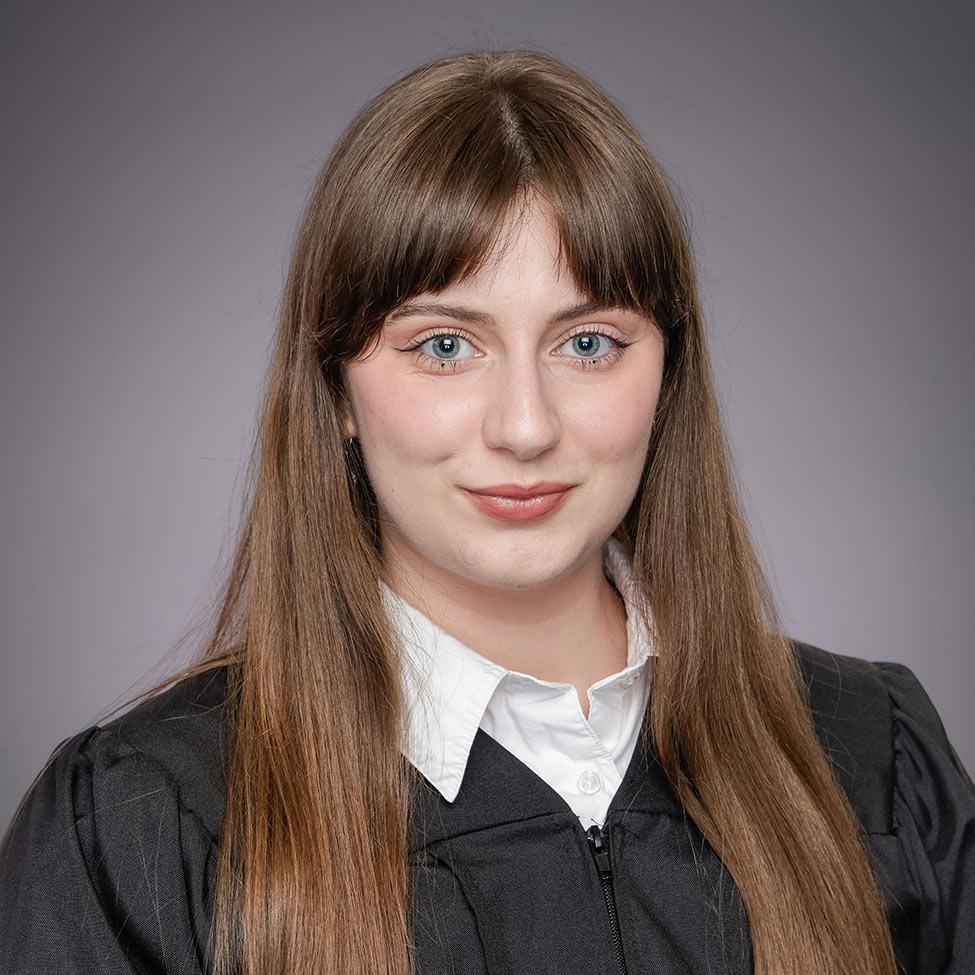
Next step: Laboratory technician II, Dartmouth College Department of Biological Sciences
How did research shape your Pace experience?
A large part of my experience at Pace was conducting research. Professor Jeanmaire Molina was the first person who introduced me to research and guided me every step of the way. Through that collaboration, I participated in the Summer 2023 and 2024 Provost’s Student-Faculty Undergraduate Research/Creative Inquiry Award Program and received an award at the Eastern Colleges Science Conference in the Ecology section.
I was also fortunate to work with Professor Matthew Marcello. Through that collaboration, I became more independent and creative in the laboratory, gained experience with the model organism C. elegans, and won an award in the Biology Poster Presentation series.
What advice would you give students in their first and second years at Pace?
Ask questions. It is truly the best thing you can do during your first years of college. By raising your hand and speaking up early, it becomes second nature. That helps you build genuine relationships with professors, learn on a deeper level, show engagement, and gain research opportunities.
What are your post-graduation plans?
This summer, I will begin a full-time laboratory technician II position at Dartmouth College’s Department of Biological Sciences, contributing to neuroscience research focused on understanding the nervous system of C. elegans, a free-living worm.
Rajni Jaiswal ’26 is using her MPA from Dyson to support equity, education access, and student success while continuing faculty-mentored research at Pace.
With a strong foundation in laboratory science, faculty-guided research, and clinical experience ahead, Anna Nahata ’26 is preparing for medical school with purpose.

With faculty-mentored research, hands-on clinical experience, and dental school in her sights, Alessandra Barretta ’26 is turning scientific curiosity into a career devoted to patient care.
Rajni Jaiswal ’26 is using her MPA from Dyson to support equity, education access, and student success while continuing faculty-mentored research at Pace.
Rajni Jaiswal ’26 came to Pace with a background in political science, international relations, and teaching, and found in Dyson’s Master of Public Administration program a practical path toward public service. Guided by faculty mentors Gina Scutelnicu-Todoran and Hillary Knepper, Jaiswal deepened her work in equity, governance, research, and student support. After graduation, she is joining the Simons STEM Scholars Program at Stony Brook University as a program assistant, helping undergraduate STEM students navigate Summer Bridge and the academic year, while continuing research and grant-writing work with Pace’s Department of Public Administration.
Master of Public Administration
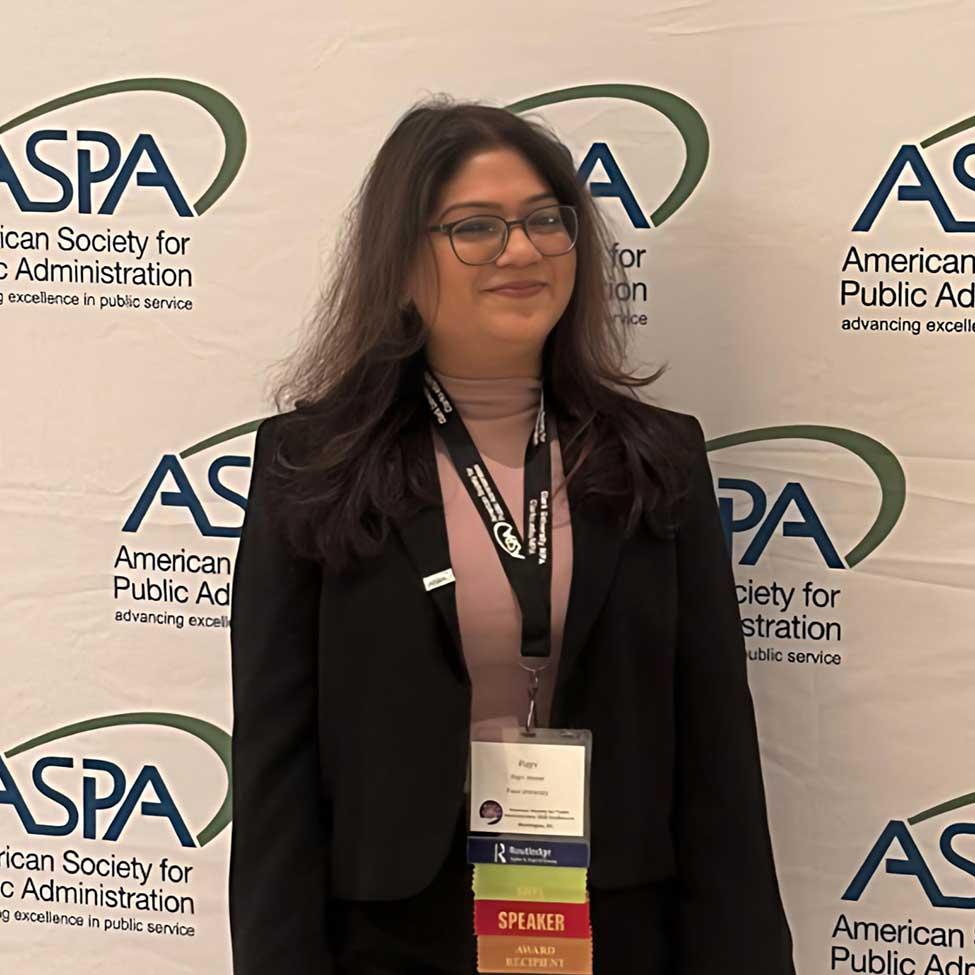
Next step: Program assistant, Simons STEM Scholars Program, Stony Brook University; research assistant, Pace University Department of Public Administration
What brought you to public administration?
My earlier training was in political science and international relations, and before moving to the United States I completed an MPhil and taught undergraduates in Kolkata, India. I wanted to shift from studying politics to working inside the systems that deliver public services. The MPA at Pace gave me a practical foundation while keeping me close to the questions of equity and governance that first drew me to the field.
Which faculty members had the greatest impact on your experience?
Professor Gina Scutelnicu-Todoran has been my capstone advisor, mentor, and guide through everything at Pace. She understood what an international student goes through, and that meant everything to me. I am continuing to work with her after graduation as a research assistant in the Department of Public Administration. Professor Hillary Knepper has also been incredibly generous, coaching me through interviews and career decisions, and I am collaborating with her on the Journal of Social Equity and Public Administration.
What are your post-graduation plans?
I am working as a program assistant with the Simons STEM Scholars Program at Stony Brook University, supporting undergraduate STEM students through Summer Bridge and the academic year. It is a strong fit for my interest in education access and student support, and it allows me to put what I learned at Pace into practice. I am also staying connected to Pace through research and grant writing.
Morgan Strecker ’26 is bringing her fascination with the brain, the nervous system, and human health into a research technician role at Children’s Hospital of Philadelphia.

Amanda DeSarno ’26 turned her passion for storytelling, media, and brand connection into a client relations role with one of the world’s leading advertising and communications awards programs.
With a strong foundation in laboratory science, faculty-guided research, and clinical experience ahead, Anna Nahata ’26 is preparing for medical school with purpose.
Amanda DeSarno ’26 turned her passion for storytelling, media, and brand connection into a client relations role with one of the world’s leading advertising and communications awards programs.
Amanda DeSarno ’26 has always been drawn to the way stories, brands, and media connect people. As a BA in Communications student at Dyson College, she explored that passion through courses in electronic media, sports media, and hands-on internship experience in New York City. After working with SpoiledChild on a launch and collaboration with fashion designer Jeremy Scott, DeSarno discovered the kind of fast-moving, creative environment where she could thrive. Now, she is beginning her career as a client relations coordinator with The Clio Awards, supporting creative excellence in advertising, marketing, and communications.
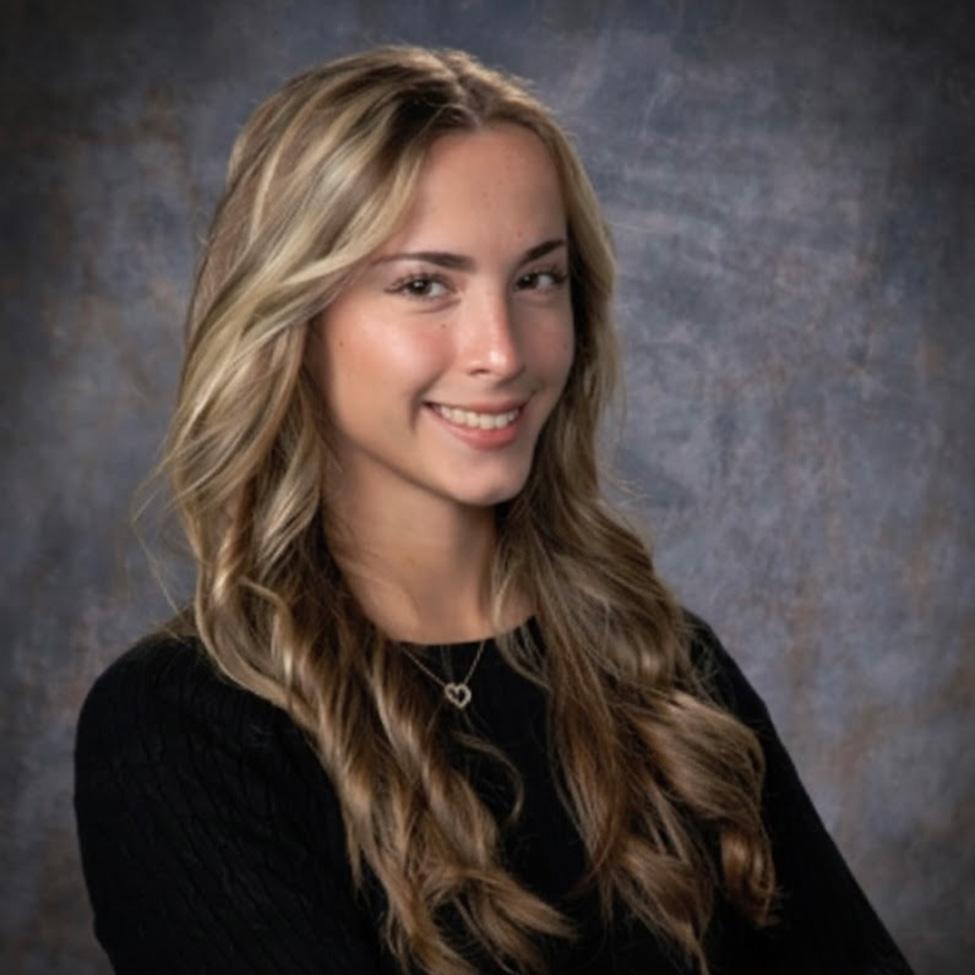
Next step: Client relations coordinator, The Clio Awards
What drew you to communications?
I enjoy connecting with and working with people. Growing up, I was always interested in the entertainment and marketing industries, especially the ways companies connect and communicate with audiences through branding, media, and advertising. That interest naturally led me to study communications.
Which Pace experiences helped shape your path?
Several Media, Communications, and Visual Arts courses stood out, including Writing for the Electronic Media, which helped me develop storytelling skills and create engaging content for television, and Sports Media, which connected my interest in sports with the way broadcasters engage fans in real time. My internship course was especially memorable. Through my role with SpoiledChild in SoHo, I discovered what I wanted to do: work hands-on with a team, support a launch and collaboration with fashion designer Jeremy Scott, and be part of a major event.
What are your post-graduation plans?
I will be working as client relations coordinator for The Clio Awards, an international awards program recognizing innovation and creative excellence in advertising, marketing, and communications. In my role, I will support award entry submissions, advise on categories for agencies and brands, review creative assets, oversee administration, and attend Clio Awards events. I am thrilled and eager to get started.
Morgan Strecker ’26 is bringing her fascination with the brain, the nervous system, and human health into a research technician role at Children’s Hospital of Philadelphia.
With faculty-mentored research, hands-on clinical experience, and dental school in her sights, Alessandra Barretta ’26 is turning scientific curiosity into a career devoted to patient care.
Rajni Jaiswal ’26 is using her MPA from Dyson to support equity, education access, and student success while continuing faculty-mentored research at Pace.
With faculty-mentored research, hands-on clinical experience, and dental school in her sights, Alessandra Barretta ’26 is turning scientific curiosity into a career devoted to patient care.
For Alessandra Barretta ’26, a BS in Biology from Dyson College became the foundation for something bigger: a future in dentistry. At Pace, she built deep research experience under the mentorship of Professors Daniel Strahs and Jeanmaire Molina, contributing to projects on drug resistance, bacterial communities, and dental caries. Now preparing for the Dental Admission Test while working as an orthodontic assistant, Barretta is bringing together laboratory research, clinical experience, and a passion for patient care as she works toward becoming an orthodontist.
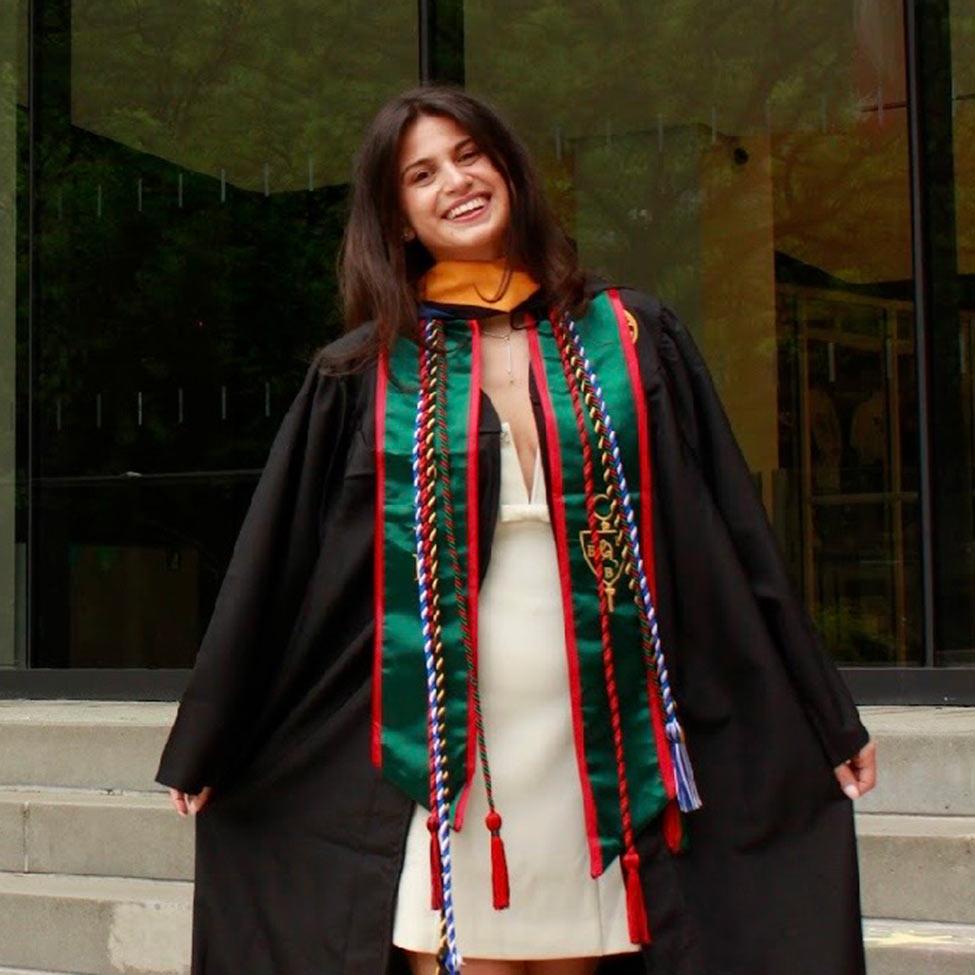
Next step: Preparing for dental school while working as an orthodontic assistant and continuing dental research
What drew you to biology?
I chose to study biology to build a strong scientific foundation for dental school, but also to immerse myself in a field driven by innovation, discovery, and curiosity. At Pace, I found an environment where opportunities are truly yours for the taking, and throughout my academic journey, I achieved more than I ever imagined possible.
How did Dyson help prepare you for what’s next?
Faculty-mentored research played a major role in my experience. I published research on drug resistance mechanisms in Saccharomyces cerevisiae under the mentorship of Professor Daniel Strahs, and later joined Professor Jeanmaire Molina’s laboratory, where we investigated bacterial community composition within Rafflesia, the world’s largest flower. I am now continuing research with Professor Molina on what may be Pace’s first dental research project, focused on bacterial communities associated with the development of dental caries.
What are your post-graduation plans?
I am preparing for the Dental Admission Test and plan to attend dental school with the goal of becoming an orthodontist. While studying, I am working as an orthodontic assistant, expanding my clinical knowledge and passion for patient care. I also remain actively involved in dental research and hope to see our work published by the end of the year.
Amanda DeSarno ’26 turned her passion for storytelling, media, and brand connection into a client relations role with one of the world’s leading advertising and communications awards programs.
Through faculty-mentored lab work, award-winning research, and a deep curiosity about the nervous system, Anastasiia Kirdiianova ’26 is launching her next chapter at Dartmouth College.
Rajni Jaiswal ’26 is using her MPA from Dyson to support equity, education access, and student success while continuing faculty-mentored research at Pace.
Pace University’s Lubin School of Business continues to strengthen its national reputation. Its latest recognition from The Princeton Review places Lubin among the country’s leading on-campus MBA programs, underscoring the school’s academic excellence, industry connections, and proven commitment to career-ready graduate education.


Pace University’s Lubin School of Business has once again been named one of The Princeton Review’s Best On-Campus MBA Programs. The recognition places Pace among 208 business schools nationwide selected for excellence in graduate business education.
“This recognition reflects Pace University’s commitment to preparing students to lead in today’s dynamic global economy,” said Pace University President Marvin Krislov. “Through the Lubin School of Business, our students benefit from rigorous academics, experiential learning, dedicated faculty, and strong connections to New York’s business community. We’re proud to see those strengths recognized once again by The Princeton Review.”
The Princeton Review selected the 208 schools based on more than 60 data points collected from surveys of business school administrators and MBA students during the 2025–26 academic year. The designation recognizes schools that excel in academics, faculty, career services, experiential learning, and student satisfaction. Rather than publishing an overall ranking, The Princeton Review recommends MBA programs it believes best prepare students for professional success.
“Today’s business leaders must be prepared to think strategically, embrace innovation, and lead with integrity,” said Ajay Khorana, PhD, dean of the Lubin School of Business. “At Lubin, we combine rigorous academics with hands-on learning and strong industry partnerships to prepare our graduates for successful careers in an increasingly dynamic global marketplace.”
The designation reflects Lubin’s longstanding excellence in graduate business education. In addition to its inclusion in The Princeton Review’s Best On-Campus MBA Programs, Lubin holds dual accreditation in business and accounting from the Association to Advance Collegiate Schools of Business (AACSB) International, an elite distinction earned by fewer than 2 percent of business schools worldwide that offer business degree programs. The school is also recognized among LinkedIn’s Top 100 MBA Programs, while its online MBA program has been ranked among the nation’s best by U.S. News & World Report.
“Today’s business leaders must be prepared to think strategically, embrace innovation, and lead with integrity,” said Ajay Khorana, PhD, dean of the Lubin School of Business.
The recognition is also reflected in Lubin’s student outcomes. Among Lubin master’s graduates in the Class of 2025, 96 percent were employed, continuing their education, or engaged in service, while 97 percent secured positions related to their fields of study. Graduates working full time earned an average salary of $74,222.
“Our goal is to provide students with an education that is both academically rigorous and deeply connected to the needs of today’s workforce,” said Alison Carr-Chellman, PhD, provost and executive vice president for academic affairs. “Lubin’s MBA program reflects that commitment by combining innovative teaching with experiential learning that prepares graduates to lead in a rapidly evolving business environment.”

Pace University is rising in the national spotlight, with multiple graduate programs ranked among the Top 100 in the 2026 U.S. News & World Report rankings, including the #1 Environmental Law program in the country. See which programs are leading and climbing.

Poets & Quants recently named Lubin Professor Jessica Magaldi among the 50 Best Undergraduate Business School Professors of 2025, highlighting her creative course “Music Industry Law (Taylor’s Version)”.

Learn how Professor Nick Martucci connects creativity and business to prepare students for careers in the fast-changing entertainment industry.