Image
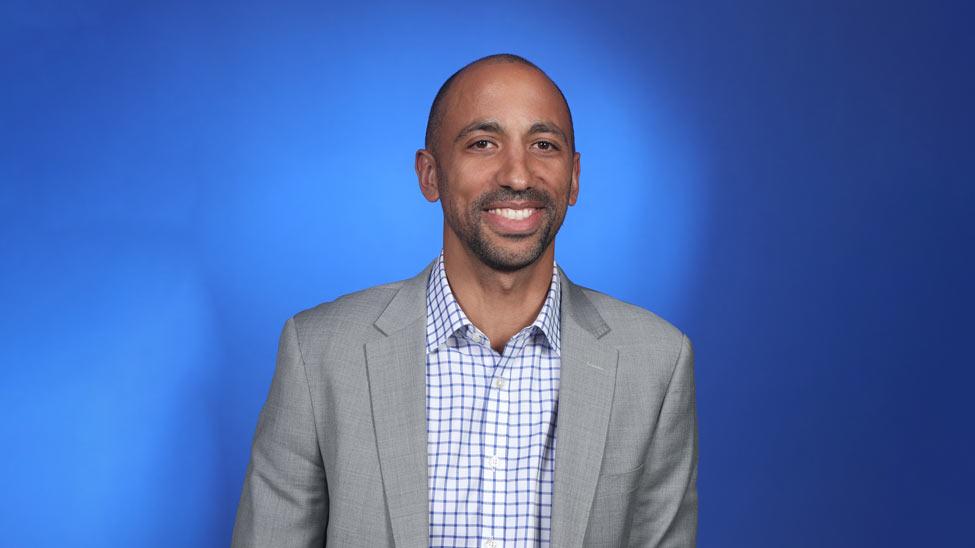

When students arrive at Pace University, they expect more than classrooms and coursework. They expect a community where they can learn, work, perform, research, and grow while feeling safe, respected, and supported. Behind much of that work is Pace’s Office of Civil Rights Compliance (OCRC), a team focused on helping ensure discrimination and harassment do not become barriers to anyone’s education or career.
Led by Assistant Vice President and Pace’s Title VI and Title IX Coordinator Bernard Dufresne, the office oversees the University’s compliance with major federal civil rights laws, including Title IX, Title VI, and Title VII as well as state and local laws that prohibit discrimination and harassment. While many people are familiar with Title IX through conversations about sex-based discrimination and sexual misconduct, the office’s work extends much further, addressing concerns connected to race, national origin, shared ancestry, gender, and other protected characteristics.
This summer, the office will formally transition from the Office of Institutional Equity and Title IX Compliance to the Office of Civil Rights Compliance, a change designed to better reflect the full scope of the office’s responsibilities and provide a clearer path for community members seeking support.
“Our office exists to make sure discrimination and harassment don’t interfere with your education or job, and to help you understand your options if something goes wrong,” says Dufresne.
A growing area of focus nationally—and at Pace—is Title VI of the Civil Rights Act of 1964, which prohibits discrimination based on race, color, or national origin at institutions receiving federal funding. The law also applies to discrimination tied to shared ancestry or ethnic characteristics, making it increasingly relevant as colleges and universities navigate incidents involving antisemitism, Islamophobia, racism, and national-origin discrimination. The office’s expanded focus also reflects recent changes in New York State law requiring colleges and universities to designate a Title VI Coordinator to oversee compliance and response efforts related to discrimination and harassment covered under the statute.
“Our office exists to make sure discrimination and harassment don’t interfere with your education or job, and to help you understand your options if something goes wrong,” says Dufresne.
Title VI protections can apply in a range of situations: a student targeted for wearing a yarmulke or Star of David, a student harassed for wearing a hijab, or a faculty member mocking a student’s accent or native language. In these cases, the Office of Civil Rights Compliance reviews both the conduct itself and the impact it had on the individual(s) experiencing it.
Importantly, the office is not solely focused on formal investigations. Dufresne emphasizes that support often begins long before a complaint process formally starts.
“Central to our trauma-informed approach is acknowledging the difficulty of coming forward and whenever possible, we give the affected individual agency over how they wish to proceed,” he says. “We do that by explaining the difference between a formal complaint and supportive measures, allowing individuals to receive help without necessarily triggering a full investigation if they aren't ready.”
That support can include connecting individuals with resources, explaining reporting options, helping implement supportive measures, and coordinating with other offices across the University. The office works closely with Residential Life, Human Resources, Student Conduct, the Counseling Center, the Dean for Students offices, and the Office of Sexual and Interpersonal Wellness to ensure concerns are addressed appropriately and compassionately.
At the same time, Dufresne notes that one of the biggest misconceptions about the office is that it handles every form of conflict or misconduct at the University. The OCRC specifically addresses concerns involving discrimination and harassment tied to protected characteristics. Other workplace or student conduct concerns may fall under different offices, such as Human Resources or Student Conduct.
“Obviously, misconduct comes in various forms and our goal when we receive a report is to make sure that it’s being handled promptly by the right office,” says Dufresne.
The office also continues to evolve in response to feedback from students and the broader campus climate. Recent student survey data at Pace found that while many students believe reports of sex-based misconduct would be taken seriously, fewer students fully understood investigation procedures and available rights. The findings highlighted an ongoing need for clearer communication, stronger awareness, and more peer-based prevention efforts.
For Dufresne, building trust remains at the center of the work.
“Trust is a long-term project,” he says. “We cannot guarantee a specific outcome for every case, but we can guarantee a consistent, respectful, and dignified process.”
And for anyone unsure whether their experience falls within the office’s scope, his advice is simple: reach out anyway.
“You do not need to know whether something ‘counts’ as discrimination to reach out,” Dufresne says. “The office exists to ensure that your identity never becomes a barrier to your education or career.”
The Pace Community can expect to hear more from the office during the Fall 2026 semester.
Students, staff, faculty, families, and members of the broader community can learn more about available resources or to share a concern through Pace’s Guardian reporting system.

Jennifer Winter, NP, a women's health nurse practitioner and doctoral student at Pace University's College of Health Professions, is using short social media-style videos to close a persistent gap in STI knowledge among young females, a population she has treated in clinical practice for more than two decades.

Choosing the right college is a big decision—for both students and their families. At Pace University, we understand that you’re not just sending your student off to school—you’re investing in their future. Here are five reasons you can feel confident about what’s ahead for your student at Pace.

With a new name, a broader mission, and a commitment to integrating inclusive excellence across every aspect of university life, the Division of Opportunity and Institutional Excellence is ready to expand its support across Pace. Associate Vice President and Chief Diversity Officer Stephanie Akunvabey, EdD, shares what’s next.