Image
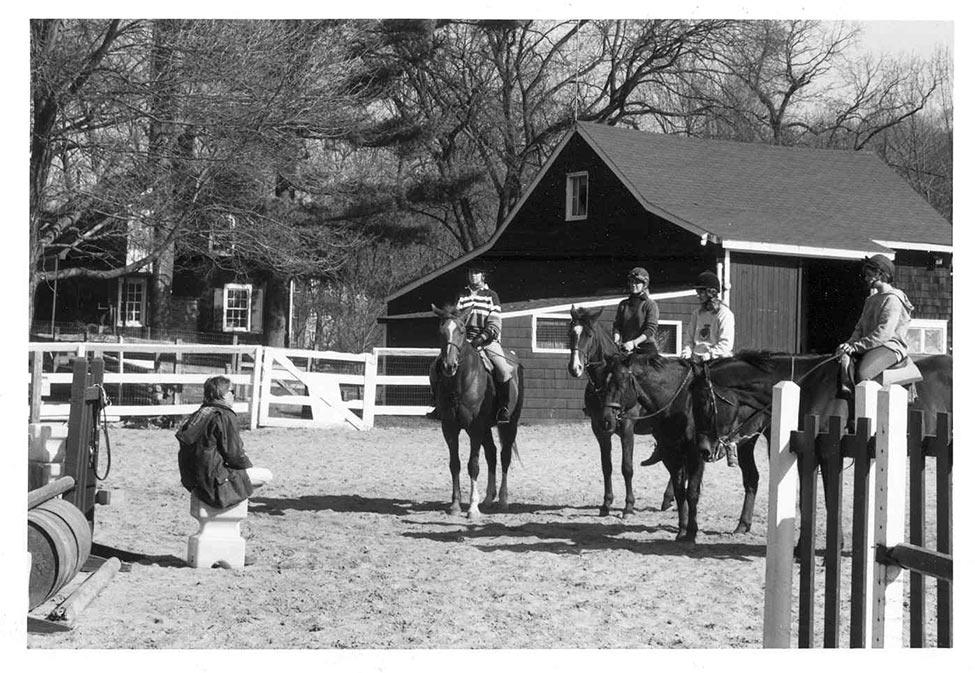

Today the sound of student chatter fills Pace University’s Westchester Campus, but just over sixty years ago, the campus sounded different. Surrounded by fields and the freshly constructed Taconic State Parkway, the property was filled with the sounds of farm animals and the soft drone of passing cars. In the following years, Pace’s presence in Westchester went through metamorphosis, growing from a small campus surrounded by pastures to an anchor institution with regional impact. At the 120th anniversary of Pace University, the Westchester Campus is integrated into the growth and success of the local community through numerous initiatives and providing students with opportunities to meet the challenges of the moment.
Long before Pace arrived, the land that would become its Pleasantville Campus had already witnessed a century of remarkable stories. In 1867, a shoemaker named Samuel Baker built a house on the property. It would later come into the possession of Dr. George C.S. Choate, a prominent physician who expanded it into a private sanitarium for wealthy patients suffering from what the era called "nervous disorders." In November 1872, one of those patients was Horace Greeley, the celebrated newspaper editor and presidential candidate who had just lost to Ulysses S. Grant in a brutal campaign. Greeley, who owned a farm a few miles away in Chappaqua, checked into the Choate sanitarium and never checked out. He died there weeks later, one of the most famous Americans of his age, on a campus that today hosts study groups and late-night runs to the Pace Perk.
Dr. Choate himself passed away in 1896, and the sanitarium continued for another decade before closing. In 1909, his widow Anne Hyde Choate did something remarkable: she had a section of the original Choate House moved—inch by inch, via teams of horses—to its current location on campus, where she lived until her death in 1926. The house changed hands several times before landing with Wayne C. Marks, a Pace College alumnus from the class of 1928. In an act of generosity that would shape the region's educational landscape for generations, Marks and his wife Helen donated the property to Pace, including the iconic pink Choate House and a pond that still bears the family name. Pace honored the gift by naming the then-main academic building Marks Hall.
Today, painted turtles bask along the banks of Choate Pond, largely unbothered by the campus life swirling around them. They are, in their unhurried way, the longest-tenured residents on campus.
"The property was farmland forever," explains University Librarian Steve Feyl. "New York City was expanding north, and the area became suburban, creating the possibility of a suburban campus."
"New York City was expanding north, and the area became suburban, creating the possibility of a suburban campus."—Feyl
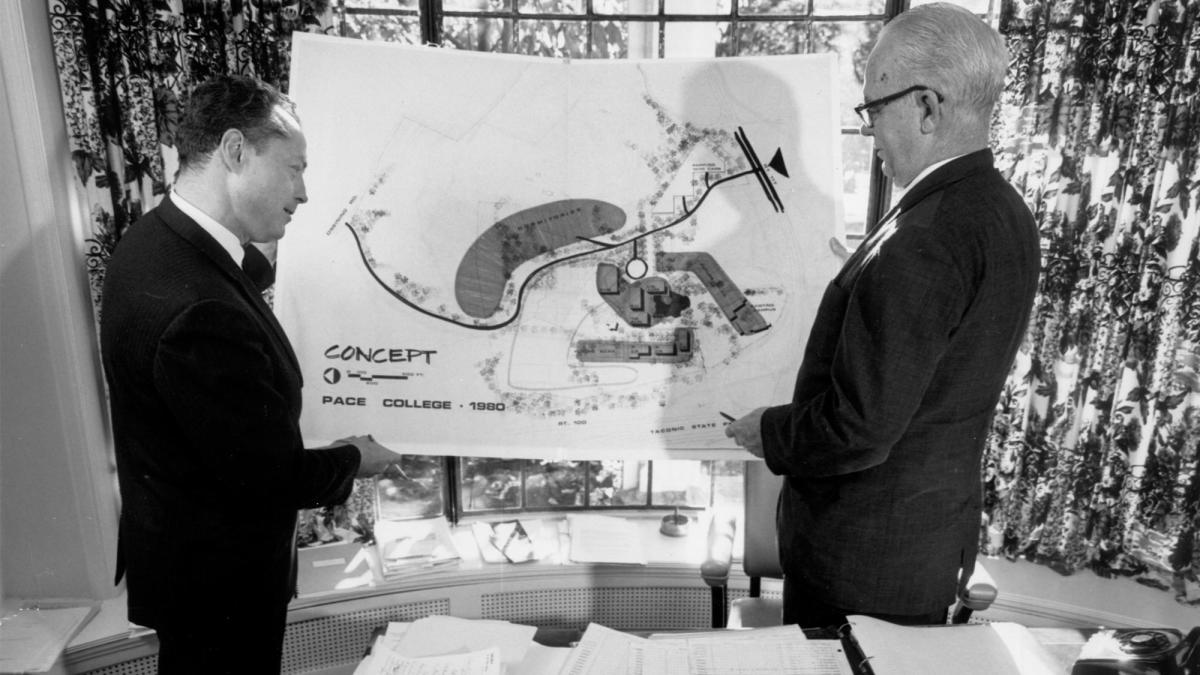
Growth came steadily. Dyson Hall followed. Then Wilcox Hall in 1965, which marked a turning point. "When Wilcox was built, students at the time saw it as an investment in them," says Feyl. "Pace was starting to become a college campus with a cafeteria, library, gymnasium, and more academic spaces." Four-year degrees followed. The 1970s brought Miller Hall and Lienhard Hall, as well as a significant institutional expansion: Pace consolidated with the College of White Plains (formerly Good Counsel College) which became the home of what is now the Elisabeth Haub School of Law. The Law School opened in 1976, enrolling 250 students. And even today, it remains the only law school between New York City and Albany.
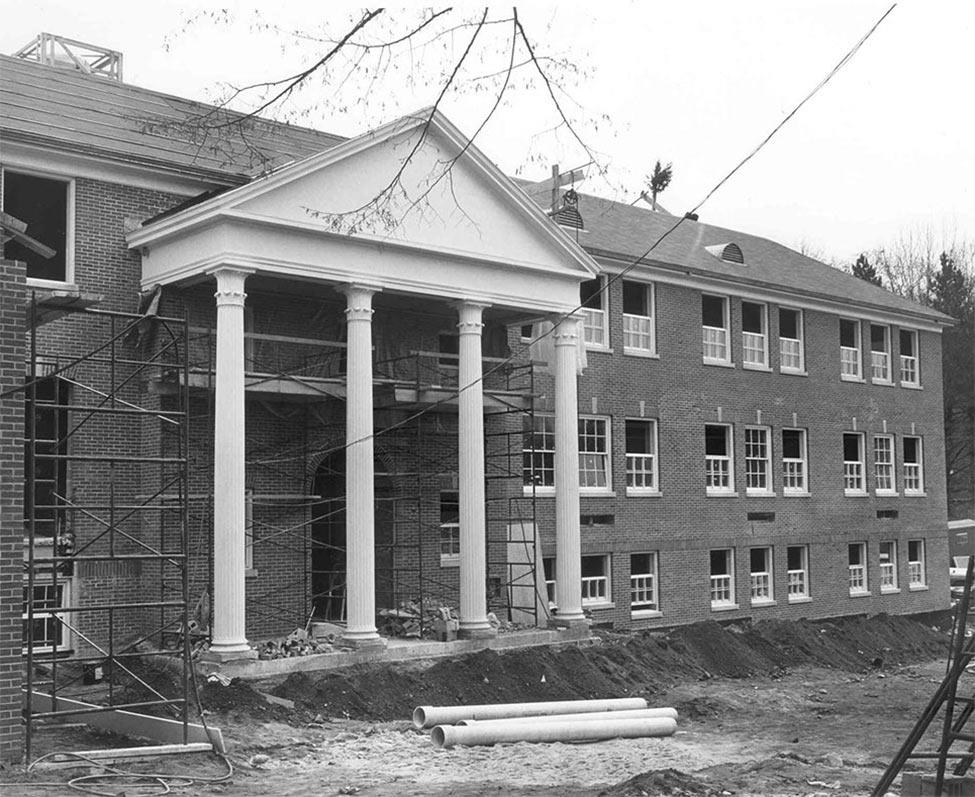
Residence halls in Pleasantville followed and then a library building, a key facility for a burgeoning university campus. Mortola Library opened in 1985 and faculty paintings from the era show cattle grazing just outside its newly constructed walls. As late as the early 2000s, Feyl recalls horses and sheep still calling the campus home. "The environmental center, a historic building, used to be the center of campus, the farmhouses used to be the center of campus, and animals used to be the center of campus," he says.
During Pleasantville’s 50th anniversary, Pace announced a $100 million investment in the 200-acre property. Between 2013 and 2016, the campus added Alumni Hall and Elm Hall to meet surging residential demand; an overhaul of the Kessel Student Center for dining, student organizations, and the student government association; an additional14,000-square-foot athletic complex supporting more than a dozen NCAA Division II programs; and a new Environmental Center powered by solar and geothermal energy. Gone were the grazing animals. In their place: a vibrant, modern campus that still carries the memory of what came before.
Feyl shares that the evolution of the spaces on campus have reflected the changing needs of degrees and workforce, for example adding a nursing program in the mid-1960s or discontinuing an equestrian associate degree. This responsiveness to community needs is an element of what sets Pace’s presence in Westchester apart. As the campus grew, so did Pace's deep commitment to the community surrounding it.
“Our legacy represents generations of serving as the anchor university in Westchester,” explains Interim Associate Provost, Professor, and Executive Director of the Wilson Center for Social Entrepreneurship Rebecca Tekula, PhD. While there are other institutions of higher education in the region, Tekula says Pace is unique in that “our partnerships are naturally in service of the community, because of our commitment to community engagement, civic education, and experiential learning. We have a longstanding institutional focus on supporting our students and alumni in their career paths, which means that our work with students, and the academic programs that we stand up on this campus, are intrinsically and proactively responsive to the needs of the local and regional economy.”
Students and faculty members in the MS in Mental Health Counseling program are an ongoing example of this process, she says. “Westchester County Commissioner of Community Mental Health Michael Orth recognizes the need for co-occurring disorders prevention, early detection, and treatment.” She explains that if someone has mental health needs, they’re tracked through one system of behavioral health support, yet if they concurrently develop a substance use disorder, they would be tracked into a separate system of substance use treatment and support. “There are very few integrated approaches to supporting the care of someone who is presenting with both mental health and substance use concerns.”
She recognizes the work being done by faculty who are participating in training on treating co-occurring disorders so they can go on to train doctoral and master’s students at Pace. “In this way, as we train-the-trainers, all of our students in mental health counseling would have the opportunity to graduate and enter the workforce as clinicians with the tools to recognize and treat clients with co-occurring disorders, using the best tested methods. It’s a beautiful case where, as our partners in government raise concern on an emerging program and policy issue, our faculty have developed a response in roughly 24 months. It is incredible, and we’re proud to continue to bust the myth of a higher education sector that moves too slowly.”
"Our legacy represents generations of serving as the anchor university in Westchester."—Tekula
That same instinct to meet community need with institutional action runs through nearly every corner of Haub Law. Professor Tekula also references the ongoing work of the Pace Women’s Justice Center (PWJC). Founded in 1991, the center now serves around 3,500 clients annually across Putnam and Westchester counties. The PWJC provides free legal services to victims and survivors of domestic violence, sexual assault, and elder abuse by helping individuals navigate the legal system. The work takes place at the Walk-In Legal Clinic, hosted at the Elisabeth Haub School of Law, and Tekula says, “at some of the local police stations and courthouses through the Court Accompaniment, Respect and Empowerment (CARE) program where volunteers act as legal representatives and advocates who are there to receive and support” people in the moment.
PWJC integrates law students as a core element of all of its programs. Students receive ongoing supervision and guidance from attorneys and paralegals while earning academic credit for their assigned work through specialized learn-work experiences called externships at the Center. This includes preparing cases for family court, gaining expertise in relevant areas of law to represent domestic violence victims in court, practicing client interviews, and developing drafting and case presentation skills. Undergraduates also work with PWJC assisting with maintaining the case management system, case files, and legal resources databases. Students’ integration into PWJC helps them develop necessary professional skills while having a real-time impact in the Westchester community.
The Haub School of Law is also home to the Land Use Law Center (LULC). The Center was one of the first law school-based initiatives in the country to respond to the 1992 Rio de Janeiro pledge by countries around the world to foster sustainable development, meet economic needs, and preserve resources for future generations. The Center “is a key partner for regulatory work that communities are doing, and it’s very much a part of the fabric of those policy and issue areas,” explains Tekula.
"Haub Law school’s continuous community and government connection and stewardship of those relationships is one of the strongest cases of how Pace University shows up for Westchester and the greater region."—Tekula
Stemming from a commission to study land use patterns in the Hudson Valley to see whether the region would be sustainable in 50 years, the Center developed a training program supported by over 100 local communities and governments to provide land use leaders, advocates, planners, and others with opportunities to learn techniques to build grassroots civic engagement that fosters sustainable communities. More than 3,000 participants have graduated from the four-day program so far.
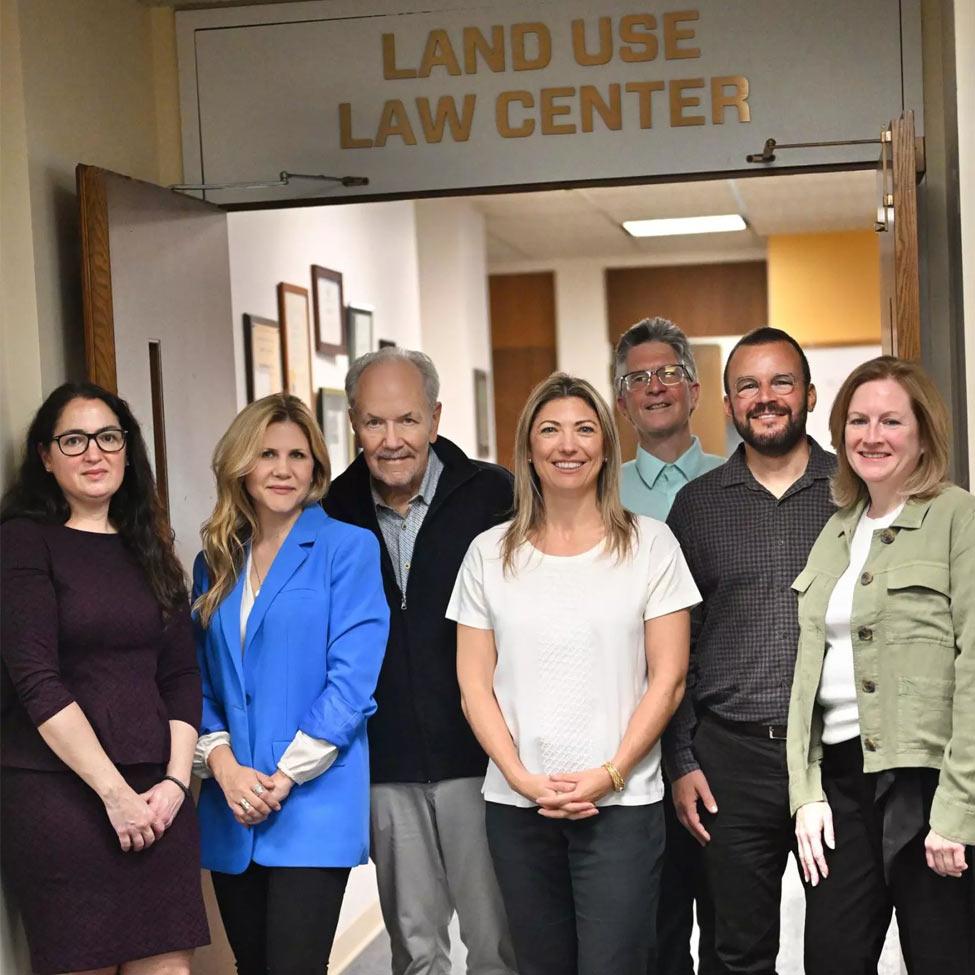
Locally, LULC operates the US Department of Energy’s New York-New Jersey Combined Heat and Power Technical Assistance Partnership (CHP-TAP). Funded by federal tax dollars, the program provides technical assistance to help industry transition to clean energy, reduce emissions, and contribute to a clean energy economy. The Center also supports regional cities, towns, and villages in working toward sustainable development by providing strategic recommendations and technical assistance. Both initiatives have direct and indirect impacts on the Westchester community by creating advocates and opportunities for sustainable land use and methods for creating clean energy. Students work and volunteer at LULC conducting research on land use, with their work often receiving publication in academic journals, scholarly publications, and contributing to the Center’s archives and books.
“Haub Law school’s continuous community and government connection and stewardship of those relationships is one of the strongest cases of how Pace University shows up for Westchester and the greater region,” says Tekula, “Haub is a model and a lens through which we can envision this potential for all of our programs in Westchester, and is an internal organizational case study of how these true partnerships add value to both Pace and its counterparts.”
Pace has a role in Westchester that extends beyond direct partnerships. The Westchester Campus enrolls more than 3,400 students, employs more than 2,000 people, and places hundreds of students in local internship and clinical practice each year. According to a 2019 report, the impact on the regional economy “amounts to $278.5 million in increased output, $92.8 million in earnings, and 2,409 [non-campus] jobs.”
Because of Pace's deep ties to the economic wellbeing of Westchester County, as well as Haub Law’s nearby location to critical municipal buildings, Pace often collaborates with the Westchester County government. Professor Tekula explains, “Westchester County government is highly effective, innovative, and serves as a powerful connector throughout the Hudson Valley, New York State, tri-state area, and directly to Washington, DC. Our county partners are critical to our university and the greater community, and we are so incredibly fortunate to have not one but two of our campuses here.”
"To understand where we've come from helps us understand where we're going."—Feyl
Tekula has worked with members of the Pace Community in collaboration with Dyson College’s Department of Public Administration and the Helene and Grant Wilson Center for Social Entrepreneurship on a growing number of community-engaged research projects, evaluations and assessments which have guided and informed funding and policy. The Wilson Center supports faculty and students across all disciplines working with social enterprises and non-profits to educate, research, and advise. Students participating in programs at The Wilson Center receive hands-on experience in class and during extracurricular opportunities to work with a variety of organizations on pressing needs.
“On a hyper local level, we have worked on community needs assessments for three towns and their community fund, and another county-wide project to produce the Westchester County Nonprofit Compensation and Benefits Report,” she explains. The report provides insights into equitable pay and benefits for non-profit employees in the region. This information galvanizes organizations to make informed decisions about compensation, retention, and future planning, as well as understanding structural barriers in providing livable wages and opportunities for change.
Another high-impact community-engaged research project she’s worked on is the Westchester County: Hispanic Community Needs Assessment (PDF), published in 2025. “This project marks the first comprehensive needs assessment of the Hispanic community in Westchester County in over 20 years,” says Tekula. “We’ve worked with the county’s Hispanic Advisory Board to understand the needs of the Hispanic population, which has now grown to 27% of the county.”
"Pace has that public purpose as a partner. Higher education can stand up to service these needs."—Tekula
The report resulted from 18 months of community-engaged research, including co-designing the research instruments with community representatives, online and paper surveys, and in-depth, semi-structured interviews. “We covered key areas such as education, healthcare, employment, housing, and social services as the initiative aimed to collect high-quality data to enhance county programs and services,” says Tekula. The report shows that respondents ranked “Families, Children, and Seniors, Mental and Physical Health, and Basic Human Needs” as their highest priorities, specifying needs like “parent training, elder care, emergency access, suicide counseling and intervention, quality and affordable housing, and quality groceries.” The Hispanic Advisory Board has already applied these findings to make policy recommendations to the County Executive Ken Jenkins, and the rigorous, detailed report has formed the foundation of a better understanding of “needs and barriers affecting access to services and opportunities and […] creating goals to close high priority gaps.”
Ultimately this partnered, community-engaged research helps to shape county policies and programs by providing actionable insights into what’s happening in local organizations and in the community. “Pace has that public purpose as a partner. Higher education can stand up to service these needs,” says Tekula.
Pace’s commitment to meeting regional needs and connecting students with hands-on experiences ensures that students have strong post-college outcomes. Working with cutting-edge mental health treatments, practicing environmental and family law, and participating in research, among other real-world issues during their time in school gives students an advantage when applying for internships, first-time roles, and graduate programs. “Experiential learning opportunities help students translate academic skills into workplace-ready skills,” says Kim Porter, director of Operations, Assessment, and Strategy for Pace’s Career Services and Employer Relations team. “This preparation positions Pace students as confident, motivated candidates.” Because of opportunities like these, within six months of graduation, 95% Pace graduates from Westchester hold a job or continue their education or military service, with 83% of undergraduates and 97% of graduate students working in a field related to their studies.
Pace’s Career Services is a leader in the region, providing a range of career advising, career fairs, and in-person and online programming to ensure students are prepared with the skills employers seek. “Career readiness is integrated throughout the student experience beginning the first year,” explains Porter. “A key example is Resume Write Now, a Career Services initiative embedded in University 101 courses that helps first-year students create their first professional resume early, removing barriers to applying and preparing them to engage with employers and internship opportunities from the start of their college experience.” After The Resume Write Now experience, students have the opportunity to engage with the “Employer in Residence” program where employers visit Career Service’s offices in Westchester to host one-on-one meetings with students.
"Experiential learning opportunities help students translate academic skills into workplace-ready skills."—Porter
“Pace works closely with area companies, nonprofit organizations, government agencies, and business associations across Westchester to connect students with internships and full-time opportunities,” says Porter. One unique opportunity to work regionally is Pace’s Community Impact Funded Internship Program, which places students in paid internships with mission-driven partner organizations. Porter shares, “students have been placed with a variety of local Westchester organizations, including Make-A-Wish, the Ronald McDonald House, Arts Westchester, and more.”
Those smaller, mission-driven placements exist alongside connections to some of the county's largest employers. The Career Services team also engages with regional employer networks like the Westchester County Association to stay connected to workforce trends and employer needs in the county. These connections help students hold more than 9,000 internships, co-ops, field experiences, and clinicals with over a thousand different employers across the Hudson Valley and New York City. In Westchester, students have connected with organizations like PepsiCo, IBM, Fujifilm, Regeneron Pharmaceuticals, Northwell Health, Montefiore Medical Center, Cerebral Palsy of Westchester, Westchester Magazine, and White Plains City School District, among others. Whether students work in the non-profit, healthcare, or education sectors and have direct impacts on members of their own community, or gain technical experience with larger corporate partners, they all shape Westchester County, its economic outcomes, and their own successful career journey.
Stand at the edge of Choate Pond on a quiet morning and look out. The turtles are there if you know where to look. The building that was moved by horses still stands. The house on the hill is still pink. That continuity is not incidental. It is the argument.
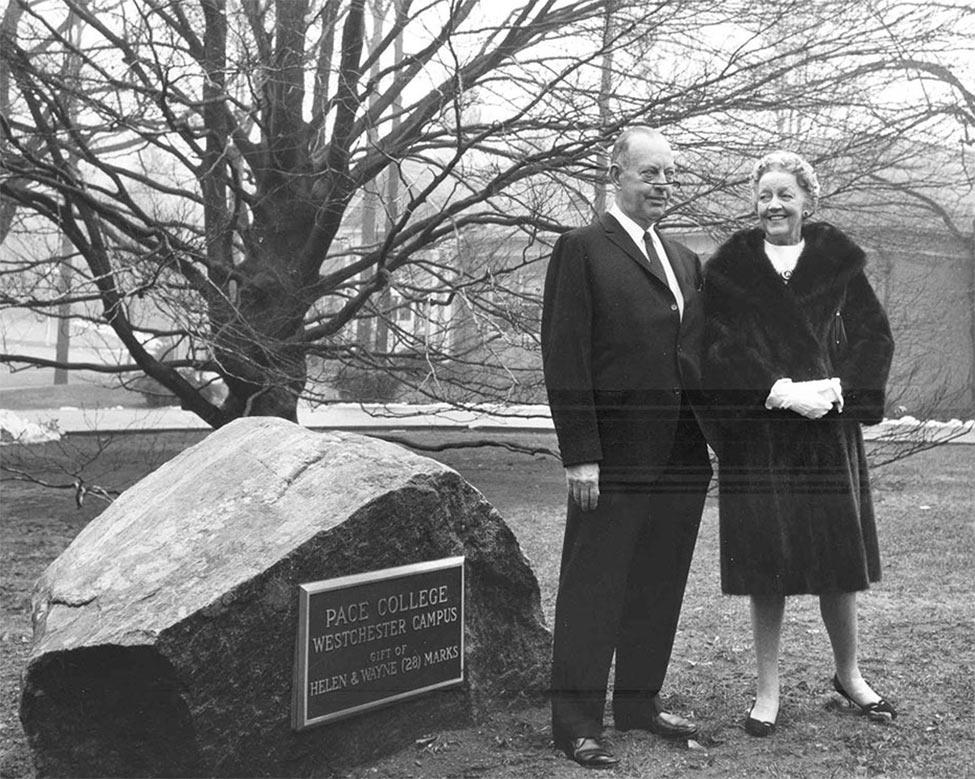
"To understand where we've come from helps us understand where we're going," says Feyl. Six decades of earned relationships, adapted programs, and community-centered purpose have created something that cannot be built overnight: genuine belonging. Pace is uniquely positioned to lead innovation in physical and mental health, economic development, technology, and the law. Not despite its history, but because of it.
That positioning is both geographic and relational. "I think Pace's Westchester Campus is very fortunate to be in an environment where we can have all of the benefits of a residential, suburban college where we can be true partners to one of the most innovative governments in one of the most diverse counties in our state and in our country," says Tekula. The investments into building and maintaining those partnerships, along with a rich history of adaptation and exploration, mean that Pace can respond to meet the moment as needs change. "In this environment of higher education, we're all needing to transform in order to survive and thrive."
In another 120 years, the campus will sound different and look different. But if history is any guide, it will still be responsive, still be present, and still be doing the work. That is what it means to be Pace in Westchester. That is what it means to belong somewhere.

Not just dates and milestones, but momentum. This timeline traces the defining moments that shaped Pace University, from its founding in 1906 to the institution it is today.

In 1906, with a $600 loan and a single rented classroom on Park Row, Homer Pace launched an entrepreneurial idea that would become a model for the future of higher education.

Some institutions wait for the future to arrive. Pace has spent 120 years going after it—preparing lawyers, nurses, technologists, and artists not for the world that was, but for the one taking shape now. This isn’t ambition or luck. It’s 120 years of deliberate evolution.