Image

Haub Law Professor Bennett Gershman pens an op-ed in amNewYork, criticizing what he describes as the administration’s misguided federal transportation agenda. Professor Gershman argues that the approach undermines sound governance and raises broader concerns about accountability and the long-term consequences for public infrastructure — the story was picked up by Europe Says.

Dyson Professor Melvin Williams speaks to USA Today discussing emerging Gen Z slang like “aura farming” and “clip farming,” explaining how coded language reflects younger generations’ deep reliance on digital platforms to shape identity and social life.
In Prevention, new research shows that changing to a healthier diet after age 45 can add years to your life—potentially more than three—by improving long-term health outcomes such as blood pressure, cholesterol, blood sugar, and inflammation. Christen Cooper, R.D.N., associate professor in the College of Health Professions at Pace University, explained that plant-forward eating patterns rich in whole grains, fruits, and vegetables were key drivers of increased lifespan in the study’s analysis of more than 100,000 participants. Making sustainable, nutritious dietary changes later in life can be a powerful step toward better health and longevity.
In Salon, Professor Gershman also weighs in on Attorney General Pam Bondi’s conduct during a House Judiciary Committee hearing, noting that perjury allegations would hinge on reliable evidence and underscoring that no official is immune from accountability under the law.

In health and nutrition, College of Health Professions Professor Christen Cooper speaks to SELF about intermittent fasting, noting that research remains mixed and that while narrower eating windows may help some people reduce snacking, results vary widely.
The Elisabeth Haub School of Law at Pace University has been named to preLaw Magazine’s inaugural Justice & Opportunity Honor Roll, a national recognition highlighting law schools that demonstrate leadership in expanding access to legal education and strengthening pathways into the legal profession.


The Elisabeth Haub School of Law at Pace University has been named to preLaw Magazine’s inaugural Justice & Opportunity Honor Roll, a national recognition highlighting law schools that demonstrate leadership in expanding access to legal education and strengthening pathways into the legal profession.
Featured in preLaw’s Winter issue, the Honor Roll recognizes the top 20 percent of U.S. law schools whose innovative and lawful strategies broaden opportunity for students from a wide range of backgrounds, experiences, and perspectives. The distinction reflects Pace Haub Law’s longstanding and deeply embedded commitment to ensuring that access to legal education, and ultimately access to justice, remains central to its mission.
“We are honored to be included in preLaw Magazine’s inaugural Justice & Opportunity Honor Roll,” said Pace Haub Law’s Dean, Horace E. Anderson Jr. “At Pace Haub Law, expanding access to justice is not a standalone initiative; it is woven into our curriculum, our partnerships, and our community engagement. Access to justice begins with access to education. We are proud that our work, in the classroom, in the courthouse, and in the community, continues to open doors and expand opportunity for the next generation of legal professionals.” Pace Haub Law’s approach to expanding opportunity spans pipeline initiatives, academic programming, experiential learning, and community partnerships.
In 2020, the Law School formally launched the Pace Access to Justice Project (Pace A2J), an initiative designed to increase student, faculty, and staff engagement in pro bono and community-based work, while supporting the local community in addressing justice gaps. Pace A2J incorporates curricular, experiential, research, and policy advocacy components, building on the Law School’s nationally recognized clinics and centers. Through courses such as the Access to Justice Seminar and the Access to Justice Lab, students critically examine systemic barriers to justice while working on real-world solutions that strengthen the legal services ecosystem. The initiative serves as a hub for community collaboration and civic engagement across the region.
Being named to this Honor Roll affirms our belief that legal education must actively respond to the justice gaps that persist in our communities.
—Horace E. Anderson, Jr., Dean of Pace Haub Law
“Being named to this Honor Roll affirms our belief that legal education must actively respond to the justice gaps that persist in our communities,” said Dean Anderson. “We are committed to preparing lawyers who understand those challenges and are equipped to address them.”
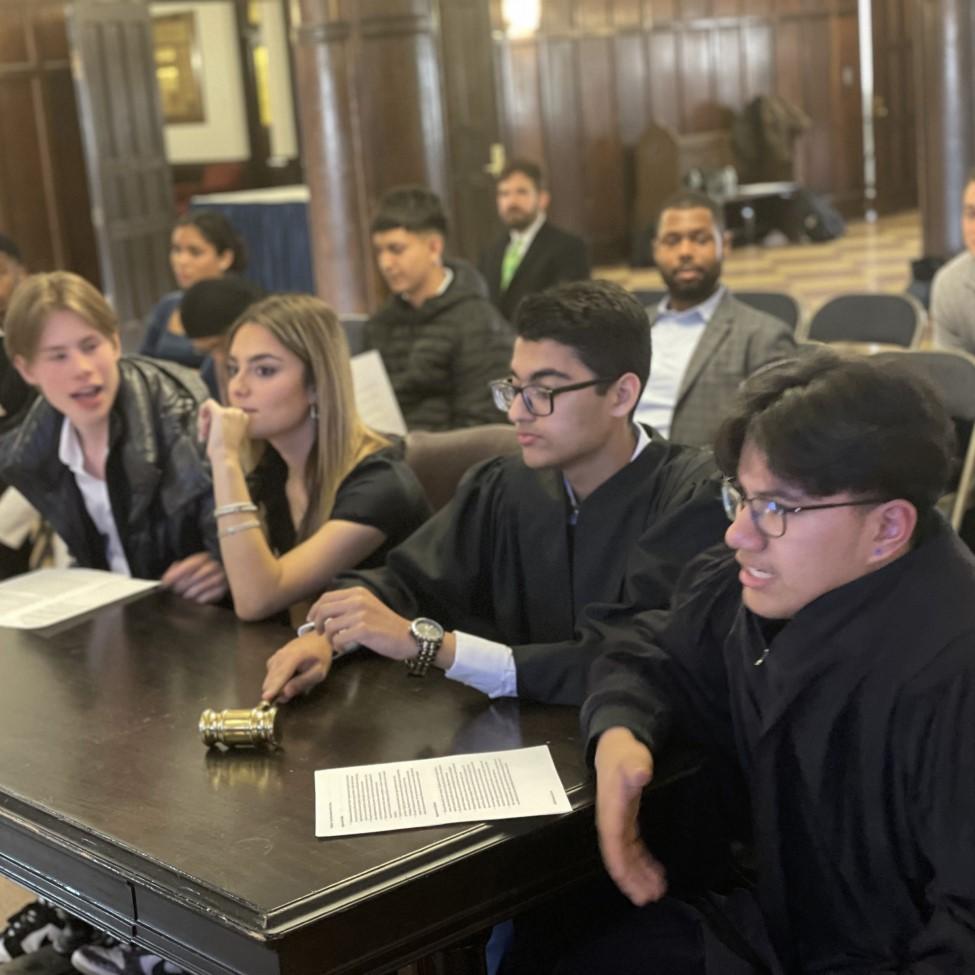
A cornerstone of Pace Haub Law’s commitment to expanding opportunity is its robust suite of pipeline and civic education programs designed to expose, educate, and prepare students, particularly those historically underrepresented in the legal profession, for careers in law. Each year, the Law School partners with courts, schools, nonprofit organizations, and legal institutions to introduce hundreds of middle and high school students to the intersection of law, government, public service, and civic life. In the past, these initiatives have included: The Honorable Robert A. Katzmann Justice for All: Courts and the Community Initiative, The Verizon Street Law Legal Diversity Pipeline Program, the Scales of Justice Academy, Law Day with the White Plains Youth Bureau, participation in the New York Legal Education Opportunity Program, and more.
These initiatives are part of the broader Access to Justice framework and reflect the Law School’s belief that exposure, mentorship, and experiential learning are critical to diversifying and strengthening the legal profession. Programs include interactive workshops, mock trials, guest speakers, and classes taught by distinguished legal leaders, providing students with both civic knowledge and meaningful engagement with the legal system. “These efforts are designed not only to spark interest in the law, but also to provide students with the tools, confidence, and exposure needed to pursue legal education,” shared Dean Anderson.
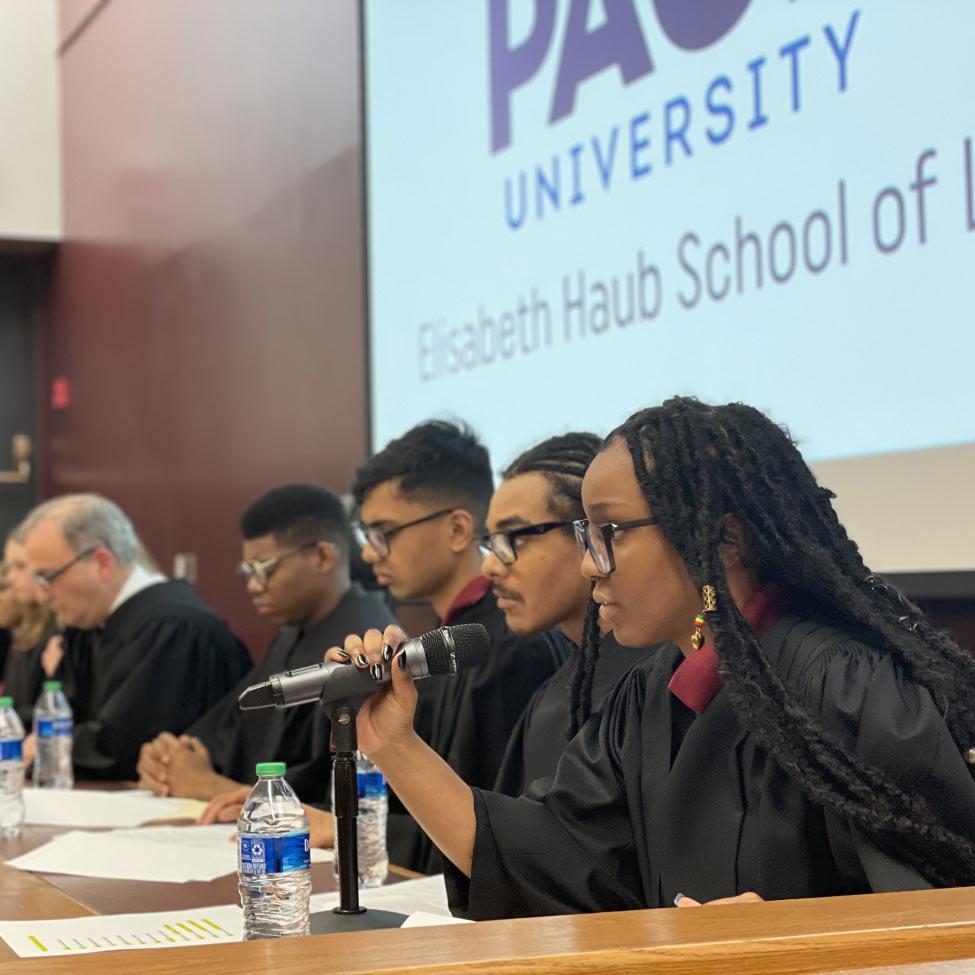
The Law School’s commitment to access and civic engagement continues to grow. Recently, the Center for Community Action and Research at Pace University announced that the Elisabeth Haub School of Law at Pace University received funding through Project Pericles’ Civic Engagement Mini-Grants program, supported by the Mellon Foundation and the Eugene M. Lang Foundation, to expand several pipeline and civic education programs. Director of Community Relations and Special Programs Lori Kanner, successfully applied for this grant, noting that “We are so appreciative of Project Pericles and this funding. This will allow the Law School to continue introducing hundreds of students annually to the workings of the law, thereby expanding access to legal education and ultimately, access to justice.” These initiatives, including the programs highlighted above, will further deepen partnerships with federal courts, local high schools, and community organizations.
Pace Haub Law leads through action and our longstanding commitment to both access to legal education and access to justice embodies this.
—Horace E. Anderson, Jr., Dean of Pace Haub Law
“Pace Haub Law leads through action and our longstanding commitment to both access to legal education and access to justice embodies this,” remarked Dean Anderson. “For the Law School to be included in the Justice & Opportunity Honor Roll reflects decades of sustained commitment to ensuring that opportunity within the legal profession is both meaningful and accessible. We remain dedicated to expanding that access for generations to come.”
The Elisabeth Haub School of Law at Pace University is proud to announce that a distinguished group of environmental law scholars will join the Law School as Haub Visiting Scholars.


The Elisabeth Haub School of Law at Pace University is proud to announce that a distinguished group of environmental law scholars will join the Law School as Haub Visiting Scholars. These renowned thought-leaders bring extensive expertise across climate change law, environmental justice, policy, and interdisciplinary law practice, and will enrich Pace Haub Law’s Environmental Law Program through guest lectures, collaboration with faculty, and direct engagement with students.
“Our Haub Visiting Scholars program offer students and faculty an opportunity to engage directly with leading voices in environmental law,” said Achinthi C. Vithanage, Executive Director of the Environmental Law Program and Professor of Law for Designated Service in Environmental Law. “Their scholarship, teaching, and mentorship enrich the classroom experience and advance innovative thinking across our program. We are fortunate that Randy, Marianne, Doug, and Jim are willing to give so much of their time to our Pace Haub Law community.” Funding for the Haub Visiting Scholars was made possible by a gift from the Haub family in recognition of the essential role of environmental science, informatics and other technology and allied fields toward formulating environmental policy and law.
Randall S. Abate will serve as a Haub Visiting Scholar for the spring 2026 semester, bringing global expertise in climate change law and justice. Professor Abate is a Research Associate and Special Advisor for Law and Justice at Ocean Nexus and is a Visiting Scholar at the Environmental Law Institute. In spring 2026, he will also teach environmental, food, and animal law focused courses at one law school and two universities. Previously, he served as Assistant Dean for Environmental Law Studies at the George Washington University Law School and has held full-time law teaching positions at six U.S. law schools and one university. Professor Abate has lectured and taught courses in more than 25 countries on six continents and has published six books and more than 40 law journal articles and book chapters. He is the author of Climate Change and the Voiceless: Protecting Future Generations, Wildlife, and Natural Resources (2nd ed., forthcoming 2026). During his time at Pace Haub Law, Professor Abate will serve as a guest lecturer and a symposium panelist, deliver two book talks, convene with faculty and students, participate in the annual Pace-Maryland Colloquium, and serve as a judge in The Jeffrey G. Miller National Environmental Law Moot Court Competition (NELMCC).
As previously announced, Marianne Engelman-Lado, Douglas Kysar, and James Salzman will also serve as Haub Visiting Scholars during 2026.
During her time as a Haub Visiting Scholar, Marianne Engelman-Lado will deliver a faculty workshop, visit classes as a guest lecturer, and engage with the Pace Haub Law Community. Professor Engelman-Lado’s has devoted her career to civil rights and environmental justice. She recently joined New York University School of Law to serve as Research Scholar and Director of a new Environmental Justice Initiative. During the Biden Administration she served as Deputy General Counsel for Environmental Initiatives in the Office of General Counsel and as Acting Principal Deputy Assistant Administrator in the newly launched Office of Environmental Justice and External Civil Rights at the Environmental Protection Agency. She previously directed Environmental Justice Clinics at Yale and Vermont Law Schools, and served as Lecturer at both the Yale University School of Public Health and the Yale School of the Environment. She has served as senior staff attorney at Earthjustice, her experience also includes ten years as General Counsel at New York Lawyers for the Public Interest (NYLPI), and she began her legal career as a staff attorney at the NAACP Legal Defense and Educational Fund, Inc. Marianne has lectured widely and taught graduate, law and undergraduate level courses and is a widely published scholar.
Douglas Kysar will visit Pace Haub Law as a Haub Visiting Scholar over the course of the spring 2026 semester. Professor Douglas Kysar is Joseph M. Field ’55 Professor of Law at Yale Law School and faculty director of the Law, Environment and Animals Program. His teaching and research areas include torts, animal law, environmental law, climate change, products liability, and risk regulation. Professor Kysar was previously on the faculty at Cornell Law School. He has also served as a visiting professor at Indiana University, NYU, UCLA, Yale, Harvard, and in Singapore, Hong Kong, London, and Spain. Professor Kysar has authored several books and is a widely published scholar. During his time at Pace Haub Law, he will deliver the Lloyd K. Garrison Lecture on Environmental Law in April 2026. He will also serve as a guest lecturer, convene with faculty and students, and participate in the annual Pace-Maryland Colloquium.
James Salzman will visit Pace Haub Law as a Haub Visiting Scholar during the fall 2026 semester. Professor Salzman is the Donald Bren Distinguished Professor of Environmental Law with joint appointments at the UCLA School of Law and at the Bren School of Environmental Science & Management at UC Santa Barbara. During his time at Pace Haub Law, Professor Salzman will deliver the 2027 Lloyd K. Garrison Lecture on Environmental Law. Prior to his current appointment, he formerly held distinguished chairs at Duke University Law and Environment Schools. In thirteen books and more than 100 articles and book chapters, his broad-ranging scholarship has addressed topics spanning drinking water, policy design, and creating markets for ecosystem services. One of the most read environmental law professors in the world, his work has been translated into ten languages with over 115,000 article downloads. He frequently appears as a media commentator and has delivered lectures on every continent. He has served as a visiting law professor at Columbia, Harvard, Stanford, and Yale as well as at universities in Australia, China, Israel, Italy, Portugal, and Sweden.
Compare a master’s in computer science vs. software engineering, from courses to careers, and choose the right graduate path.


Choosing between a master’s in Computer Science (CS) and a master’s in Software Engineering (SE) is a common crossroads for aspiring technologists. Both programs require proficiency in programming and math. Both can lead to rewarding roles across industries. But they are not the same degree, and the differences matter when you picture your day-to-day work.
This guide breaks down what each degree covers, where they overlap, how they differ, and the careers they lead to. We’ll also outline typical admissions requirements, course patterns, and timelines, with examples from respected programs, including Pace University, to help you compare options and choose the path that fits your goals.
Computer scientists study the fundamentals of computer design, usage, and programming. Graduate study examines how computers function as a whole, encompassing both hardware and software, and how systems communicate through wired and wireless networks. Many master’s programs also involve theory and formal methods that inform the design and analysis of software and systems.
Most CS master’s programs expect prior coursework in discrete math, data structures, and at least one programming language. Some, like Pace University’s MS in Computer Science, offer a short bridge course for applicants without a computing background so career changers can ramp up before core classes begin. Typical application materials include a statement of purpose, a resume, and transcripts from all colleges attended. Letters of recommendation may be optional.
A common plan of study runs 30–34 credits completed in about 24 months full time, with part-time options for working professionals. Many universities offer multiple start terms across the year and a choice of in-person or online study. International students often seek STEM-designated programs that support internships and practical training.
Computer Science master’s curricula usually blend theoretical depth with hands-on projects, covering:
As artificial intelligence tools and systems have become embedded in everything from search engines to healthcare tools, many computer science master’s programs incorporate AI concepts into core curriculum rather than limiting them to a narrow specialization.
This shift is reflected in Pace's MS in Computer Science program, for example, drawing on more than 30 years of AI education at the Seidenberg School and faculty expertise spanning machine learning, natural language processing, robotics, and intelligent systems. With more than 40 courses across undergraduate and graduate study incorporating AI concepts, and more than 15 faculty members active in AI teaching and research, students encounter artificial intelligence as a recurring theme within broader computing foundations.
A CS master’s offers a broad technical range. Graduates can pivot among systems work, data-focused roles, and application development. Strong programs provide:
Software engineers specialize in writing code for computers and digital devices while applying engineering principles to design, test, and maintain software. The education centers on the software lifecycle from early planning through launch and maintenance. Professionals in this discipline may also be referred to as software developers, software designers, or computer programmers.
Strong SE programs expect prior programming experience and comfort with data structures and algorithms. Applicants typically submit a statement of purpose, a resume, and transcripts. Pace’s Software Development and Engineering MS illustrates a common model: coursework aligned to modern team practices and, uniquely, access to IEEE-aligned content as Pace is an IEEE Registered Education Provider in the eastern United States.
Many SE master’s degrees span 30–36 credits and take about 24 months to complete full time, with flexible part-time pacing. Multiple start terms and in-person or online delivery are common. SE programs are frequently STEM-designated and support international students.
Software Engineering graduate-level study emphasizes building and shipping reliable software in team settings. Coursework typically includes:
Graduates strengthen skills that help teams ship features on time and maintain quality in production. Programs that mirror Pace’s approach tend to offer:
Both degrees rest on a shared technical foundation. Graduates from either program can build software, analyze systems, and communicate with cross-functional teams. The overlaps below are the most common.
The contrasts reflect how each discipline frames its core questions and daily work. Here’s how to think about the split while keeping inevitable overlap in mind.
Computer Science vs. Software Engineering Fields
| Category | Computer Science | Software Engineering |
|---|---|---|
| Primary focus | How computing works across algorithms, systems, data, and networks | Planning, designing, building, testing, and shipping software products |
| Coursework | Algorithms, operating systems, databases, networking, AI / Machine Learning (ML) electives | Architecture, requirements, testing, secure coding, CI/CD, Human-computer Interaction (HCI), team process |
| Portfolio outcomes | Research prototypes, systems projects, data science work | Production-ready apps, design docs, test suites, pipelines, reliability metrics |
| Typical first roles | Software Developer, Data Scientist, Systems Analyst, Cloud Admin | Software Engineer/Developer, Full-Stack Developer, QA/Automation, DevOps |
| Mobility vs. specialization | Broader range across systems, data, and research | Tighter focus on product delivery and engineering leadership |
| Best fit | If you enjoy theory, systems thinking, and cross-domain options | If you enjoy building usable software and improving reliability with a team |
Computer science graduates can work across artificial and machine intelligence, networks, security monitoring, databases, user interaction, mathematical analysis, and programming language theory. Below are representative roles, the skills they require, and typical pay guidance modeled on ranges that schools like Pace share from major salary aggregators such as Glassdoor.
Master in Computer Science Careers
| Job Title + Description | Required Skills | Salary Range |
|---|---|---|
Data Scientist Analyze and interpret large datasets to produce insights and models that guide decisions | Python, statistics, machine learning, feature engineering, cloud platforms, visualization | $120,000–$195,000 |
Artificial Intelligence/Machine Learning Engineer Design and deploy ML systems for Natural Language Processing, computer vision, recommender systems, or forecasting | Python, deep learning frameworks, data engineering, MLOps, experimentation and evaluation | $109,000–$175,000 |
Cybersecurity Analyst Protect networks and systems through risk assessment, controls, monitoring, and incident response | Security frameworks, scripting, SIEM tools, networking, basic cloud security | $101,000–$170,000 |
Systems Architect Design high-level architectures that balance performance, reliability, security, and cost | System design, distributed systems, cloud services, integration patterns, stakeholder communication | $146,000–$231,000 |
Research Scientist Investigate advanced topics in computing such as algorithms, AI, HCI, or bioinformatics; publish findings and collaborate with academia or industry labs | Strong math and theory, experimental design, prototyping, academic writing | $165,000–$268,000 |
Note: Salary ranges reflect data sourced in August 2025 and can vary based on geographic location, specific job title, organization size, experience level, and various other factors.
SE graduates concentrate on building, testing, releasing, and improving software in organizations of all sizes. The roles below show where the degree commonly leads.
Master in Software Engineering Careers
| Job Title + Description | Required Skills | Salary Range |
|---|---|---|
Software Development Manager Lead a team that plans, designs, and delivers software products | Project planning, hiring and coaching, architecture reviews, metrics, stakeholder alignment | $185,000–$293,000 |
DevOps Engineer Bridge development and operations through automation and reliability practices that keep delivery smooth | CI/CD tooling, scripting, cloud services, containers, observability, incident response | $112,000–$176,000 |
Product Manager (Software Focus) Translate market needs into roadmaps and requirements, work with designers and engineers, and measure outcomes | Market research, prioritization, technical fluency, analytics, communication | $167,000–$250,000 |
Quality Assurance (QA) Lead Own test strategy and automation frameworks that improve reliability and performance | Test architecture, automation tools, performance testing, defect management, leadership | $76,000–$132,000 |
Full-Stack Developer Build both front-end and back-end components with an eye for usability, reliability, and maintainability | JavaScript/TypeScript, modern UI frameworks, server frameworks, databases, testing, CI/CD | $91,000–$155,000 |
Note: Salary ranges reflect data sourced in August 2025 and can vary based on geographic location, specific job title, organization size, experience level, and various other factors.
The best choice depends on your interests, strengths, and where you want to grow. Use the questions and factors below to guide your decision.
Before you apply, review the points below. Each item has a direct influence on fit and success:
Neither is universally better. Choose based on the work you want to do. CS emphasizes breadth across theory, systems, and data. SE emphasizes designing and delivering reliable software in team settings.
Compensation depends on role, location, and experience. Data-oriented roles sometimes publish higher ranges. Engineering roles offer steady progression from engineer to senior, staff, and leadership. Pick the work you prefer, then build experience through projects and internships.
Difficulty is personal. CS leans on math and theory alongside systems topics. SE leans on architecture, code quality, testing depth, and delivery under real constraints. Review sample syllabi and imagine the assignments you would enjoy.
Yes. Many software engineers hold CS degrees. Your electives, internships, and portfolio signal readiness for engineering roles.
Yes. Organizations across every sector hire developers and engineers. A graduate degree coupled with internships and strong project work improves your positioning.
Ready to match your goals with the right program and see the coursework up close? Explore Pace’s Master of Science in Computer Science and Master of Science in Software Development and Engineering pages to compare curricula, and then connect with an advisor or request information to start planning your next step.
Pace University’s Sands College of Performing Arts will host the 12th annual Broadway Stage Management Symposium (BSMS) on Saturday, May 30–Sunday, May 31, 2026, from 10:00 a.m.–6:00 p.m., on its Lower Manhattan campus.


Pace University’s Sands College of Performing Arts will host the 12th annual Broadway Stage Management Symposium (BSMS) on Saturday, May 30–Sunday, May 31, 2026, from 10:00 a.m.–6:00 p.m., on its Lower Manhattan campus.
The Symposium brings together Broadway professionals, educators, students, and emerging artists to explore the art and practice of stage management through panels and discussions. Created by stage managers for stage managers, the conference focuses on professional development and the exchange of industry expertise.
The Symposium will also offer live online participation and on-demand access to session recordings, expanding access for stage managers nationwide and internationally.
“Hosting the Broadway Stage Management Symposium reflects the core mission of the Sands College of Performing Arts—to connect rigorous academic training with the highest levels of professional practice,” said Jennifer Holmes, PhD, dean of the Sands College of Performing Arts. “This partnership gives our students meaningful access to Broadway leaders while positioning Pace as a national hub for professional training and artistic collaboration.”
In addition to educational sessions, the event will feature the BSMS Expo, showcasing theatrical technology and service providers, including Clear-Com, Stage Write, Prospero, and Virtual Callboard. Pace stage management students will work alongside industry professionals throughout the conference, gaining hands-on experience and supporting the broader stage management community.
“The Broadway Stage Management Symposium has always been about sharing the wisdom of Broadway’s great professionals with the next generation,” said Matthew Stern, founder of the Symposium and head of the stage management department at Sands College of Performing Arts. “Partnering with Pace University allows us to deepen that commitment to education while strengthening the professional community.”
Students, educators, and professionals can learn more and register.
Founded in 1906 and celebrating 120 years of preparing students for success in 2026, Pace University pairs real-life learning with strong academics to launch meaningful careers. With campuses in New York City and Westchester County, Pace serves 13,600 students across a range of bachelor, master, and doctoral programs through the College of Health Professions, Dyson College of Arts and Sciences, Elisabeth Haub School of Law, Lubin School of Business, Sands College of Performing Arts, School of Education, and Seidenberg School of Computer Science and Information Systems.
Sands College of Performing Arts at Pace University is a cutting-edge performing arts school that nurtures artistic innovation and develops future leaders and changemakers in the profession. Renowned for its diverse range of highly-ranked programs, Sands College is committed to cultivating top-talent performers, designers, and production professionals. From Hollywood to Broadway, Sands College students and alumni have appeared in major film and television productions and theater performances such as & Juliet, A Beautiful Noise, A Strange Loop, Almost Famous, Hadestown, Hamilton, Kimberly Akimbo, MJ The Musical, Moulin Rouge, Ohio State Murders, Wicked, and the Radio City Christmas Spectacular. Recognized by Playbill as one of the 10 most represented colleges on Broadway, Sands College continues to inspire the next generation of artists both on stage and screen.
Founded by Matthew Stern, whose Broadway credits include Wicked, Finding Neverland, The Little Mermaid, Phantom of the Opera, and more. Stern is a board member of the Stage Managers’ Association, USA, serves as the head of the stage management department at Sands College of Performing Arts, and is the author of the upcoming book, Leadership Lessons from Broadway Stage Managers.
Is a masters in cybersecurity worth it? See the benefits, career paths, salary signals, and how Pace’s on-campus or online MS can help you move forward.


Cyber risk is climbing worldwide, and the stakes are high: Global cybercrime costs are projected to reach $15.63 trillion by 2029. According to the World Economic Forum’s Global Cybersecurity Outlook 2025, 72 percent of business leaders surveyed say risk increased over the past year, with ransomware still a leading concern.
As demand grows, many teams lack the expertise to keep up. The same report finds that two in three organizations face moderate to critical skills gaps, and only 14 percent feel fully staffed, which creates room for qualified candidates to advance.
If you’re wondering, “Is a master’s in cybersecurity worth it?”, this guide explains what an MS in cybersecurity covers, how programs are structured, typical admissions requirements, benefits and salary signals, career paths, and whether a certification aligns with your career goals.
A master’s in cybersecurity focuses on identifying, preventing, and responding to attacks across systems, networks, applications, and cloud environments. Most programs run 30–36 credits and can be completed in about two years, full-time.
Throughout the program, you’ll build a mix of technical depth and risk-aware judgment across enterprise environments, including:
In addition to coursework, applied training is central to many programs. At Pace University, for example, students gain hands-on experience in the Pace Cyber Range, a secure virtual training environment designed to simulate real-world cyber threats. The Cyber Range enables you to practice the full lifecycle of an attack, from reconnaissance to defense and recovery, using industry-standard tools in controlled, attack-and-defend scenarios.
Rather than being limited to only case studies, students operate in live simulations with virtual machines and guided challenges that increase in complexity. This type of immersive training is crucial to translate classroom concepts into practical skills that employees expect in network security, digital forensics, and incident response.
In many programs, you'll also have the option to choose a focus area aligned to your target role, with concentrations such as:
Cybersecurity admissions policies vary by institution, but most programs look for academic readiness, a solid technical foundation, and clear professional goals.
Typically, universities expect a bachelor’s degree from an accredited institution, preferably in computer science, engineering, mathematics, or a related field. Programs value preparation in programming, networking, operating systems, and mathematics; applicants who have gaps in these areas may need to complete bridge or prerequisite coursework.
Testing requirements also differ by school. Some programs require the GRE, while others offer waivers based on professional experience, strong GPAs, or prior graduate study. International applicants are usually asked to demonstrate English proficiency through exams such as TOEFL or IELTS.
Beyond academics and testing, most universities commonly request official transcripts from all colleges or universities attended, a résumé or CV highlighting technical and professional experience, and a statement of purpose that connects your goals to the program’s outcomes. Letters of recommendation are often required or encouraged. Additionally, some programs may also ask for coding or writing samples.
Timing is another factor. Many programs admit for fall and spring, and some offer summer starts. Domestic and international timelines often differ to allow for processing and relocation, so review dates early.
Format and location also matter. On-campus, online, and hybrid options can affect course pacing, scheduling, and, for international students, visa considerations. Check each program’s modality options to plan an application path that fits your situation.
Rising risk and a persistent skills gap are shaping hiring across security teams. A graduate degree can deepen your technical range, strengthen your leadership profile, and help you compete for roles that influence strategy. The points below reflect current employer signals from the World Economic Forum’s Global Cybersecurity Outlook 2025.
A graduate degree can widen your options across hands-on, architectural, and leadership tracks. Titles vary by company and industry, so use the roles below to map day-to-day work, the skills that matter, and current New York City pay trends.
Note: Salary figures reflect Salary.com NYC pages accessed September 2025. Some roles do not have an exact-matching NYC title on the site; in those cases the closest NYC title is used and labeled above.
Graduate study and professional certifications serve different purposes. A master’s in cybersecurity builds broad conceptual understanding, applied technical depth, and communication skills that help with higher-responsibility roles. Certifications validate targeted knowledge and are often used by employers to screen for baseline proficiency or specialization. The fact is, many cybersecurity practitioners use both over the course of a career.
What a master’s signals to employers:
What certifications signal to employers:
Popular certifications include:
| Category | MS in Cybersecurity | Cybersecurity Certification |
|---|---|---|
| Duration | Typically 30–36 credits; about 2 years full time | Weeks to months; preparation time varies |
| Cost | Typically $30k–$60k+ in tuition before aid; billed per credit | Exam fees usually cost $575–$1,199 depending on credential. For example: Plus, optional prep / training costs ($0–$3,000+) and renewal fees |
| Skills | Technical execution, research, communication, leadership, governance | Technical proficiency in the tested domain |
| Expiration | Does not expire | Renewal cycles are common; continuing education often required |
| Focus Areas | Breadth across security domains plus depth in a specialization | Targeted body of knowledge in one domain or toolset |
| Learning Format | Faculty-led courses, labs, and a capstone or thesis | Self-study or course prep followed by a proctored exam |
| Career Impact | Supports progression into architect, lead, and management tracks; strengthens long-term mobility | Helps meet hiring filters or contract requirements; sharpens candidacy for specialized roles |
| Flexibility of Knowledge Transfer | High across industries and roles | Moderate to narrow, depending on the certification |
Note: Many certifications require annual maintenance fees and continuing-education credits to keep the credential active.
If you need fast validation for a specific role, a certification can help. If you are aiming for broader responsibility, leadership potential, or research and project experience, a master’s offers more scope. Many professionals complete a degree and then add certifications as their roles evolve.
For many early-career professionals, the answer is yes. A master’s in cybersecurity can support higher earning potential over time, open doors to architect and leadership tracks, and provide steadier job prospects in a field where demand remains strong. The degree also travels well across cyber, information security, and national security work, since the core skills apply in multiple industries.
The academic experience builds more than tool familiarity. You develop technical depth in areas, such as network defense, secure software, cloud security, digital forensics, and risk management, alongside practice in communication and stakeholder alignment. That mix helps you qualify for roles that influence decisions, not just implement them.
Career changers benefit too. Structured coursework, labs, and a capstone can create a credible portfolio that shortens the distance from prior roles to security-focused positions. Pairing the degree with a targeted certification can further validate a specialty and increase competitive advantage as a job candidate.
Before you commit, weigh the fit for your goals and constraints. Use the questions below to check alignment.
A master’s can raise your ceiling, expand your options, and support movement into roles with a broader scope. Outcomes still depend on experience, performance, internships, and market conditions. If the degree aligns with your target roles and you can invest the time and cost, it is a strong path. If you need immediate validation for a specific job requirement, a certification may be the faster first step, with graduate study added when you are ready.
Getting a master’s degree in cybersecurity is worth it if you’re aiming for specialized or leadership roles and want broader preparation in risk, governance, and hands-on defense. A degree also allows you to address any ongoing skills gaps to enhance your advancement opportunities in the cybersecurity field.
With a master’s in cybersecurity, compensation depends on role, industry, and location; analysts, architects, managers, and executives command different ranges, but in general, cybersecurity professionals can expect to earn anywhere from $79,000 to $400,000+ per year.
With a master’s in cybersecurity, you can qualify for roles across finance, healthcare, government, consulting, and SaaS, where sustained threats keep hiring needs high.
A master's in cybersecurity is not designed to be difficult, but it is rigorous. Good master's degree programs will require intensive work in systems, networks, cryptography, and secure development, plus labs and projects that mirror workplace challenges.
A master’s in cybersecurity often requires some coding; many tracks include scripting or programming for automation, testing, and secure development, though requirements vary by program.
Not sure which path fits? Share your background and goals. A Pace advisor can discuss program options, timelines, and support services.