
Academics and Programs
Learn how AI in software development affects developer roles, productivity, security risks, and the skills employers want now.
AI skills are in high demand, but are general AI or applied AI skills a better fit for your AI career? Here’s what you need to know about the difference between AI and applied AI degrees, their areas of study, prospective careers, and how to determine which will work better for you.


| Key Takeaways |
|---|
|
The demand for professionals with artificial intelligence (AI) skills is high, with the U.S. Bureau of Labor Statistics forecasting that many jobs that utilize AI will experience faster-than-average growth. At the same time, it’s estimated that workers with AI skills will command higher wages, up to a 56% wage premium compared to other professionals.
As a consequence of AI skills being in such high demand, there are many different AI career paths available to you. Whether you’re an engineer, computer scientist, or tech enthusiast who’s thinking of a career change, there’s a role you can play with AI. The question is: What kind of AI work do you want to do?
You should start by deciding whether you want to work in general AI development or in applied AI. The difference is that, while general AI work focuses on improving how computer systems simulate human intelligence, applied AI is the practical implementation of those systems to solve real-world problems.
Your answer will determine your course of study, the classes you take, and your future career opportunities. What resources do you need access to, to engage in practical AI implementation and build real-world experience? For example, Pace students can take advantage of the Pace Artificial Intelligence lab for hands-on research and training.
Here’s what you need to know about the difference between AI and applied AI studies, and which might be the better master’s degree for your career.
A general AI program is primarily about the science and theory of artificial intelligence. This study and work explore the mathematical and computational foundations that make AI systems work or not work, and why.
A master’s program in AI will focus on the development and advancement of core AI theory, algorithms, and models. It is a highly technical program with advanced math and programming, designed to help you build strong technical skills in modern AI, including:
This line of study would be a good fit for those interested in core theory and research-focused practices and who want to become AI researchers, developers, or engineers.
A general AI master’s degree gives you the freedom to develop a rigorous grasp of why intelligent systems behave the way they do. You’ll study the mathematics, the logic, and the underlying models while simultaneously designing, implementing, and evaluating those systems yourself. A general AI graduate will have a strong understanding of theory and practice and be just as capable of architecting a system and then reasoning carefully about why it succeeded or failed.
Additionally, general AI programs that offer interdisciplinary areas of study will enable you to build specialized skills. For example, a program that offers coursework that includes neuropsychology, human learning, and cognitive psychology would provide a framework for thinking about how humans reason, form beliefs, and make decisions under uncertainty — all of which can provide important benchmarks against which AI systems can be measured and critiqued.
In most cases, a full-time master’s degree program will take two years to complete. Some accelerated programs may be completed sooner, in as little as 12–18 months.
A general AI curriculum tends to focus on the foundations that make AI systems work. Depending on your interests and choice of electives, you might spend significant time on:
Applied AI takes existing tools and techniques and focuses on deploying them to solve real problems. The emphasis is on translating AI capability into systems that operate, often to solve day-to-day life problems in different domains, including healthcare, manufacturing, finance, and retail.
A master’s in applied AI will focus on the practical application and integration of AI technologies within an organizational context. These programs supplement their curriculum with project-based learning informed by real-world examples and opportunities to develop actual working solutions.
In a master’s program in applied AI, you might explore:
An applied AI program would be ideal for someone who wants to become a technical expert in AI deployment, strategy, or governance.
Graduating with a degree in applied AI should give you the capability to walk into a professional environment and immediately begin designing, implementing, and managing AI systems that produce measurable results. In general, you’ll:
Having learned in a project-based environment, you’ll have the professional judgment to confidently make decisions under real constraints. You’ll have experience in learning to scope a problem, choosing appropriate tools, managing tradeoffs, and iterating when the first approach doesn't work. Upon graduation, you’ll also have built a portfolio of tangible work that clearly demonstrates your competence.
Just like a general AI master’s degree program, a full-time master’s in applied AI will typically take two years to complete. Some accelerated programs may be completed sooner, in as little as 12–18 months.
Some concentrations in applied AI will focus on designing AI systems that work well for people, while others will specialize in managing data or building advanced intelligent technologies. While there is a wide array of specializations, you can think of them as falling into one of these categories:
Core courses establish rigorous mathematical and computational foundations and then use those foundations to explore the full range of AI as an intellectual discipline. Students don't just learn to use existing tools; they learn to reason about why those tools work, where they break down, and how they might be improved.
In the study of intelligence, the MS in AI may draw on electives from cognitive science, neuroscience, philosophy of mind, linguistics, and psychology.
Courses are more hands-on and project-driven from the start, and the progression of the program is designed to move students from foundational skills to production-ready competence as directly as possible. Students will likely spend substantial time on the practical infrastructure of AI: data pipelines, model deployment, cloud platforms, system monitoring, and performance evaluation.
In an applied AI program, the capstone or practicum experience is frequently the centerpiece of the degree, designed to simulate the full lifecycle of an AI project from problem to solution.
For the most part, neither an MS in AI nor an MS in Applied AI will require a computer science degree for admission. For students who are entering from non-technical fields — or who studied computer science years ago and feel their skills have grown rusty — many programs offer bridge courses designed to close the knowledge gap.
An education in general AI will prepare graduates for environments where advancing the state of the art is the primary mission. Research labs are a common destination, as are universities and institutions where AI is being studied and applied. Graduates can also find a place at companies building advanced AI technologies.
The MS in AI is also a bridge to a PhD in AI. A doctorate in AI is an essential step toward a tenure-track faculty position, a role at a frontier AI lab, or a research scientist position at a major technology company.
The most common roles for graduates of an applied AI degree are those that focus on outcomes, mainly measurable improvements in efficiency, accuracy, cost, or customer experience. This can include AI engineers, who are responsible for designing and maintaining the systems that put AI models into production; data engineers, who are responsible for building predictive models from complex datasets; and AI consultants, who help organizations understand AI solutions and guide implementation.
Roles that emphasize theory, model development, advanced algorithms, or deep technical research will be a better fit for a degree in general AI studies, while roles that focus on implementing AI in organizations, solving business problems, managing products, or operationalizing tools will be better suited to applied AI programs.
| Job title | General AI or Applied AI Skills | Average Salary Range* |
|---|---|---|
| AI Architect | Applied AI or General AI | $153,000 to $280,000 |
| AI Consultant | Applied AI | $119,000 to $201,000 |
| AI Engineer | Applied AI or General AI | $138,000 to $230,000 |
| AI Product Manager | Applied AI | $176,000 to $265,000 |
| AI Researcher | General AI | $98,000 to $180,000 |
| Computer Vision Specialist | Applied AI or General AI | $144,000 to $248,000 |
| Data Engineer | Applied AI | $114,000 to $190,000 |
| Data Scientist | Applied AI or General AI | $129,000 to $220,000 |
| Machine Learning Engineer | General AI | $138,000 to $222,000 |
| Robotics Engineer | General AI | $110,000 to $185,000 |
* Sourced from Glassdoor in April 2026, based on the New York Metro area.
| MS-AI | MS-AAI | |
|---|---|---|
| Primary Emphasis | Theory, research methods, and the science of intelligence, including how and why AI systems work at a fundamental level | Practical implementation, system deployment, and delivering measurable outcomes in real-world environments |
| Skill Development | ML theory, natural language processing, LLMs, data science, robotics, generative AI, cognitive science, research design | ML engineering, data engineering, cloud platforms, model development, system monitoring, product delivery |
| Career Paths | Research scientist, AI lab researcher, academic faculty, AI developer | ML engineer, AI engineer, data engineer, AI product roles, AI consultant |
| Example Coursework | Machine learning theory, natural language processing, AI ethics, and cognitive psychology | Applied ML, data engineering, AI product management, information security management, user experience, and design |
| CS Background | Not required, as bridge courses can build computing and math fundamentals | Not required, as bridge courses can build computing and math fundamentals |
There are lots of opportunities in both general AI and applied AI fields, as well as some degree of overlap between them. In many ways, you can’t go wrong with choosing a path, but if you’re interested in working in a specific field or having a certain job title, it can be helpful to understand which degree will serve you best.
1. What do you want to study?
Are you interested in pushing the boundaries of AI? Or are you drawn to open-ended problems and exploring the theory and practice of AI solutions? Then you’d enjoy a general AI degree.
Or, do you enjoy the satisfaction of shipping real systems and seeing immediate impact? Do you want to learn how to apply AI solutions to a particular field or functional area, such as finance, marketing, or human resources? Then consider studying applied AI.
2. What careers interest you?
If you want to build core AI systems, then general AI may be the stronger route. If you want to apply AI in business, industry, or product settings, then applied AI may be the better fit. If you’re interested in flexible career options, then you may find either path valuable depending on your specialization choices.
3. What work environment do you prefer?
A general AI degree is often the stronger fit for research-driven, highly technical environments, such as tech companies, robotics labs, research institutions, autonomous vehicle firms, or innovation teams within major enterprises. An applied AI degree is better suited for business and industry settings where AI is used to solve practical challenges, improve operations, and drive strategy, such as healthcare organizations, financial services, consulting firms, marketing teams, and product-focused companies.
4. What do you want beyond academics?
Think about whether you want to build specific knowledge, expand your skills, grow your professional network, or all three. Professional development and networking opportunities may depend more on specific program formats and location than on the degree itself.
Pace University’s location in the heart of New York City provides our students with direct access to some of the largest and most distinguished healthcare facilities in the country, as well as many of the Fortune 500 companies established within steps of campus.
Both Pace University’s Master’s in Artificial Intelligence and Master’s in Applied AI programs offer rewarding paths for graduates, with each tailored to distinct professional goals. An MS in AI is ideal for those who want to excel as innovators, developers, and problem solvers. The MS in applied AI program prepares problem-solvers to design, implement, and manage AI systems across different industries.
If you’re ready to take the next step in your AI career, explore the MS-AI and MS-AAI programs at Pace University, where you’ll build the skills, connections, and experience needed to make a meaningful impact in your field. Reach out today for personalized guidance on how Pace can support your journey.
What’s the difference between applied AI and AI?
Artificial intelligence (AI) is the broad field focused on building systems that can learn, reason, and make decisions. Applied AI focuses on using those tools to solve real-world business and industry challenges. A master’s in AI may emphasize theory, algorithms, and model development, while a master’s in applied AI often centers on implementation, strategy, ethics, and using AI in fields like healthcare, finance, and technology.
Is applied AI a thing?
Yes. Applied AI is an increasingly important field focused on putting AI to work in practical settings. Rather than concentrating only on theory or research, applied AI teaches students how to use AI tools, data, and machine learning to improve operations, products, and decision-making. Applied AI is a helpful career specialization, as employers increasingly seek professionals who can bridge technical knowledge with real-world application.
What are examples of applied AI?
Examples of applied AI include AI systems that help doctors analyze medical images, fraud detection tools used by banks, recommendation engines on streaming platforms, chatbots for customer service, smart logistics systems that optimize delivery routes, and predictive maintenance tools in manufacturing. Any examples of AI solving specific problems, improving efficiency, or creating better user experiences are examples of applied AI.
Is a master’s in applied AI worth it?
Yes. A master’s in applied AI is worth it because it can help you build in-demand skills in machine learning, automation, data strategy, and ethical AI use. It may open doors to careers in technology, healthcare, finance, consulting, and other sectors. It can be especially valuable for professionals who want to lead AI projects, apply AI in their industry, or stay competitive in a changing job market.
Learn how AI in software development affects developer roles, productivity, security risks, and the skills employers want now.

Discover the most in-demand tech jobs in the New York area and beyond for 2026 and the future.

On December 5, 2025, IBM partnered with the Seidenberg School’s Pace Data Science Society to host a full-day hackathon at Pace University.
The Elisabeth Haub School of Law at Pace University International Criminal Court Moot Court team achieved the best finish in program history at the 2026 International Criminal Court Moot Court Competition, advancing to the semifinal round in The Hague, the Netherlands, and finishing among the top nine teams out of 94 representing 48 countries and territories from around the world.


The Elisabeth Haub School of Law at Pace University International Criminal Court Moot Court team achieved the best finish in program history at the 2026 International Criminal Court Moot Court Competition, advancing to the semifinal round in The Hague, the Netherlands, and finishing among the top nine teams out of 94 representing 48 countries and territories from around the world.
Building on last year's appearance in The Hague, the team returned for a second consecutive year and surpassed every previous Haub Law finish in the competition. In addition to the team's historic performance, Sophie Bacas (3L) earned the prestigious Ben Ferencz Award for Best Speaker for the Prosecution, recognizing her as the competition's top prosecution advocate.
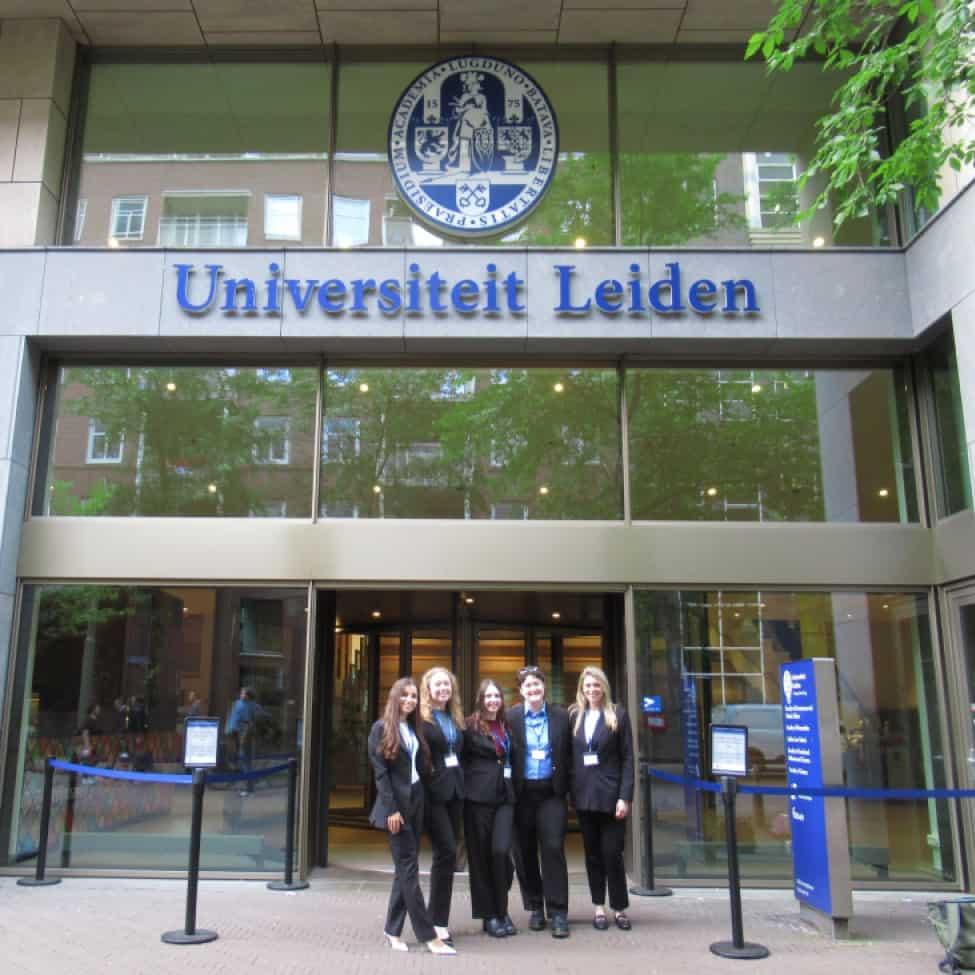
This year’s team was comprised of oralists Sophie Bacas (3L, Captain), Julia Jann (3L), and Sophia Querrazzi (2L), with research assistants Kayla Aranda (2L) and Jeanette Reatz (2L). They were coached by International Criminal Court Moot Court alumni Brad Gorson ‘13, Kristen Carroll ‘14, and Priscilla Holloway ‘25, who competed in The Hague last year.
"This team accomplished something truly extraordinary," said Louis V. Fasulo, Professor of Trial Practice and Director of Advocacy Programs. "To return to The Hague for a second consecutive year was an impressive achievement in itself. To advance to the semifinal round against the world's top advocacy teams and earn one of the competition's highest individual honors reflects the exceptional preparation, talent, and dedication of these students and their coaches. This latest accomplishment elevates our Advocacy Program to a new level. It is also a testament to the support of our entire Law School community, from our faculty and staff to Dean Horace E. Anderson, Jr., whose encouragement and commitment make achievements like this possible. We could not be prouder of what this team has accomplished."
The team first qualified for The Hague by competing in the North American Regional Round of the International Criminal Court Moot Court Competition, which is proudly hosted each year by the Elisabeth Haub School of Law. Advancing through the regional competition for the second consecutive year secured Haub Law's place among the select US teams invited to compete internationally. During the Regional Round, Julia Jann was also recognized as the Second Best Defense Oralist among all preliminary round competitors.
Hosted June 12–19 by the Grotius Centre for International Legal Studies at Leiden University, in partnership with the International Bar Association and with the support of the International Criminal Court, the International Round brought together 94 teams from 48 countries and territories spanning North America, South America, Europe, Asia, Africa, and Oceania.
Reflecting on the experience, team captain Sophie Bacas emphasized both the competition's global impact and the team's accomplishment. "I'm fortunate to have been a part of the ICC team for two years now, and seeing this competition bring people from all over the world together to inspire global legal scholarship has been nothing short of incredible. I am so proud of my teammates for their tenacity, and am thrilled that the spirit of their advocacy will continue to inspire others."
For Julia Jann, the opportunity to compete before internationally recognized jurists made the experience especially meaningful. "It was an honor to represent Haub Law Advocacy on the international stage. Not only did our hard work lead us to the top nine, but we had the privilege of arguing before esteemed international law scholars, including an actual ICC judge. This was an unforgettable experience and a highlight of my law school career."
I loved being able to share this experience with people from many countries, who all have a passion for international human rights.
—Sophia Querrazi, Haub Law ICC Moot Court Team Member
Sophia Querrazzi reflected on the teamwork that defined the team's success. "It was amazing to see how the long days and hard work could turn into joy and pride of our work and our connection as a team. I loved being able to share this experience with people from many countries, who all have a passion for international human rights."
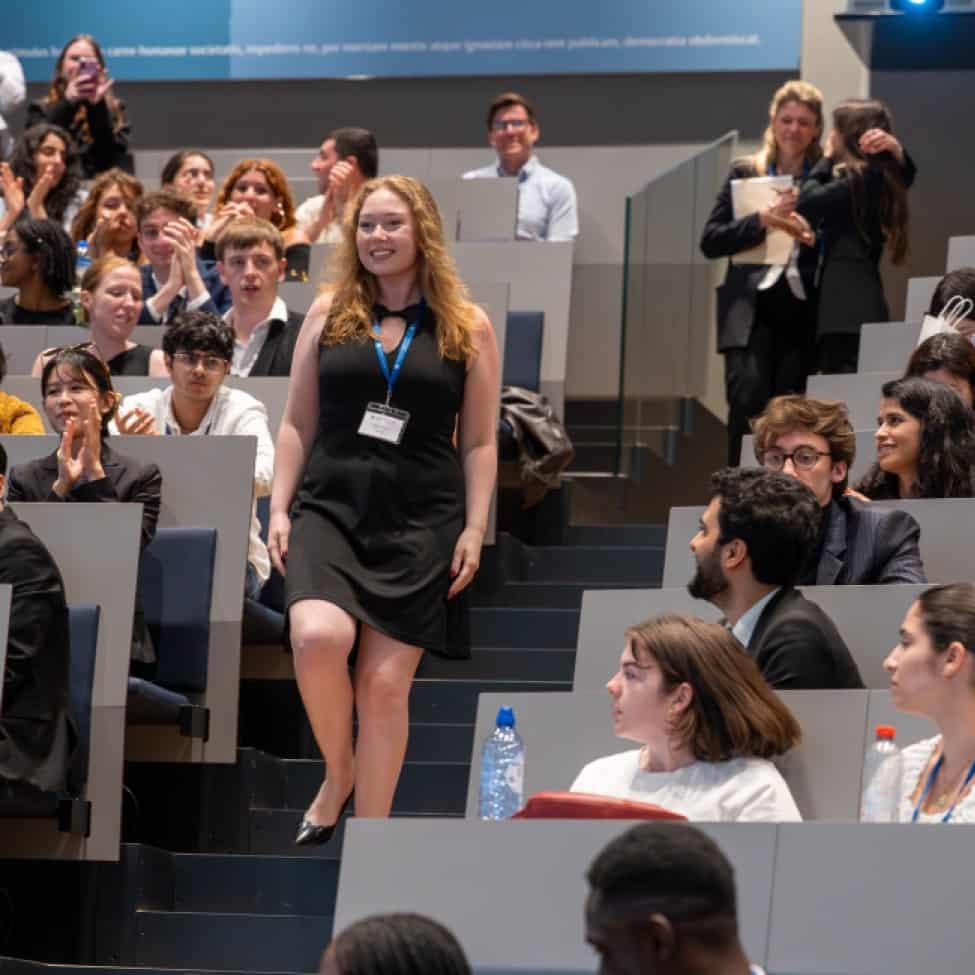
Research assistants Kayla Aranda and Jeanette Reatz also credited the experience with strengthening their advocacy skills while underscoring the value of collaboration.
"Being a member of a fiercely supportive and enthusiastic team has made me more excited to continue honing in on my advocacy skills and encouraged me to share this experience with future moot team members," said Kayla Aranda.
"Being part of ICC was one of the most meaningful experiences of law school," added Jeanette Reatz. "Seeing months of collaboration and preparation culminate in our team's historic success reinforced the value of dedication and teamwork. It strengthened the advocacy, teamwork, and resilience I'll carry with me throughout my legal career."
The International Criminal Court Moot Court Competition has deep roots at Haub Law. Established by the Law School in 2004, it was the world's first moot court competition based on the law and procedures of the International Criminal Court, the first permanent international tribunal dedicated to prosecuting genocide, crimes against humanity, war crimes, and the crime of aggression. In 2014, Pace partnered with the Grotius Centre for International Legal Studies and the International Criminal Court to create the global ICC Moot Court Competition, with the final round in The Hague judged by ICC judges and legal officers. Today, Haub Law continues to host the North American Regional Round, helping determine which US teams advance to international competition.
This year's case centered on a fictional armed conflict between the State of Essus and the Democratic Republic of Merine in the South Pacific. Teams argued complex issues of international criminal law arising from The Prosecutor v. Droganna Syrax, addressing questions involving war crimes, humanitarian assistance, head-of-state immunity, jurisdiction under the Rome Statute, and the admissibility of proceedings before the International Criminal Court. Competitors presented arguments as counsel for the Prosecution, Defense, and the Government of Merine before distinguished judges and international legal scholars.
“By combining outstanding advocacy, meticulous legal research, and months of preparation, the 2026 team not only represented Haub Law on the international stage but also established a new benchmark for excellence in one of the world's premier international law competitions,” said Professor Fasulo.

The Elisabeth Haub School of Law at Pace University is pleased to welcome Professor Allison Pincus as Assistant Professor of Law to its full-time faculty. Bringing experience across government, public policy, and legal practice, Professor Pincus will teach Civil Procedure, Housing Development and Discrimination, and Federal Courts.

For nearly five decades, Professor Emeritus Merril Sobie has been one of the defining members of the Elisabeth Haub School of Law at Pace University faculty.

What happens after the sentence is handed down? For professor emeritus Michael Mushlin, JD, that question has defined a career. Now, a first-in-the-nation New York reform he helped shape will require judges to step inside prisons and jails, bringing the realities of incarceration into clearer view.
Morgan Strecker ’26 is bringing her fascination with the brain, the nervous system, and human health into a research technician role at Children’s Hospital of Philadelphia.

Morgan Strecker ’26 has long been fascinated by the brain and nervous system, and Dyson’s BS in Behavioral Neuroscience program gave her the opportunity to explore that interest in depth. Through courses in systems behavioral neuroscience, functional neuroanatomy, and molecular and cellular biology, she developed a deeper understanding of how biological systems connect and how scientific inquiry can lead to meaningful medical advances. After graduation, Strecker will work as a research technician in Dr. Veronique Lefebvre’s lab at Children’s Hospital of Philadelphia, studying genetic mutations and stem cell differentiation while preparing for a future in medicine and potentially an MD/PhD pathway.
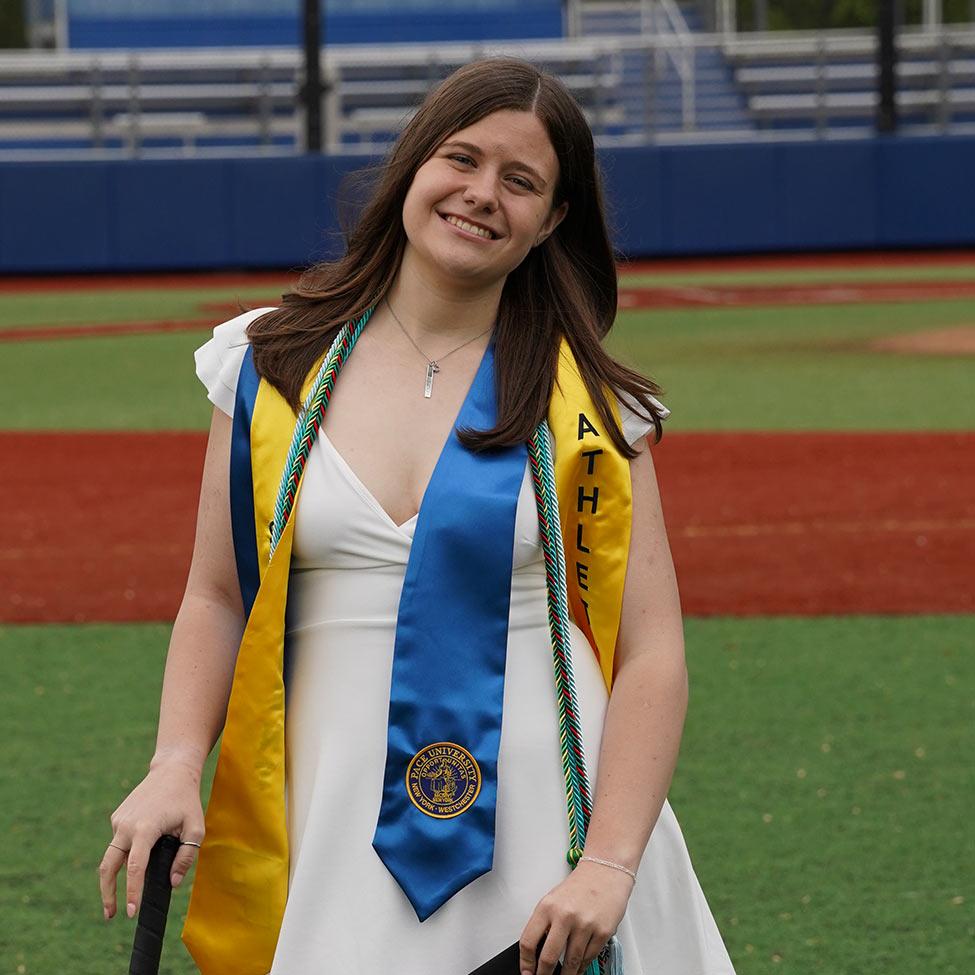
Next step: Research technician, Children’s Hospital of Philadelphia
What drew you to behavioral neuroscience?
I have always been fascinated by the brain and nervous system, and this program gave me the opportunity to explore the topics I was most interested in. I also plan to attend medical school, and many of the upper-level courses are taught in ways that mirror the depth and systems-based approach used in medical education.
Which courses helped prepare you for what’s next?
Some of my favorite courses were Systems Behavioral Neuroscience, Functional Neuroanatomy, and Molecular and Cellular Biology. They challenged me to think more critically about how biological processes are interconnected and reinforced how connected the systems of the body truly are.
What are your post-graduation plans?
I will be working as a research technician in Professor Veronique Lefebvre’s lab at the Children’s Hospital of Philadelphia, studying genetic mutations and how they impact stem cell differentiation. I also plan to apply to medical school, and possibly MD/PhD programs, with the goal of pursuing a career as a physician.

Amanda DeSarno ’26 turned her passion for storytelling, media, and brand connection into a client relations role with one of the world’s leading advertising and communications awards programs.

With faculty-mentored research, hands-on clinical experience, and dental school in her sights, Alessandra Barretta ’26 is turning scientific curiosity into a career devoted to patient care.

Rajni Jaiswal ’26 is using her MPA from Dyson to support equity, education access, and student success while continuing faculty-mentored research at Pace.
With a strong foundation in laboratory science, faculty-guided research, and clinical experience ahead, Anna Nahata ’26 is preparing for medical school with purpose.

Anna Nahata ’26 found her fit in biology through hands-on science. At Dyson College, she built a strong academic and research foundation through courses in genetics and anatomy, faculty mentorship from Professors Matthew Marcello and David Boerma, and research using Caenorhabditis elegans to study sperm activation and male fertility. Her work earned recognition at Pace’s Biology Research Day and helped her receive highest academic excellence in the BS in Biology program. Now, Nahata is taking a gap year before applying to medical school, using the time to study for the MCAT, work as a medical assistant, volunteer in healthcare settings, and gain additional clinical experience.
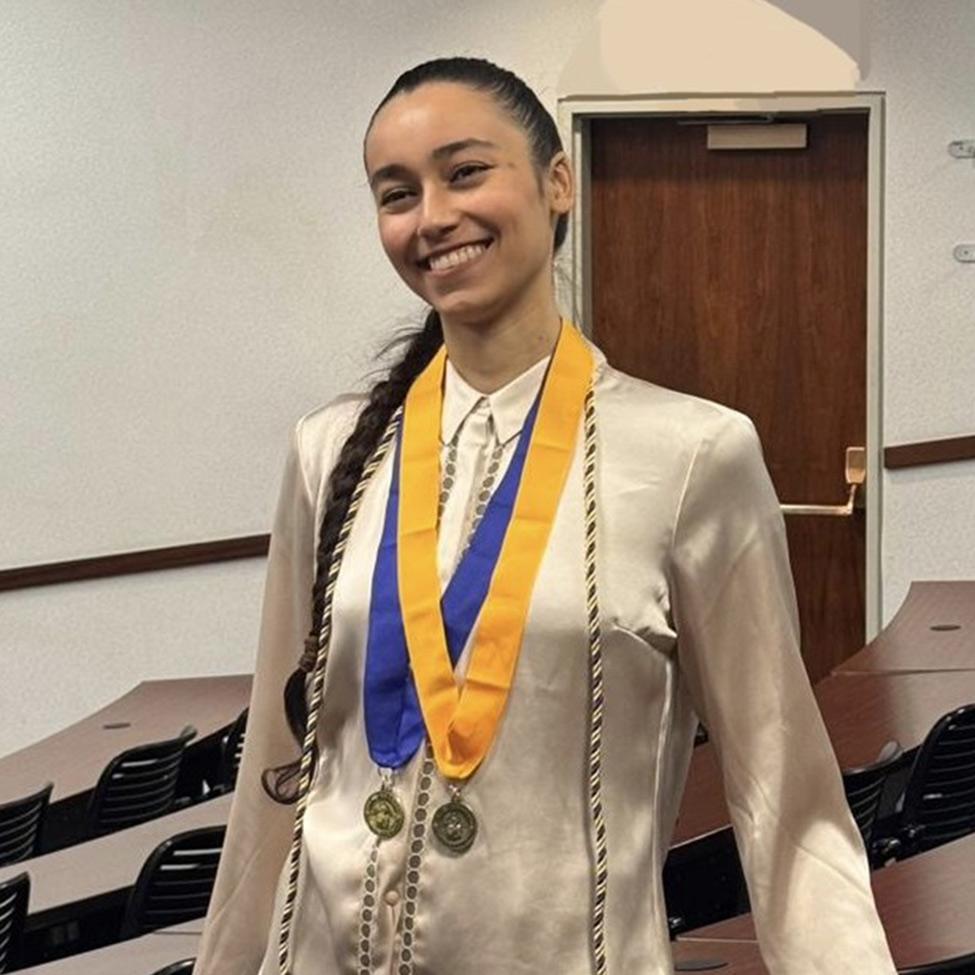
Next step: Gap year before medical school
What drew you to biology?
I have always been interested in science and loved hands-on work. It is one thing to read and understand how a process works on paper, and another to witness a reaction in front of you. When I saw how many labs were built into Pace’s science courses, I knew it would be a strong fit.
Which courses helped shape your experience?
Genetics with Professor Matthew Marcello and Anatomy with Professor David Boerma stood out. Both professors explained complex concepts in digestible ways, which made learning less intimidating and more exciting. I continued to do research with Professor Marcello and presented my work on Caenorhabditis elegans as a model to investigate the role of TCP11 in sperm activation and male fertility. That research was presented at the Eastern Colleges Science Conference and Biology Research Day at Pace, and I was selected for highest academic excellence in the BS in Biology program.
What are your post-graduation plans?
I will be taking a gap year before applying to medical school. During that time, I will study for the MCAT, work part-time as a medical assistant, volunteer at South Brooklyn Health Hospital and an animal clinic, and complete an internship as a health aide at Maimonides Medical Center in Brooklyn.
Rajni Jaiswal ’26 is using her MPA from Dyson to support equity, education access, and student success while continuing faculty-mentored research at Pace.
Morgan Strecker ’26 is bringing her fascination with the brain, the nervous system, and human health into a research technician role at Children’s Hospital of Philadelphia.

Through faculty-mentored lab work, award-winning research, and a deep curiosity about the nervous system, Anastasiia Kirdiianova ’26 is launching her next chapter at Dartmouth College.
Through faculty-mentored lab work, award-winning research, and a deep curiosity about the nervous system, Anastasiia Kirdiianova ’26 is launching her next chapter at Dartmouth College.
For Anastasiia Kirdiianova ’26, research became one of the defining experiences of her time at Dyson College. As a BS in Behavioral Neuroscience student, she worked closely with Professors Jeanmaire Molina and Matthew Marcello, gaining hands-on laboratory experience, participating in Pace’s student-faculty research programs, and earning recognition at the Eastern Colleges Science Conference and the Biology Poster Presentation series. Now, Kirdiianova is beginning a full-time laboratory technician II role at Dartmouth College’s Department of Biological Sciences, where she will contribute to neuroscience research focused on the nervous system of C. elegans.
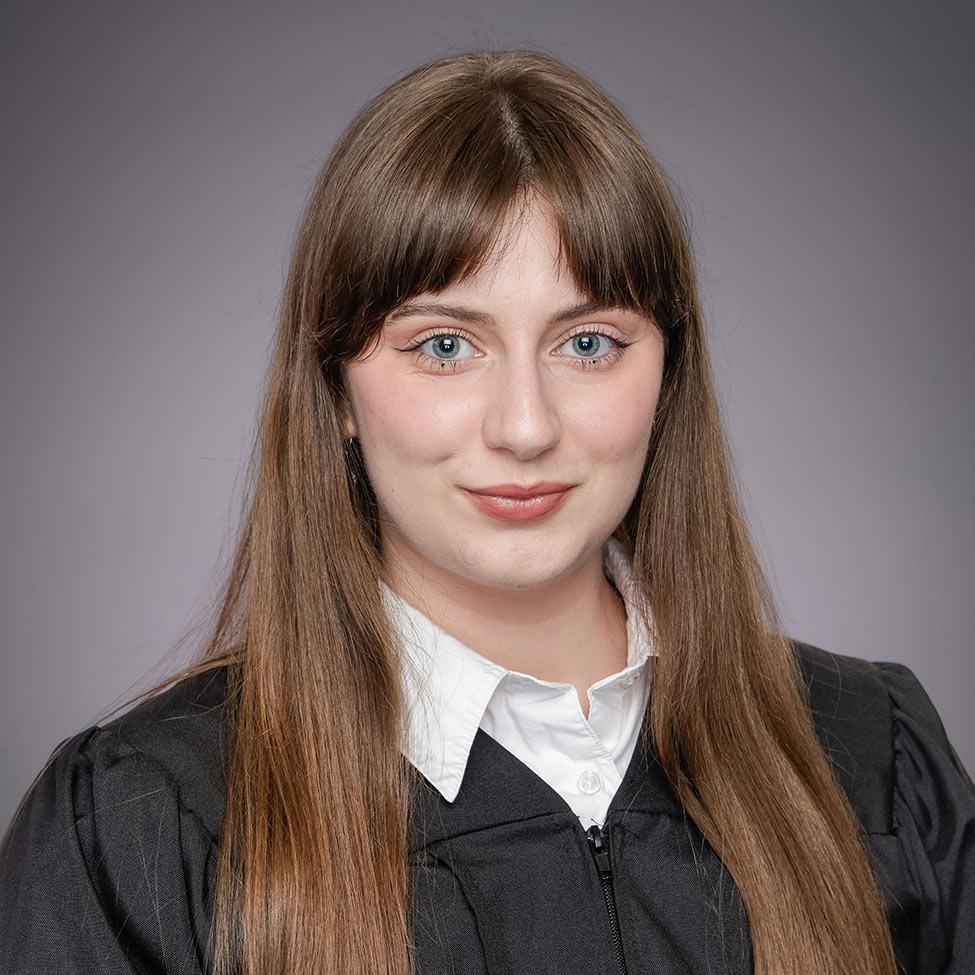
Next step: Laboratory technician II, Dartmouth College Department of Biological Sciences
How did research shape your Pace experience?
A large part of my experience at Pace was conducting research. Professor Jeanmaire Molina was the first person who introduced me to research and guided me every step of the way. Through that collaboration, I participated in the Summer 2023 and 2024 Provost’s Student-Faculty Undergraduate Research/Creative Inquiry Award Program and received an award at the Eastern Colleges Science Conference in the Ecology section.
I was also fortunate to work with Professor Matthew Marcello. Through that collaboration, I became more independent and creative in the laboratory, gained experience with the model organism C. elegans, and won an award in the Biology Poster Presentation series.
What advice would you give students in their first and second years at Pace?
Ask questions. It is truly the best thing you can do during your first years of college. By raising your hand and speaking up early, it becomes second nature. That helps you build genuine relationships with professors, learn on a deeper level, show engagement, and gain research opportunities.
What are your post-graduation plans?
This summer, I will begin a full-time laboratory technician II position at Dartmouth College’s Department of Biological Sciences, contributing to neuroscience research focused on understanding the nervous system of C. elegans, a free-living worm.
Rajni Jaiswal ’26 is using her MPA from Dyson to support equity, education access, and student success while continuing faculty-mentored research at Pace.
With a strong foundation in laboratory science, faculty-guided research, and clinical experience ahead, Anna Nahata ’26 is preparing for medical school with purpose.
With faculty-mentored research, hands-on clinical experience, and dental school in her sights, Alessandra Barretta ’26 is turning scientific curiosity into a career devoted to patient care.
Rajni Jaiswal ’26 is using her MPA from Dyson to support equity, education access, and student success while continuing faculty-mentored research at Pace.
Rajni Jaiswal ’26 came to Pace with a background in political science, international relations, and teaching, and found in Dyson’s Master of Public Administration program a practical path toward public service. Guided by faculty mentors Gina Scutelnicu-Todoran and Hillary Knepper, Jaiswal deepened her work in equity, governance, research, and student support. After graduation, she is joining the Simons STEM Scholars Program at Stony Brook University as a program assistant, helping undergraduate STEM students navigate Summer Bridge and the academic year, while continuing research and grant-writing work with Pace’s Department of Public Administration.
Master of Public Administration
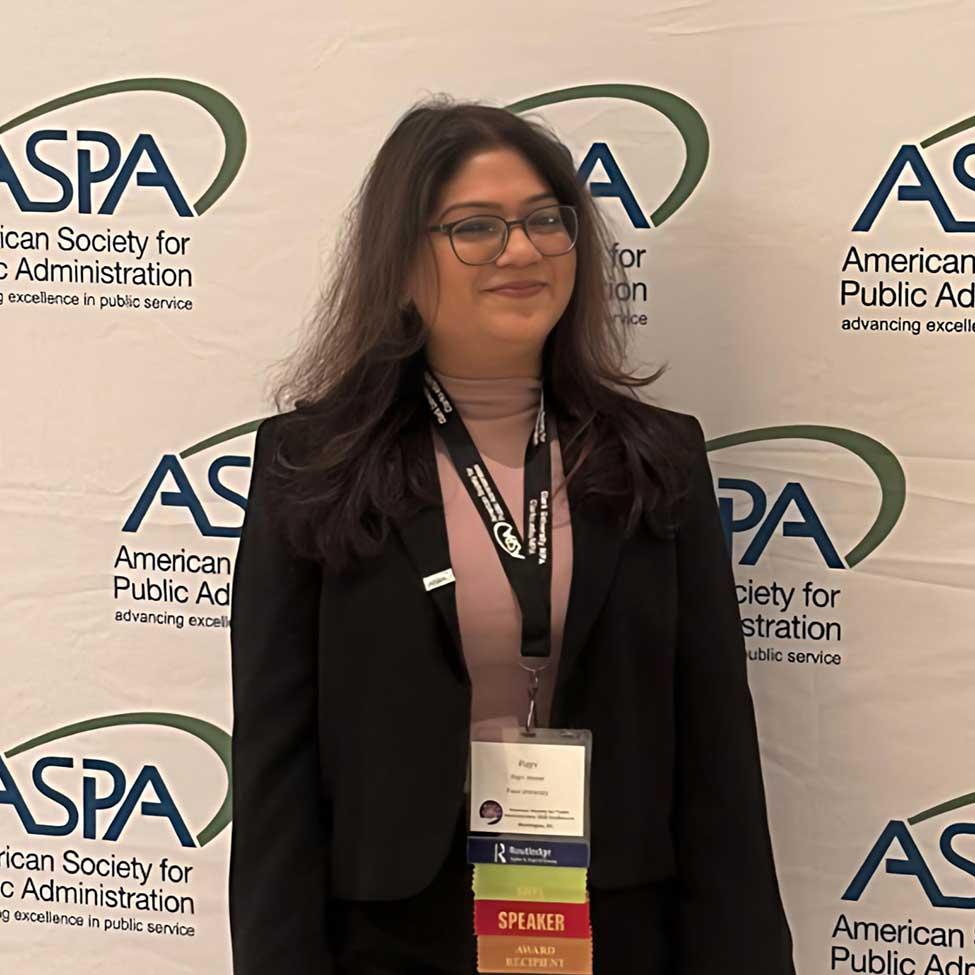
Next step: Program assistant, Simons STEM Scholars Program, Stony Brook University; research assistant, Pace University Department of Public Administration
What brought you to public administration?
My earlier training was in political science and international relations, and before moving to the United States I completed an MPhil and taught undergraduates in Kolkata, India. I wanted to shift from studying politics to working inside the systems that deliver public services. The MPA at Pace gave me a practical foundation while keeping me close to the questions of equity and governance that first drew me to the field.
Which faculty members had the greatest impact on your experience?
Professor Gina Scutelnicu-Todoran has been my capstone advisor, mentor, and guide through everything at Pace. She understood what an international student goes through, and that meant everything to me. I am continuing to work with her after graduation as a research assistant in the Department of Public Administration. Professor Hillary Knepper has also been incredibly generous, coaching me through interviews and career decisions, and I am collaborating with her on the Journal of Social Equity and Public Administration.
What are your post-graduation plans?
I am working as a program assistant with the Simons STEM Scholars Program at Stony Brook University, supporting undergraduate STEM students through Summer Bridge and the academic year. It is a strong fit for my interest in education access and student support, and it allows me to put what I learned at Pace into practice. I am also staying connected to Pace through research and grant writing.
Morgan Strecker ’26 is bringing her fascination with the brain, the nervous system, and human health into a research technician role at Children’s Hospital of Philadelphia.
Amanda DeSarno ’26 turned her passion for storytelling, media, and brand connection into a client relations role with one of the world’s leading advertising and communications awards programs.
With a strong foundation in laboratory science, faculty-guided research, and clinical experience ahead, Anna Nahata ’26 is preparing for medical school with purpose.
Amanda DeSarno ’26 turned her passion for storytelling, media, and brand connection into a client relations role with one of the world’s leading advertising and communications awards programs.
Amanda DeSarno ’26 has always been drawn to the way stories, brands, and media connect people. As a BA in Communications student at Dyson College, she explored that passion through courses in electronic media, sports media, and hands-on internship experience in New York City. After working with SpoiledChild on a launch and collaboration with fashion designer Jeremy Scott, DeSarno discovered the kind of fast-moving, creative environment where she could thrive. Now, she is beginning her career as a client relations coordinator with The Clio Awards, supporting creative excellence in advertising, marketing, and communications.
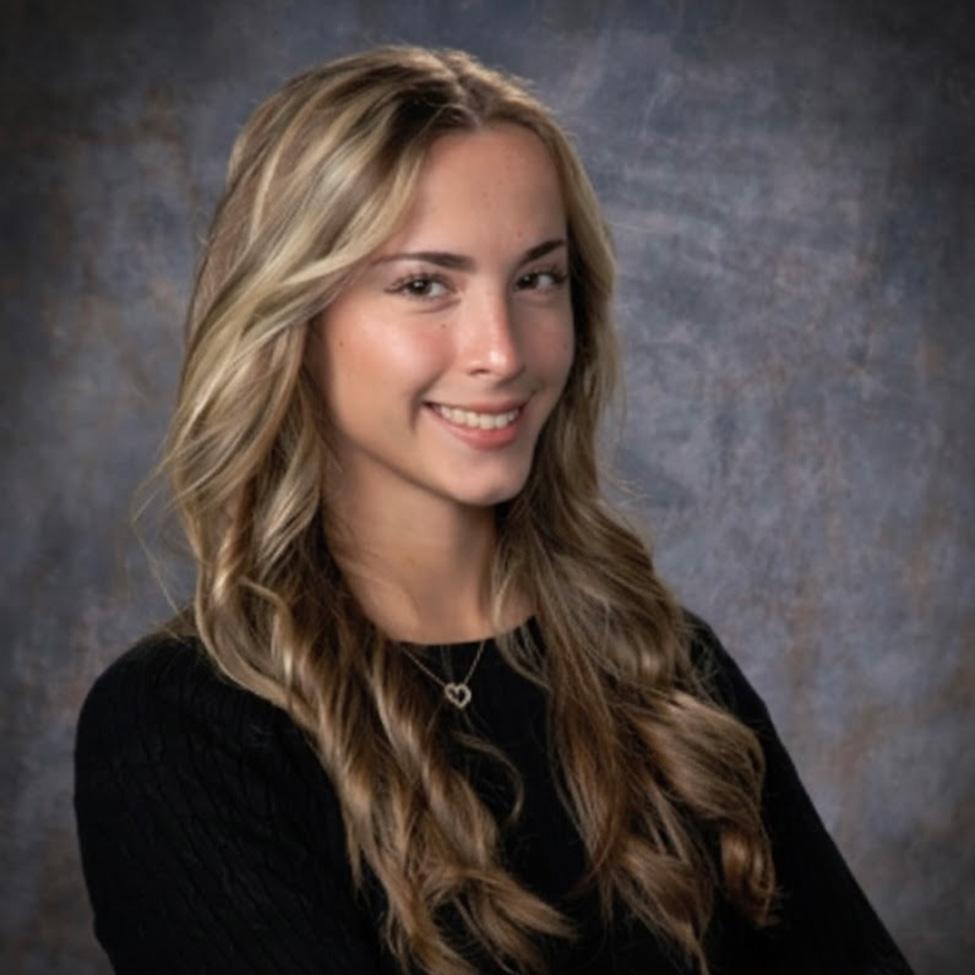
Next step: Client relations coordinator, The Clio Awards
What drew you to communications?
I enjoy connecting with and working with people. Growing up, I was always interested in the entertainment and marketing industries, especially the ways companies connect and communicate with audiences through branding, media, and advertising. That interest naturally led me to study communications.
Which Pace experiences helped shape your path?
Several Media, Communications, and Visual Arts courses stood out, including Writing for the Electronic Media, which helped me develop storytelling skills and create engaging content for television, and Sports Media, which connected my interest in sports with the way broadcasters engage fans in real time. My internship course was especially memorable. Through my role with SpoiledChild in SoHo, I discovered what I wanted to do: work hands-on with a team, support a launch and collaboration with fashion designer Jeremy Scott, and be part of a major event.
What are your post-graduation plans?
I will be working as client relations coordinator for The Clio Awards, an international awards program recognizing innovation and creative excellence in advertising, marketing, and communications. In my role, I will support award entry submissions, advise on categories for agencies and brands, review creative assets, oversee administration, and attend Clio Awards events. I am thrilled and eager to get started.
Morgan Strecker ’26 is bringing her fascination with the brain, the nervous system, and human health into a research technician role at Children’s Hospital of Philadelphia.
With faculty-mentored research, hands-on clinical experience, and dental school in her sights, Alessandra Barretta ’26 is turning scientific curiosity into a career devoted to patient care.
Rajni Jaiswal ’26 is using her MPA from Dyson to support equity, education access, and student success while continuing faculty-mentored research at Pace.
With faculty-mentored research, hands-on clinical experience, and dental school in her sights, Alessandra Barretta ’26 is turning scientific curiosity into a career devoted to patient care.
For Alessandra Barretta ’26, a BS in Biology from Dyson College became the foundation for something bigger: a future in dentistry. At Pace, she built deep research experience under the mentorship of Professors Daniel Strahs and Jeanmaire Molina, contributing to projects on drug resistance, bacterial communities, and dental caries. Now preparing for the Dental Admission Test while working as an orthodontic assistant, Barretta is bringing together laboratory research, clinical experience, and a passion for patient care as she works toward becoming an orthodontist.
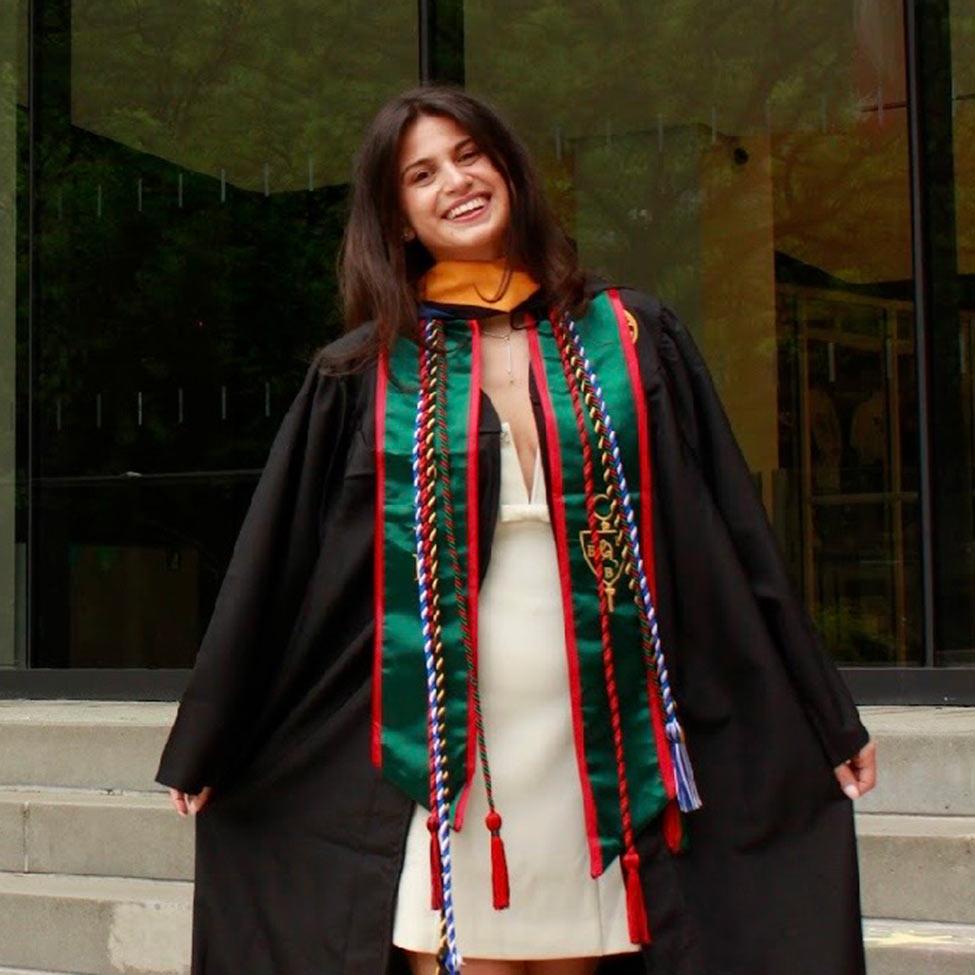
Next step: Preparing for dental school while working as an orthodontic assistant and continuing dental research
What drew you to biology?
I chose to study biology to build a strong scientific foundation for dental school, but also to immerse myself in a field driven by innovation, discovery, and curiosity. At Pace, I found an environment where opportunities are truly yours for the taking, and throughout my academic journey, I achieved more than I ever imagined possible.
How did Dyson help prepare you for what’s next?
Faculty-mentored research played a major role in my experience. I published research on drug resistance mechanisms in Saccharomyces cerevisiae under the mentorship of Professor Daniel Strahs, and later joined Professor Jeanmaire Molina’s laboratory, where we investigated bacterial community composition within Rafflesia, the world’s largest flower. I am now continuing research with Professor Molina on what may be Pace’s first dental research project, focused on bacterial communities associated with the development of dental caries.
What are your post-graduation plans?
I am preparing for the Dental Admission Test and plan to attend dental school with the goal of becoming an orthodontist. While studying, I am working as an orthodontic assistant, expanding my clinical knowledge and passion for patient care. I also remain actively involved in dental research and hope to see our work published by the end of the year.
Amanda DeSarno ’26 turned her passion for storytelling, media, and brand connection into a client relations role with one of the world’s leading advertising and communications awards programs.
Through faculty-mentored lab work, award-winning research, and a deep curiosity about the nervous system, Anastasiia Kirdiianova ’26 is launching her next chapter at Dartmouth College.
Rajni Jaiswal ’26 is using her MPA from Dyson to support equity, education access, and student success while continuing faculty-mentored research at Pace.
Pace University’s Lubin School of Business continues to strengthen its national reputation. Its latest recognition from The Princeton Review places Lubin among the country’s leading on-campus MBA programs, underscoring the school’s academic excellence, industry connections, and proven commitment to career-ready graduate education.


Pace University’s Lubin School of Business has once again been named one of The Princeton Review’s Best On-Campus MBA Programs. The recognition places Pace among 208 business schools nationwide selected for excellence in graduate business education.
“This recognition reflects Pace University’s commitment to preparing students to lead in today’s dynamic global economy,” said Pace University President Marvin Krislov. “Through the Lubin School of Business, our students benefit from rigorous academics, experiential learning, dedicated faculty, and strong connections to New York’s business community. We’re proud to see those strengths recognized once again by The Princeton Review.”
The Princeton Review selected the 208 schools based on more than 60 data points collected from surveys of business school administrators and MBA students during the 2025–26 academic year. The designation recognizes schools that excel in academics, faculty, career services, experiential learning, and student satisfaction. Rather than publishing an overall ranking, The Princeton Review recommends MBA programs it believes best prepare students for professional success.
“Today’s business leaders must be prepared to think strategically, embrace innovation, and lead with integrity,” said Ajay Khorana, PhD, dean of the Lubin School of Business. “At Lubin, we combine rigorous academics with hands-on learning and strong industry partnerships to prepare our graduates for successful careers in an increasingly dynamic global marketplace.”
The designation reflects Lubin’s longstanding excellence in graduate business education. In addition to its inclusion in The Princeton Review’s Best On-Campus MBA Programs, Lubin holds dual accreditation in business and accounting from the Association to Advance Collegiate Schools of Business (AACSB) International, an elite distinction earned by fewer than 2 percent of business schools worldwide that offer business degree programs. The school is also recognized among LinkedIn’s Top 100 MBA Programs, while its online MBA program has been ranked among the nation’s best by U.S. News & World Report.
“Today’s business leaders must be prepared to think strategically, embrace innovation, and lead with integrity,” said Ajay Khorana, PhD, dean of the Lubin School of Business.
The recognition is also reflected in Lubin’s student outcomes. Among Lubin master’s graduates in the Class of 2025, 96 percent were employed, continuing their education, or engaged in service, while 97 percent secured positions related to their fields of study. Graduates working full time earned an average salary of $74,222.
“Our goal is to provide students with an education that is both academically rigorous and deeply connected to the needs of today’s workforce,” said Alison Carr-Chellman, PhD, provost and executive vice president for academic affairs. “Lubin’s MBA program reflects that commitment by combining innovative teaching with experiential learning that prepares graduates to lead in a rapidly evolving business environment.”

Pace University is rising in the national spotlight, with multiple graduate programs ranked among the Top 100 in the 2026 U.S. News & World Report rankings, including the #1 Environmental Law program in the country. See which programs are leading and climbing.

Poets & Quants recently named Lubin Professor Jessica Magaldi among the 50 Best Undergraduate Business School Professors of 2025, highlighting her creative course “Music Industry Law (Taylor’s Version)”.

Learn how Professor Nick Martucci connects creativity and business to prepare students for careers in the fast-changing entertainment industry.